

TL;DR:
- Refusing a breathalyzer in New Hampshire is legal but results in an automatic license suspension, now extending to 9 months for a first refusal. SB 620 has increased penalties, making refusal as costly as a DUI conviction and applying to repeat offenders with suspensions up to three years. Drivers should seek legal counsel immediately to understand their rights, contest suspensions, and develop an effective defense strategy.
You can legally refuse a breathalyzer test in New Hampshire, but that choice carries immediate and significant administrative penalties. Under New Hampshire’s implied consent law, every driver who operates a vehicle on public roads has already agreed to chemical testing as a condition of holding a license. Refusal is permitted, but it is not without cost. Recent legislation has made that cost considerably higher, and understanding the current legal framework is the first step toward protecting your rights.
Can you refuse a breathalyzer test in new hampshire?
New Hampshire’s implied consent law is defined under RSA 265-A:4. It establishes that any person who drives in the state has implicitly consented to submit to a breath, blood, or urine test if a law enforcement officer has reasonable grounds to believe the driver is impaired. The term “implied consent” means your agreement to testing is built into your driving privilege, not something you actively sign.
When an officer pulls you over and suspects impairment, they will typically request a preliminary breath test at the roadside. This is separate from the evidentiary breath test administered at the station, which carries the formal legal weight. You have the right to decline both, but the consequences differ.
Refusing a breathalyzer triggers an automatic administrative license suspension. This is a civil penalty, not a criminal charge. Refusal is not itself a criminal offense, though the underlying DUI investigation continues regardless of whether you submitted to testing.
Here is when officers are authorized to request a breath test:
- After a traffic stop where the officer observes signs of impairment such as slurred speech or the smell of alcohol.
- Following a motor vehicle accident where impairment is suspected.
- At a sobriety checkpoint conducted under New Hampshire law.
- After an arrest for DUI or DWI, when the evidentiary test is formally requested.
Pro Tip: You have the right to know your rights during any traffic stop. Remaining calm, being polite, and asking to speak with an attorney before making decisions about testing can protect your position.
What are the penalties for refusing a breathalyzer in new hampshire?
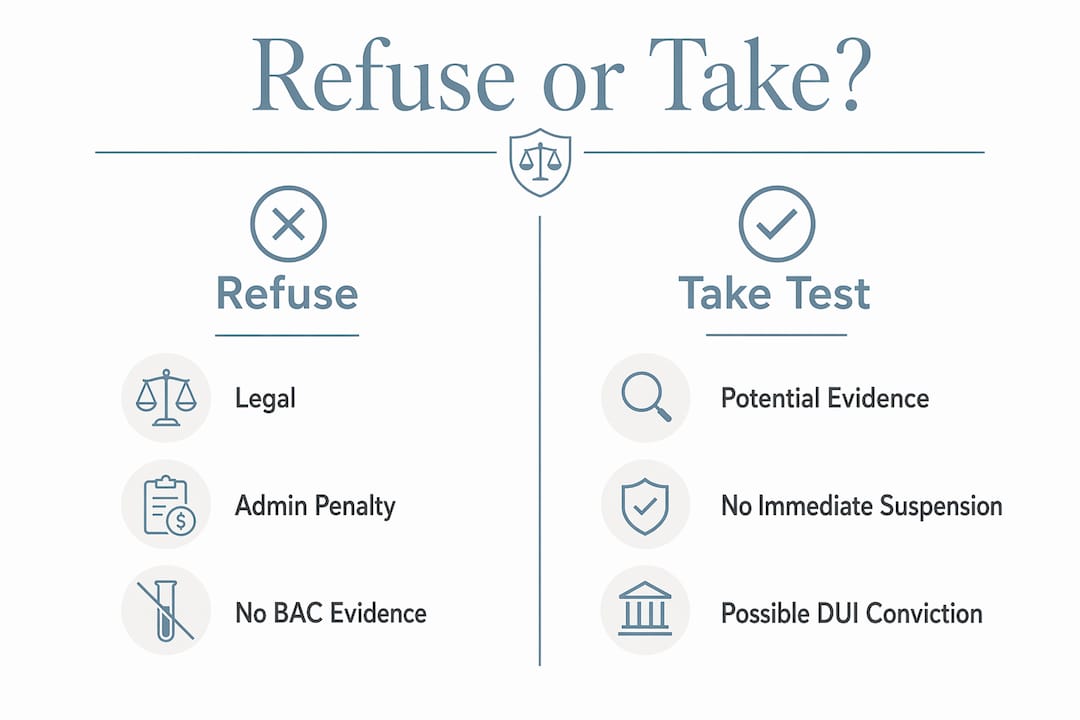
The penalty structure for breathalyzer refusal in New Hampshire changed significantly with the passage of SB 620. Effective January 1, 2027, SB 620 increases the suspension for a first-time refusal from 180 days to 270 days. That is a jump from 6 months to 9 months of lost driving privileges.

For repeat refusals, the consequences are even more severe. Subsequent refusals now carry a 3-year administrative suspension, up from the previous 2-year penalty. These are administrative suspensions, meaning they are separate from any criminal DUI conviction and its associated penalties.
The table below summarizes the penalty changes:
| Offense | Suspension Before SB 620 | Suspension After Jan 1, 2027 |
|---|---|---|
| First refusal | 180 days (6 months) | 270 days (9 months) |
| Subsequent refusal | 2 years | 3 years |
| First DUI conviction (minimum) | 9 months | 9 months (unchanged) |
The legislative intent behind SB 620 is direct. New Hampshire’s refusal rate stood at approximately 75% in 2026, far above the 24% national average. Lawmakers recognized that drivers were making a calculated choice to refuse because the old penalty was lighter than the consequence of a positive test result. That gap has now been closed.
“The goal of SB 620 is to close the DUI refusal loophole by making refusal at least as costly as failing the test.” — Governor Ayotte, April 2026
Pro Tip: Administrative suspensions from refusal and criminal DUI penalties run separately. You could face both if charged and convicted. Consulting a DUI defense attorney immediately after a stop is the most effective way to understand your full exposure.
Refusal vs. taking the test: how do the outcomes compare?
The decision to refuse or submit to a breath test is one of the most consequential choices you can make during a DUI stop. Each path carries distinct risks, and the 2027 law changes have shifted the calculus significantly.
Before SB 620, refusing the test meant a 6-month suspension while a DUI conviction carried a minimum 9-month suspension. That gap gave drivers a rational reason to refuse. The new law removes that incentive by aligning the first-refusal suspension with the minimum DUI conviction suspension at 9 months.
Consider the key differences:
- Refusal: Automatic 270-day license suspension (post-January 1, 2027), no chemical evidence for prosecution, but the state can still pursue DUI charges using field sobriety tests, officer observations, and other evidence.
- Submitting and passing: No suspension, no DUI charge based on BAC, and the stop may end without further action.
- Submitting and failing (BAC at or above 0.08%): DUI charge with a minimum 9-month license suspension upon conviction, fines, possible jail time, and a criminal record.
Refusal eliminates one piece of prosecution evidence, specifically the chemical BAC reading. However, prosecutors in New Hampshire can and do pursue DUI convictions without breath test results. The absence of a test does not guarantee a dismissal. You should also factor in that DUI insurance consequences apply regardless of whether the charge stems from a positive test or a refusal-related conviction.
For a deeper look at how to weigh this decision, Narolaw’s guide on whether to take a breathalyzer in New Hampshire walks through the practical and legal considerations in detail.
What steps should you take after a breathalyzer refusal?
Acting quickly after a breathalyzer refusal protects your legal options. The administrative process begins immediately, and delays can limit your ability to contest the suspension.
- Request a hearing within 30 days. After a refusal, you have a limited window to request an administrative hearing with the New Hampshire Department of Safety to contest the license suspension. Missing this deadline typically means the suspension takes effect automatically.
- Contact a DUI defense attorney immediately. An experienced attorney can review whether the officer had reasonable grounds to request the test, whether proper procedures were followed, and whether any defenses apply to your specific situation.
- Document everything you remember. Write down the time, location, what the officer said, and how the stop unfolded. This information can be critical for building a defense.
- Understand your hearing rights. The administrative hearing is separate from any criminal DUI proceeding. You can challenge the suspension on procedural grounds even if a criminal case is also pending.
- Explore all available defenses. Possible challenges include whether the officer had probable cause for the stop, whether the implied consent warning was properly given, and whether any medical condition affected your ability to provide a sample.
Pro Tip: Medical conditions such as COPD or GERD can affect breath test reliability and may be relevant to your defense. Disclose any such conditions to your attorney right away.
Key takeaways
Refusing a breathalyzer in New Hampshire is legal, but under SB 620, the first-refusal suspension now matches the minimum DUI conviction penalty at 9 months, eliminating the previous incentive to refuse.
| Point | Details |
|---|---|
| Refusal is legal but costly | Declining a breath test triggers an automatic administrative license suspension, not a criminal charge. |
| SB 620 raises the stakes | First-refusal suspensions increased from 180 days to 270 days effective January 1, 2027. |
| Repeat refusals are severe | A second or subsequent refusal now carries a 3-year administrative suspension. |
| Refusal does not stop prosecution | Police can still pursue DUI charges using field sobriety tests and officer observations. |
| Act within 30 days | You must request an administrative hearing quickly to contest the suspension. |
The 2027 law changes the refusal decision entirely
From my perspective, SB 620 represents the most significant shift in New Hampshire DUI law in years, and most drivers do not yet fully understand what it means for them.
Before this law, refusing the test was a rational, if legally risky, strategy. The math was simple: a shorter suspension for refusal versus a longer one for a positive result. Lawmakers recognized that drivers were treating refusal as an economic choice, and they responded by removing the financial logic behind it.
What I find most important for anyone facing this situation is this: the law has changed, but the complexity has not decreased. Refusal still eliminates chemical evidence, and that can matter in court. However, the suspension penalty is now identical to a DUI conviction minimum. You are no longer choosing between a lighter and a heavier penalty. You are choosing between two paths of equal administrative cost, each with different criminal implications.
The right answer depends entirely on the facts of your specific stop, your BAC at the time, and the strength of the officer’s observations. That is not a decision you should make alone at the roadside. It is a decision you should make with qualified legal counsel as quickly as possible.
— Rich
How Narolaw can help with your DUI defense in new hampshire
Facing a DUI charge or a breathalyzer refusal in New Hampshire is stressful, and the legal consequences are serious. Narolaw’s criminal defense attorneys in New Hampshire specialize in DUI and DWI defense, including cases involving breathalyzer refusals and administrative license suspensions. The team understands the full impact of SB 620 and can help you contest a suspension, challenge the basis of a stop, and build a defense tailored to your situation. Whether you refused the test or submitted and face a DUI charge, early legal representation makes a measurable difference. Contact Narolaw to schedule a free consultation and take the first step toward protecting your license and your future.
FAQ
What happens if you refuse a breathalyzer in new hampshire?
Refusing a breath test triggers an automatic administrative license suspension. Under SB 620, effective January 1, 2027, a first refusal results in a 270-day suspension.
Is refusing a breathalyzer a criminal offense in new hampshire?
No. Refusal is not a criminal offense by itself. It results in a civil administrative penalty, though a separate DUI charge may still be pursued using other evidence.
Can you still be charged with DUI if you refuse the breathalyzer?
Yes. Police can charge you with DUI based on field sobriety test results, officer observations, and witness accounts, even without a chemical BAC reading.
How long is the license suspension for refusing a breathalyzer in NH?
Effective January 1, 2027, the suspension is 270 days for a first refusal and 3 years for a subsequent refusal under New Hampshire’s updated breathalyzer test laws.
Can a medical condition excuse a breathalyzer refusal in new hampshire?
Conditions like COPD or GERD can affect a person’s ability to provide a valid breath sample. These conditions may be relevant to your defense and should be discussed with a DUI attorney promptly.


