

Child custody cases in New Hampshire can feel overwhelming from the very first step. You may not know what forms to file, when to show up in court, or how long the process will take. That uncertainty adds stress to an already difficult situation. Understanding the legal workflow that attorneys follow gives you a clearer picture of what lies ahead, helps you set realistic expectations, and puts you in a stronger position to advocate for your child. This guide walks through each stage so you can prepare with confidence.
Table of Contents
- Understanding the child custody workflow in New Hampshire
- Key documents and requirements
- Mediation versus trial: How cases are actually resolved
- Best practices for parents and lawyers
- Our perspective: What parents should be asking their lawyers
- Get expert help for your New Hampshire child custody case
- Frequently asked questions
Key Takeaways
| Point | Details |
|---|---|
| Know the process | Understanding each stage of the NH custody workflow reduces stress and helps you stay prepared. |
| Prepare documents early | Having all paperwork organized speeds up your case and avoids costly mistakes. |
| Mediation is effective | Most cases resolve through mediation, which is faster and less expensive than trial. |
| Document everything | Keeping detailed records and communication logs strengthens your custody position. |
| Get expert help | Partnering with a knowledgeable attorney can guide you through pitfalls and maximize a positive outcome. |
Understanding the child custody workflow in New Hampshire
Every custody case in New Hampshire follows a defined sequence of legal steps. Knowing this sequence reduces surprises and helps you work more effectively with your attorney. The parental rights legal workflow begins with filing a Petition for Custody and Parenting Time in the Circuit Court Family Division where your child lives, serving the other parent, attending mandatory mediation, preparing evidence if needed, and ultimately obtaining a final parenting plan based on the child’s best interests under RSA 461-A.
Court decisions in New Hampshire are always guided by the child’s best interests, not the preferences of either parent alone. That standard shapes every decision a judge makes.
Typical attorney workflow for NH custody cases
| Step | Action | Purpose |
|---|---|---|
| 1 | File Petition for Custody | Opens the case in Circuit Court Family Division |
| 2 | Serve the other parent | Provides legal notice of the proceeding |
| 3 | Attend mandatory mediation | Attempts resolution without a trial |
| 4 | Prepare and exchange evidence | Supports your position if mediation fails |
| 5 | Attend hearings | Court reviews contested issues |
| 6 | Receive final parenting plan | Court order governs custody going forward |
Understanding the child custody negotiation workflow at each stage makes it easier to prepare the right documents and ask the right questions. Working with an attorney experienced in hiring a custody attorney in New Hampshire is one of the most effective ways to stay on track.
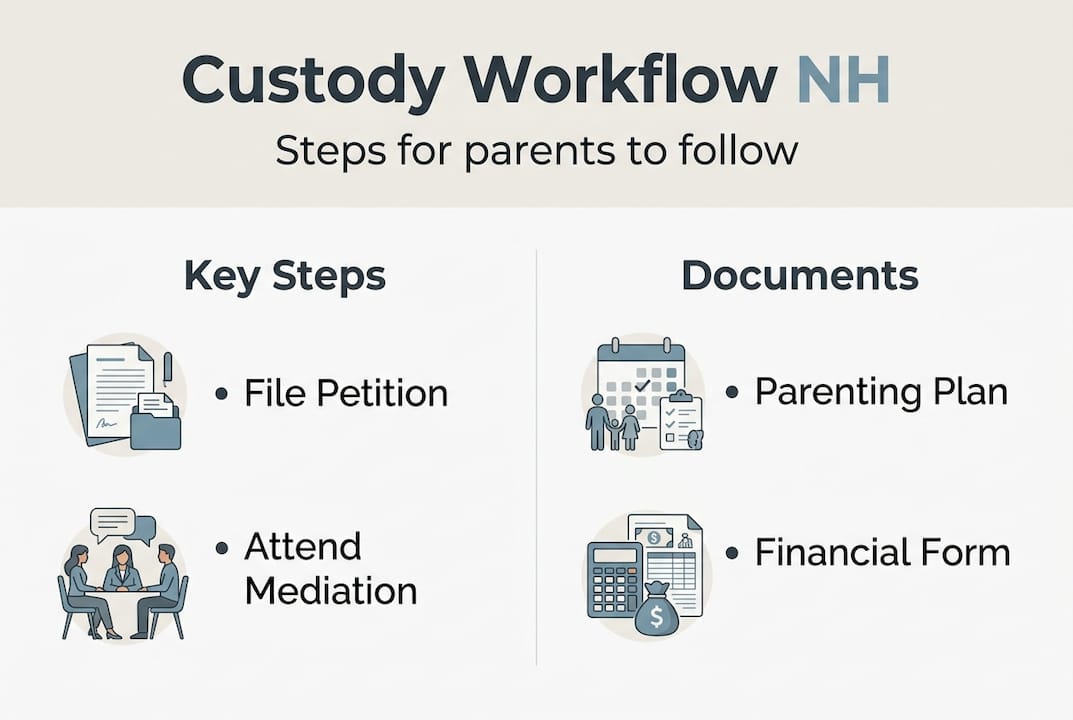
Key documents and requirements
Understanding the overall workflow is step one. Having the right paperwork ready is step two. Missing or incomplete documents are one of the most common reasons cases get delayed, and delays can be frustrating and costly.

According to the NH family law document guide, the essential documents for a custody case include a Parenting Petition, Personal Data Sheet, Financial Affidavit, and Proposed Parenting Plan. Courts provide official checklists to help ensure complete submissions.
Document requirements mapped to workflow steps
| Document | Workflow step | Purpose |
|---|---|---|
| Parenting Petition | Filing | Formally opens your custody request |
| Personal Data Sheet | Filing | Provides identifying information for all parties |
| Financial Affidavit | Filing and hearings | Discloses income and expenses relevant to support |
| Proposed Parenting Plan | Mediation and hearings | Outlines your preferred custody and visitation schedule |
Here is a quick summary of what to gather:
- Completed Parenting Petition with accurate dates and names
- Personal Data Sheet for each parent and the child
- Financial Affidavit with current income and expense details
- Proposed Parenting Plan reflecting your child’s needs
- Supporting records such as school, medical, or communication logs
Review the parental rights checklist to make sure nothing is missing before you file.
Pro Tip: Double-check all dates, names, and numbers on every form before submission. A single error can trigger processing delays that push your hearing back by weeks.
Mediation versus trial: How cases are actually resolved
Once all documents are filed, you will face a crucial fork in the road: mediation or a full trial. Most parents are relieved to learn that the 75% resolution rate at mediation means the majority of NH custody cases never reach a courtroom.
Mediation is mandatory in most cases before any hearing is scheduled. It gives both parents the opportunity to reach a mutually acceptable parenting plan with the help of a neutral third party. When it works, it saves significant time and money.
Mediation versus trial: A side-by-side comparison
| Factor | Mediation | Contested trial |
|---|---|---|
| Typical cost | $500 to $2,000 | $5,000 to $15,000 or more |
| Typical duration | 2 to 4 months | 8 to 18 months |
| Who decides outcome | Parents, with mediator’s help | Judge |
| Level of conflict | Lower | Higher |
| Privacy | More private | Public court record |
The financial and emotional difference between these two paths is significant. A contested trial can cost ten times more and take four times as long. Reviewing negotiation strategies before mediation gives you a real advantage.
Pro Tip: Arrive at mediation with a clear list of your top priorities and a genuine willingness to compromise on secondary issues. Parents who prepare this way tend to reach agreements faster and with less conflict.
Best practices for parents and lawyers
No matter which route your case takes, these practical steps make the process more manageable. Strong preparation is the single biggest factor separating smooth cases from difficult ones.
The most effective approach, drawn from essential custody tips, involves documenting your involvement, prioritizing your child’s needs in every decision, organizing evidence in chronological order, and consulting an experienced attorney as early as possible.
Here are the top best practices to follow:
- Document your involvement by keeping a log of school pickups, medical appointments, and daily caregiving activities
- Save all communications with the other parent, including texts and emails, in an organized folder
- Organize evidence chronologically so your attorney and the court can follow your story clearly
- Meet filing deadlines without exception, because missed deadlines can result in your documents being rejected
- Consult an attorney early, even if you plan to mediate, to understand your rights before you agree to anything
- Focus on your child’s best interests in every decision, since courts respond positively to parents who demonstrate this priority
Common mistakes include waiting too long to seek legal advice, submitting incomplete forms, and failing to keep records of day-to-day parenting. Review more custody tips to avoid these pitfalls.
Pro Tip: Involve your attorney from the very beginning, not just when things get complicated. Early legal guidance shapes the entire case strategy and often prevents costly mistakes.
Our perspective: What parents should be asking their lawyers
With these best practices in mind, it is worth reflecting on how parents and attorneys can work together most effectively. In our experience, the parents who get the best outcomes are the ones who treat their attorney as a project manager, not just a courtroom advocate.
Too many parents wait until a problem surfaces before asking tough questions. Get clarity on the timeline, your responsibilities, and how evidence will be organized from the very first meeting. Ask your attorney how often you will communicate, who tracks deadlines, and what you should be documenting right now.
As we often say, “The best results come when clients see their lawyer as a project manager, not just a courtroom advocate.” That mindset shift changes everything. Explore deeper legal workflow insights to understand how this approach plays out in real cases.
Get expert help for your New Hampshire child custody case
If you want practical support applying these principles to your family, legal help is just a click away. Our Manchester child custody attorneys and New Hampshire custody lawyers are experienced in guiding parents through every stage of the custody workflow, from filing the initial petition to negotiating a final parenting plan. We help you avoid common pitfalls, stay organized, and focus on what matters most: your child’s well-being. Browse our child custody tips or contact us today to schedule a free consultation.
Frequently asked questions
What are the main steps in a New Hampshire child custody case?
The main custody steps are filing a petition, serving the other parent, attending mandatory mediation, preparing evidence, and participating in court hearings if needed. Most cases are resolved before reaching a full trial.
Is mediation required in New Hampshire child custody cases?
Yes, mediation is mandatory in most New Hampshire custody cases before any hearing is scheduled, and it successfully resolves about 75% of disputes.
What documents should I prepare for my child custody case?
You should prepare a Parenting Petition, Financial Affidavit, Personal Data Sheet, and Proposed Parenting Plan, using the official court checklist to ensure nothing is missing.
How much does mediation or a custody trial cost?
Mediation typically costs $500 to $2,000 and takes 2 to 4 months, while a contested trial can cost $5,000 to $15,000 or more and last 8 to 18 months.
Why is it important to document everything in a custody case?
Thorough documentation of your parenting involvement and all communications with the other parent gives your attorney concrete evidence to support your position in court.


