

TL;DR:
- Criminal charges in New Hampshire are classified as misdemeanors or felonies, each with distinct penalties. Understanding these classifications affects defense strategies, bail conditions, and long-term consequences.
Criminal charges in New Hampshire fall into two broad categories under the New Hampshire Revised Statutes: misdemeanors and felonies, each carrying distinct penalties that can reshape your life. The most common criminal charges in NH include disorderly conduct, simple assault, drug possession, petty theft, and DWI. Knowing how the state classifies these offenses is the first step toward building a realistic defense. The difference between a Class B misdemeanor and a Class A felony is not just a matter of severity. It determines whether you face fines only, years in prison, or consequences that follow you into employment, housing, and immigration status.
What are the most common misdemeanor charges in NH?
New Hampshire divides misdemeanors into two classes, and the distinction matters more than most people realize. Class A misdemeanors carry up to one year in jail and fines up to $2,000. Class B misdemeanors carry fines up to $1,200 and no possibility of jail time. That sounds less serious, but a Class B conviction still creates a criminal record that affects employment, housing, and immigration status.
Common Class B misdemeanor offenses include petty theft, simple possession of small amounts of marijuana, and minor traffic violations. Class A misdemeanors typically involve simple assault, first-offense DWI, and criminal trespass. Disorderly conduct sits in its own category: it can be a fine-only violation or escalate to a Class A misdemeanor depending entirely on whether the defendant ignored a police officer’s order to stop. That single factor, compliance with a lawful order, is what separates a $100 fine from a potential jail sentence.

Pro Tip: If you are charged with disorderly conduct, document whether you were given a verbal order by an officer and whether you complied. That detail directly determines which charge the prosecutor can sustain.
One critical point that surprises many defendants: Class B misdemeanors do not guarantee court-appointed counsel because there is no risk of incarceration. Many people self-represent on these charges without understanding the long-term record consequences. That is a serious mistake, particularly for non-citizens, students, or anyone in a licensed profession.
What are common felony charges in New Hampshire?
Felony charges in New Hampshire are classified as Class A or Class B, with Class A carrying the heavier penalties. Class B felonies include offenses like theft over $1,500, drug possession with intent to distribute, and second-offense assault. Class A felonies cover aggravated assault, serious drug offenses, and sexual assault crimes. The sentencing ranges differ significantly between the two classes.
- Class B felony: 3.5 to 7 years in state prison, fines up to $4,000
- Class A felony: 7.5 to 15 years in state prison, fines up to $4,000
- Enhanced felony: Sentence increases apply when specific triggering factors are proven
Sentencing enhancements are where many defendants get blindsided. Special enhancement factors in New Hampshire include criminal livelihood, hate crimes, targeting first responders, and exploitation of vulnerable victims. Each of these triggers can add years to a sentence and must be proven to a jury, which directly affects how a defense attorney approaches the case.
| Felony Class | Typical Offense Examples | Prison Range |
|---|---|---|
| Class B felony | Theft over $1,500, drug distribution | 3.5–7 years |
| Class A felony | Aggravated assault, sexual assault | 7.5–15 years |
| Enhanced felony | Hate crime, criminal livelihood | Exceeds standard range |

The statute of limitations for most felonies in New Hampshire is six years. Murder carries no time limit. Sexual assault involving a minor carries a 22-year limit. Those exceptions mean prosecutors can bring charges long after the alleged offense, which affects how evidence is preserved and how defenses are built.
Pro Tip: If you are facing a felony charge, ask your attorney immediately whether any enhancement factors apply. Identifying those early shapes every decision in your defense, from plea negotiations to trial strategy.
How does the criminal process in NH unfold after an arrest?
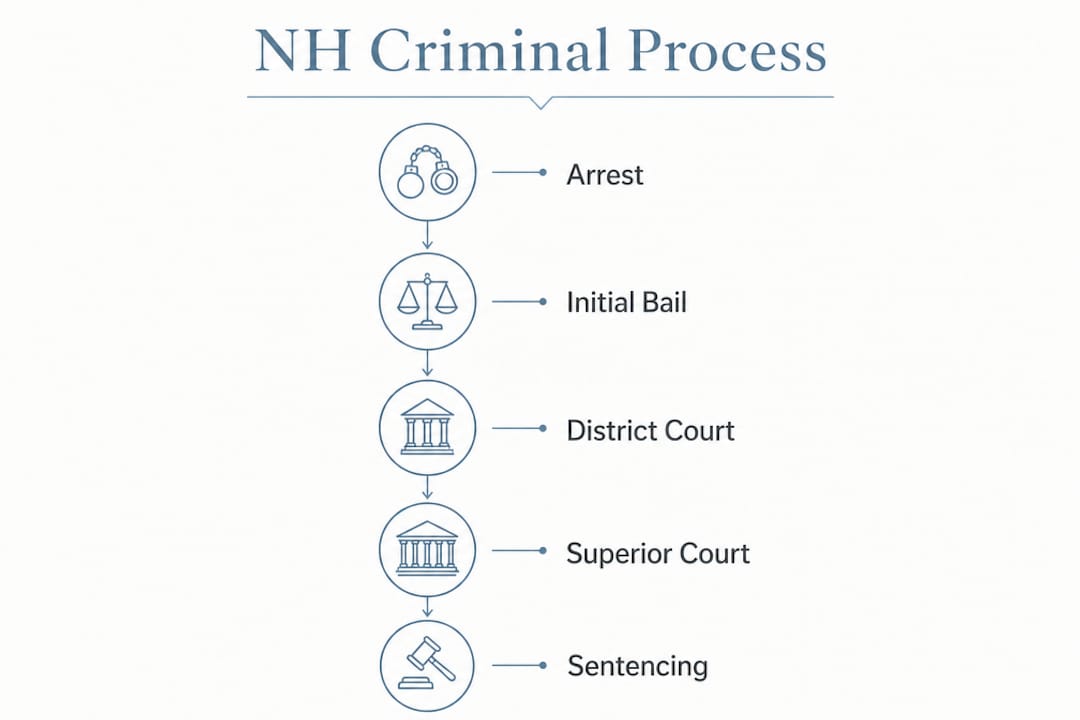
The timeline after an arrest in New Hampshire follows a specific sequence, and knowing it helps you make better decisions early. Bail hearings occur within 36 hours of arrest. Arraignments are typically scheduled 14 to 21 days after processing. That window between arrest and arraignment is when your defense strategy begins to take shape.
Key steps in the process include:
- Bail hearing: The court sets conditions of release. Violating those conditions can result in immediate detention and additional charges.
- Arraignment: You enter a formal plea. This is not the time to explain your side of the story. It is the time to enter a plea and let your attorney speak.
- Pretrial hearings: Evidence is reviewed, motions are filed, and plea negotiations often happen here.
- Trial or plea resolution: Most cases resolve before trial through negotiated pleas.
Misdemeanor cases move faster through the New Hampshire District Courts. Felony cases go to Superior Court and involve a grand jury indictment process. Understanding bail reform changes in New Hampshire is also relevant, since 2025 amendments altered how courts assess flight risk and danger to the community. Pretrial conditions like no-contact orders or travel restrictions can affect your job, your family, and your ability to assist in your own defense.
What defense considerations matter most for NH criminal charges?
The most common mistake defendants make is focusing on what they did rather than on how the law classifies it. NH defendants frequently underestimate charge severity because they focus on their conduct, not on the statutory escalation mechanisms that determine the actual charge. A person who argues with a neighbor may think they have a minor dispute. The law may classify it as criminal threatening, a Class A misdemeanor.
Defense considerations that carry real weight in New Hampshire include:
- Escalation factors: For disorderly conduct and similar charges, whether you complied with a police order is often the deciding factor in charge severity.
- Enhancement triggers: For felonies, whether the prosecution can prove factors like criminal livelihood or school-zone proximity directly affects sentencing exposure.
- Immigration consequences: Non-citizens face severe consequences from even misdemeanor drug charges, with limited exceptions. A plea deal that seems minor can trigger deportation proceedings.
- Professional licensing: Misdemeanor convictions can result in license suspension or revocation for nurses, teachers, contractors, and others in regulated fields.
- Charge reduction options: Experienced defense counsel can often negotiate a Class A misdemeanor down to a Class B, or a felony down to a misdemeanor, through pretrial diversion or plea agreements.
Pro Tip: Before accepting any plea deal, ask your attorney specifically how the conviction will appear on a background check and whether it triggers any collateral consequences for your profession or immigration status.
Probation caps in New Hampshire are generally five years for felonies and two years for Class A misdemeanors. Violations of probation conditions can result in short jail sanctions even for offenses that originally carried no incarceration. That makes compliance with every condition of release or probation a defense priority, not an afterthought. Reviewing criminal defense strategies specific to New Hampshire with an attorney early in the process gives you the clearest picture of your options.
Key Takeaways
Understanding the classification of a charge under New Hampshire law is the single most important factor in predicting outcomes and building an effective defense.
| Point | Details |
|---|---|
| Misdemeanor class determines counsel rights | Class B misdemeanors carry no right to court-appointed counsel, leaving many defendants unrepresented despite real record consequences. |
| Escalation factors change charges | Disorderly conduct shifts from a fine to a Class A misdemeanor based on whether a defendant ignored a police order. |
| Felony enhancements add years | Factors like hate crimes or criminal livelihood must be proven to a jury and can push sentences well beyond standard ranges. |
| Statute of limitations varies widely | Most felonies carry a six-year limit, but murder has no limit and minor sexual assault cases extend to 22 years. |
| Immigration risk applies to misdemeanors | Even a Class B drug misdemeanor can trigger deportation for non-citizens, making early legal counsel critical. |
What I’ve learned about NH criminal charges after years in the courtroom
The most consistent pattern I see is defendants treating a criminal charge as a personal dispute rather than a legal classification problem. Someone charged with disorderly conduct will tell me what actually happened. What matters to the court is whether they complied with a lawful order. Those are two completely different conversations.
The second pattern is underestimating collateral consequences. A $1,200 fine sounds manageable. Losing a nursing license or triggering immigration removal proceedings does not. New Hampshire’s statutory framework is specific, and the gap between what a charge sounds like and what it actually costs you can be enormous.
My consistent advice: get in front of an attorney before arraignment, not after. The 14 to 21 days between arrest and arraignment is not dead time. It is the window where the most important decisions get made, often without the defendant fully understanding what is at stake.
— Rich
Narolaw’s criminal defense services in New Hampshire
Narolaw is a New Hampshire-based legal practice with direct experience handling the full range of criminal offenses in New Hampshire, from Class B misdemeanors to serious felony charges. The firm understands how charge classifications, enhancement factors, and local court procedures interact to shape outcomes. Whether you are facing a first-offense misdemeanor or a complex felony with sentencing enhancements, Narolaw provides clear guidance on your options and the realistic consequences of each path. If you are ready to speak with an attorney about your situation, Narolaw’s criminal defense team offers free consultations to help you understand your rights and next steps.
FAQ
What is the difference between a Class A and Class B misdemeanor in NH?
Class A misdemeanors carry up to one year in jail and fines up to $2,000. Class B misdemeanors carry fines up to $1,200 and no jail time, but both create a criminal record.
How long does the state have to charge someone with a felony in NH?
The standard statute of limitations for most felonies in New Hampshire is six years. Murder carries no time limit, and sexual assault involving a minor extends to 22 years.
Can a misdemeanor conviction affect immigration status in NH?
Yes. Non-citizens face severe consequences from even misdemeanor drug charges in New Hampshire, with limited exceptions, making legal counsel before any plea deal critical.
What happens at a bail hearing in New Hampshire?
Bail hearings occur within 36 hours of arrest. The court sets conditions of release, and violating those conditions can result in immediate detention and additional charges.
What are common felony charges in New Hampshire?
Common felony charges include aggravated assault, drug distribution, theft over $1,500, and sexual assault. Class A felonies carry 7.5 to 15 years in prison; Class B felonies carry 3.5 to 7 years.


