

TL;DR:
- The criminal defense process involves multiple stages designed to protect individual rights and ensure fairness.
- Early legal action, discovery, and negotiations significantly influence case outcomes, often more than trial proceedings.
The criminal defense process is a structured, multi-stage legal framework designed to protect the rights of individuals charged with crimes and ensure a fair outcome at every step. For anyone facing charges in New Hampshire, understanding this sequence is not optional. It is the foundation of every decision you will make. The process moves from arrest through arraignment, discovery, plea negotiations, possible trial, and sentencing. Knowing what each stage demands, and what rights protect you throughout, gives you the ability to work effectively with your attorney rather than simply react to events.
What does the criminal defense process involve?
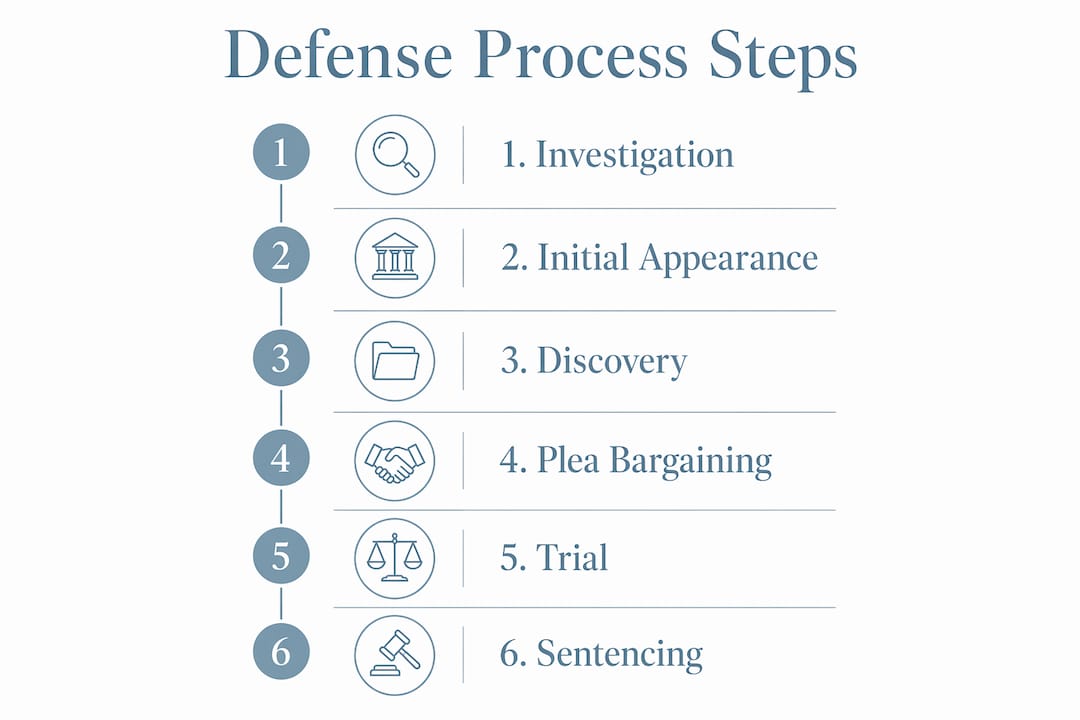
The criminal defense process is a detailed legal sequence that includes investigation, initial appearance, discovery, pretrial motions, plea negotiations, trial, and sentencing. Each stage carries specific legal obligations for both the prosecution and the defense. Constitutional protections apply at every point, from your right to remain silent at arrest to your right to appeal after conviction. Defense attorneys act as a shield against government power by identifying constitutional violations and enforcing disclosure obligations throughout. The process is not simply about what happens in a courtroom. Most of the work that determines your outcome happens before trial ever begins.
What happens immediately after an arrest in New Hampshire?
The first formal court step after arrest is the initial appearance, which must occur within 24 hours for defendants held in custody. At this hearing, a judge informs you of the charges against you and reminds you of your constitutional rights, including the right to remain silent and the right to an attorney. Bail or pretrial release conditions are also set at this stage, with the court’s goal being to secure your appearance at future proceedings.

This hearing matters more than most defendants realize. The bail decision directly affects whether you remain in custody while your case develops, which in turn affects your ability to assist your attorney, maintain employment, and manage your personal affairs. Having legal counsel present at the initial appearance protects you from making statements that could harm your case and ensures bail arguments are presented effectively.
Key rights exercised at the initial appearance include:
- The right to be informed of all charges against you
- The right to remain silent and not incriminate yourself
- The right to have an attorney appointed if you cannot afford one
- The right to request a bail hearing and argue for release
Pro Tip: Contact a criminal defense attorney before your initial appearance if at all possible. Even a brief consultation before this hearing can prevent costly mistakes and set the tone for your entire defense.
How does discovery work, and why does it matter?
Discovery is the phase where the prosecution and defense exchange evidence before trial. The prosecution carries a legal obligation to share all evidence favorable to the defense under the Brady rule, regardless of whether the defense requests it. Failure to comply with this rule can result in overturned convictions. Your attorney will review police reports, forensic test results, witness statements, and any other materials the prosecution intends to use.
This phase is where skilled defense work often produces the greatest results. Defense attorneys preserve evidence early, including surveillance footage and witness contact information, because this type of evidence is volatile and disappears quickly. New Hampshire follows open discovery rules, meaning the prosecution must provide materials in a timely manner, which gives your attorney real opportunity to build a defense before trial.
The four most impactful defense actions during discovery are:
- Reviewing all prosecution evidence for inconsistencies or gaps
- Identifying any evidence obtained through illegal searches or seizures
- Filing motions to suppress unlawfully obtained evidence
- Preserving independent evidence that supports your account
Pro Tip: Technical scrutiny of forensic evidence, including chain of custody and testing protocols, frequently creates reasonable doubt. This detail-level work is far more effective than broad challenges.
| Defense action | When it matters most |
|---|---|
| Brady disclosure demand | Immediately upon entering discovery phase |
| Motion to suppress | Before trial; timing must be precise to preserve appeal rights |
| Independent evidence collection | As early as possible after arrest |
| Forensic review | After prosecution shares lab reports and testing records |
Plea bargaining: why most cases resolve before trial
Approximately 95% of state and 98% of federal criminal convictions result from guilty pleas rather than jury trials. This statistic reflects the reality that plea negotiations, not courtroom drama, determine most outcomes. Understanding this phase is central to understanding how criminal defense works in practice.
Plea bargaining involves negotiating with the prosecution for reduced charges, lighter sentencing, or alternative resolutions such as diversion programs. Your attorney evaluates the strength of the prosecution’s evidence, the risks of going to trial, and your personal goals before advising you on any offer. This is a collaborative process, and no plea should be accepted without fully understanding the consequences.
Key facts every defendant should know about pleading guilty:
- Pleading guilty means waiving constitutional rights permanently, including the right to trial and the right against self-incrimination
- A guilty plea creates a criminal record that can affect employment, housing, and professional licenses
- Plea deals are not always the best option; a strong defense may produce a better result at trial
- The defense attorney’s role includes evaluating every plea offer against realistic trial outcomes
The myth that accepting a plea deal is always the safe or easy choice is one of the most damaging misconceptions in criminal defense. A skilled attorney weighs the specific facts of your case before recommending any resolution.
What to expect if your case goes to trial
Trials represent a small fraction of criminal cases, but when they occur, the process follows a defined structure. Jury selection, known as voir dire, comes first, followed by opening statements from both sides. The prosecution then presents its evidence and witnesses, and the defense has the right to cross-examine each one. After both sides rest, closing arguments are made before the jury deliberates.
Your rights at trial are substantial and non-negotiable. The prosecution bears the burden of proving guilt beyond a reasonable doubt. You are presumed innocent and are not required to testify or prove anything. You have the right to confront witnesses against you, to a public trial, and to a fair and impartial jury.
Possible trial outcomes include:
- A guilty verdict on all or some charges
- A not guilty verdict, resulting in acquittal
- A hung jury, where jurors cannot reach a unanimous decision
- A mistrial, declared when a procedural error compromises the proceedings
Sentencing and post-conviction options
If convicted, either by verdict or guilty plea, the case moves to a sentencing hearing. A judge may order a presentence investigation report, which examines your background, the nature of the offense, and any mitigating factors. Possible sentences include incarceration, probation, fines, community service, or alternative penalties such as treatment programs.
Conviction is not always the end of the road. Post-conviction options include:
- Filing an appeal based on legal errors that occurred during trial
- Petitioning for post-conviction relief if new evidence emerges or if counsel was ineffective
- Seeking sentence modification under certain circumstances
Appeals are not retrials and do not allow new evidence to be introduced. They review whether the law was applied correctly. Your defense attorney’s role does not end at sentencing. Continued representation through the appeals process protects your long-term rights.
Key takeaways
Effective criminal defense depends on early legal action, thorough pretrial work, and informed decision-making at every stage of the process.
| Point | Details |
|---|---|
| Early counsel is critical | Having an attorney at the initial appearance protects bail outcomes and prevents self-incrimination. |
| Discovery shapes outcomes | Brady disclosures and motions to suppress often determine case results before trial begins. |
| Plea deals dominate outcomes | 95% of state cases resolve through guilty pleas, making pretrial negotiation the most consequential phase. |
| Trial rights are strong | The prosecution must prove guilt beyond a reasonable doubt; defendants are never required to prove innocence. |
| Post-conviction options exist | Appeals and post-conviction relief petitions provide legal remedies after a verdict or guilty plea. |
Why the pretrial phase deserves your full attention
Most people facing charges focus on the trial. In my experience, that instinct misses where the real work happens. The pretrial phase, specifically discovery and motions practice, is where competent defense attorneys create the leverage that shapes every outcome that follows. I have seen cases where a single suppression motion, filed at precisely the right moment, removed the prosecution’s core evidence entirely. That is not a courtroom moment. It happens weeks or months before trial.
The defendants who fare best are not necessarily those with the most dramatic defenses. They are the ones who contacted an attorney immediately, preserved evidence before it disappeared, and worked collaboratively with counsel to build a case-specific strategy rather than a generic one. Realistic expectations matter too. Your attorney should tell you honestly what the evidence shows and what outcomes are achievable, not what you want to hear. That honesty, combined with thorough pretrial preparation, is what actually protects you.
— Rich
Talk to a New Hampshire criminal defense attorney today
Narolaw’s criminal defense team in Nashua, NH has guided clients through every stage of this process, from initial appearance through trial and appeal. Whether you are facing DUI charges, drug offenses, assault allegations, or other serious matters, early legal guidance makes a measurable difference. Narolaw handles pretrial defense, plea negotiations, trial representation, and post-conviction relief, all with strategies tailored to New Hampshire courts and your specific circumstances. Reach out to the NH criminal defense attorneys at Narolaw to schedule a free consultation and take the first step toward protecting your rights.
FAQ
What is the first step in the criminal defense process?
The first formal step is the initial appearance before a judge, which occurs within approximately 24 hours of arrest. At this hearing, you are informed of your charges, your rights, and bail conditions.
How does criminal defense work if most cases never go to trial?
Most criminal defense work happens pretrial through discovery, motions to suppress, and plea negotiations. Approximately 95% of state convictions result from guilty pleas, so the pretrial phase is where defense strategy has the greatest impact.
Can evidence be thrown out before trial in New Hampshire?
Yes. Your attorney can file a motion to suppress evidence obtained through an illegal search or seizure. If the court grants the motion, that evidence cannot be used against you at trial.
What rights do defendants have during a criminal trial?
Defendants have the right to remain silent, to confront witnesses, to a public and fair trial, and to be presumed innocent. The prosecution must prove guilt beyond a reasonable doubt.
What happens after a criminal conviction in New Hampshire?
After conviction, a sentencing hearing is held where the judge determines penalties. Defendants retain the right to appeal based on legal errors, and post-conviction relief options may be available depending on the circumstances.


