

TL;DR:
- Confirm residency and gather essential documents before filing for divorce in New Hampshire.
- Cases with minors require completing a Child Impact Program and filing specific custody and support forms.
- Organized preparation and understanding local legal requirements streamline the divorce process.
Divorce is rarely simple, and in New Hampshire, the process comes with specific legal requirements that can catch even the most prepared person off guard. Many residents feel overwhelmed by paperwork, unclear deadlines, and unfamiliar court procedures. Knowing exactly what to do and when can make a real difference in how smoothly things go. This checklist walks you through the key steps, from confirming your eligibility to organizing your documents and understanding what the court will require, so you can move forward with confidence.
Table of Contents
- Understand New Hampshire divorce eligibility requirements
- Gather essential documents and financial information
- Prepare for mandatory steps if you have minor children
- Checklist for creating your action plan
- What most NH divorce checklists miss
- Connect with New Hampshire divorce professionals
- Frequently asked questions
Key Takeaways
| Point | Details |
|---|---|
| NH residency is flexible | You can qualify to file for divorce in New Hampshire through several residency options. |
| Specific steps for parents | Divorces with minor children require court-mandated programs and forms unique to NH. |
| Organize documents early | Gathering personal, financial, and property information up front will streamline your divorce. |
| Checklists prevent errors | A clear action plan tailored to NH law helps avoid costly mistakes and delays. |
Understand New Hampshire divorce eligibility requirements
Before you file a single document, you need to confirm that you meet New Hampshire’s legal requirements to file for divorce. This step is often skipped or misunderstood, and it can cause costly delays if you get it wrong.
New Hampshire uses the concept of domicile, which means more than just living somewhere. Domicile means you live in New Hampshire and intend it to be your permanent home. Simply staying in the state temporarily does not qualify. When filing for divorce in New Hampshire, you must meet at least one of the following residency conditions:
- Both spouses are domiciled in New Hampshire
- The petitioner (the person filing) has lived in NH for at least one year prior to filing
- The petitioner lives in NH and the other spouse can be served with divorce papers there
These options come directly from RSA 458:5, giving you flexibility depending on your circumstances.
Important: One common mistake is confusing legal separation with divorce. Legal separation does not end the marriage, but it does establish court-ordered arrangements for finances and children. If you are unsure which path fits your situation, speaking with an attorney early can save you time.
Another point worth noting: you do not have to have been married in New Hampshire to file here. If you were married in another state but now meet NH residency requirements, you can still file. Learn more about NH divorce if married elsewhere to understand how this works.
Residency documentation mistakes are among the most common early errors. Keep records like lease agreements, utility bills, and voter registration to support your domicile claim.
Gather essential documents and financial information
Having clarified eligibility, your next step is to gather and organize key documents. New Hampshire divorce rates sit around 2.5 per 1,000 residents, with a median marriage duration of 22.6 years before divorce. That means most couples have accumulated significant shared financial history that needs to be carefully documented.
Here is a numbered list of the essential documents you will need:
- Recent pay stubs and proof of income for both spouses
- Federal and state tax returns from the past two to three years
- Bank and investment account statements
- Property deeds and mortgage statements
- Vehicle titles and loan documents
- Retirement account statements (401k, IRA, pension)
- Life and health insurance policies
- Outstanding debt statements (credit cards, loans)
- Business ownership documents, if applicable
- Prenuptial or postnuptial agreements
Proper documentation does two things. It speeds up attorney review and protects your financial interests during negotiations. Missing records can delay proceedings or result in settlements that do not fully reflect your situation. Reviewing divorce mistakes to avoid can help you steer clear of the most common pitfalls at this stage.
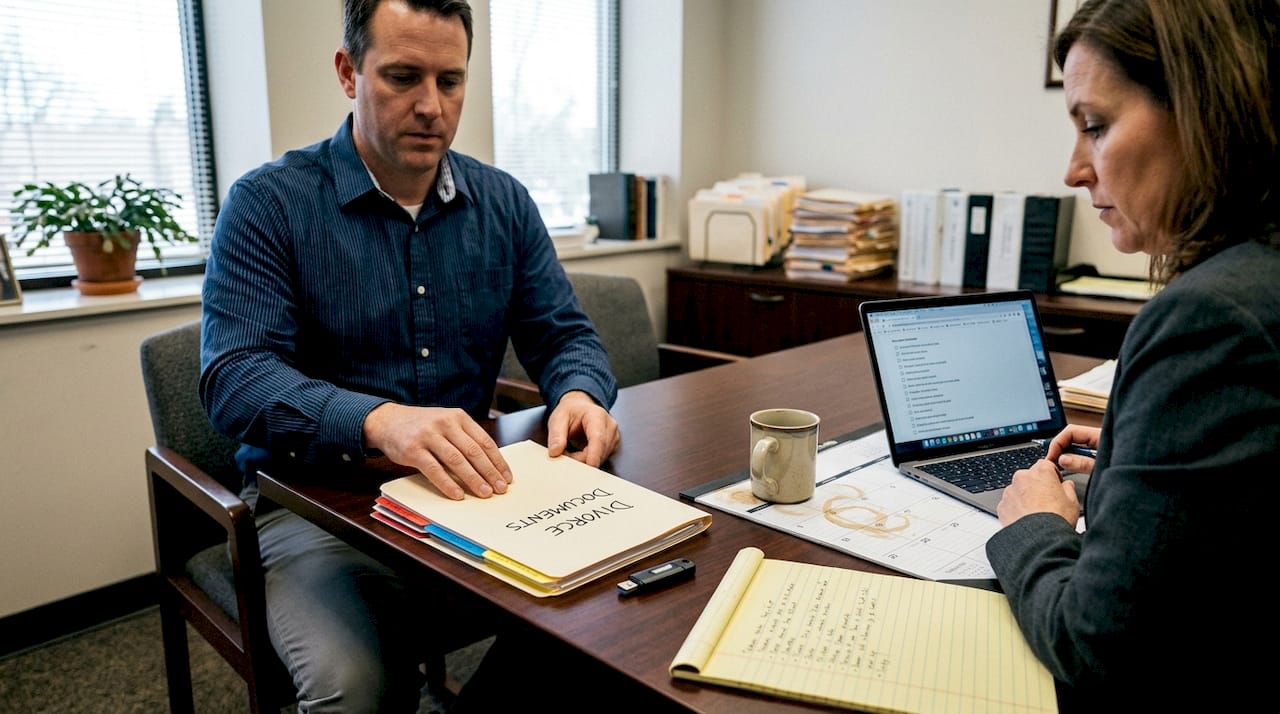
Pro Tip: Create a dedicated physical folder and a secure digital folder for all divorce-related documents. Label everything clearly with dates and account numbers. This single habit will save hours when preparing for your divorce consultation and throughout the entire process.
Organization matters more than most people expect. Attorneys bill by the hour, so arriving prepared with sorted, labeled documents directly reduces your legal costs.
Prepare for mandatory steps if you have minor children
If children are involved, there are extra steps you will need to complete early in the process. New Hampshire courts treat cases involving minor children differently, and missing these requirements can stall your case.
The most significant requirement is the Child Impact Program, a mandatory 4-hour program costing $85 per parent that must be completed within 45 days of receiving court notice (RSA 458-D). This program covers how divorce affects children and how parents can support them through the transition.
Here is a comparison of what is required with and without minor children:
| Requirement | Without minor children | With minor children |
|---|---|---|
| Child Impact Program | Not required | Required within 45 days |
| First Appearance | Standard timeline | Within 30 days |
| Parenting Plan (NHJB-2064-F) | Not required | Required |
| Child Support Worksheet | Not required | Required |
Additional steps for cases with children include:
- Filing a Parenting Plan that outlines custody and visitation
- Completing a Child Support Worksheet based on both parents’ incomes
- Attending the First Appearance hearing within 30 days
Reviewing the parental rights checklist helps ensure nothing is missed. Understanding the importance of parenting plans is also valuable, as courts look closely at how well parents have thought through day-to-day arrangements. If support calculations concern you, New Hampshire’s 2025 child support calculation laws include notable updates worth reviewing.
Checklist for creating your action plan
With documents and requirements in hand, pull everything together into an actionable game plan. New Hampshire’s median marriage duration before divorce is 22.6 years, which means most people entering the process have complex financial and personal histories to untangle. A phased approach keeps things manageable.
| Phase | Key actions | Watch out for |
|---|---|---|
| Pre-filing | Confirm residency, gather documents, consult attorney | Missing domicile proof |
| Filing | Submit petition, serve spouse, pay filing fee | Incorrect forms or missing signatures |
| Active case | Attend hearings, complete required programs | Missing Child Impact Program deadline |
| Settlement | Negotiate terms, review agreement carefully | Agreeing to terms without legal review |
| Post-filing | File final decree, update accounts and beneficiaries | Forgetting to update insurance or retirement accounts |
Pro Tip: Set calendar reminders for every court deadline the moment you receive notice. NH courts do not typically offer grace periods for missed program deadlines or hearing dates.
A few best practices to keep stress manageable:
- Keep all communication with your spouse in writing when possible
- Avoid making major financial decisions (large purchases or transfers) during the process
- Prioritize your mental health during divorce, as stress affects decision-making
- If both parties agree on major issues, explore whether an uncontested divorce is an option, as it is typically faster and less costly
Staying organized and proactive at each phase reduces surprises and keeps the process moving forward.
What most NH divorce checklists miss
Most divorce checklists focus entirely on paperwork, and while documents matter, they tell only part of the story. What often gets overlooked is the emotional dimension of the process. Decisions made under stress are rarely your best ones, and courts notice when parties are reactive rather than prepared.
Local family law experience also changes outcomes in ways that generic advice cannot account for. New Hampshire courts have specific expectations, and an attorney familiar with local judges and procedures brings real practical value. Equally important is starting post-divorce planning early, including new budgets, co-parenting communication strategies, and updated estate plans. Protecting your mental health throughout divorce is not a soft concern. It is a strategic one.
Connect with New Hampshire divorce professionals
Ready to put your plan in motion? Navigating New Hampshire’s divorce process is far less stressful when you have experienced guidance from the start. Naro Law’s family law services are designed to support you at every stage, from confirming eligibility to finalizing your agreement. Our NH divorce attorneys offer personalized strategies and free consultations so you can understand your options before making any decisions. Reach out today to schedule your consultation and take the first confident step forward.
Frequently asked questions
How long must you live in NH before filing for divorce?
You must have lived in New Hampshire for at least one year, or meet one of the other residency options under RSA 458:5, such as both spouses being domiciled in NH or the spouse being served in NH.
Is the Child Impact Program mandatory for all NH divorces?
The 4-hour Child Impact Program is required only for divorces involving minor children and must be completed within 45 days of receiving court notice under RSA 458-D.
What are the major financial documents needed for divorce in NH?
Essential documents include recent pay stubs, federal tax returns, property deeds, insurance policies, retirement account statements, and outstanding debt records, as couples in NH have a median marriage of 22.6 years before divorcing, meaning significant shared assets are common.
Can you file for divorce in NH if you married in a different state?
Yes, as long as you meet New Hampshire’s residency requirements under RSA 458:5, you can file in New Hampshire even if your marriage took place in another state.


