

TL;DR:
- Domestic violence in New Hampshire includes physical, emotional, sexual, financial abuse, and stalking.
- Legal protections like protection orders have been strengthened, with recent privacy and review reforms.
- Survivors should seek immediate help, contact crisis centers, document abuse, and get legal support.
In 2023, New Hampshire crisis centers served 11,805 victims of domestic and sexual violence, a number that speaks to both the scale of the problem and the courage it takes to ask for help. Yet many survivors still feel uncertain about where to turn, what the law actually protects, and whether help will be there when they need it. This article breaks down what domestic violence means under New Hampshire law, the protections available to you, and the practical steps you can take to access safety and support right now.
Table of Contents
- Understanding domestic violence in New Hampshire
- Legal protections and recent reforms
- Navigating the process: reporting, support, and accessing services
- Recent high-profile cases and ongoing challenges
- Why legal reform isn’t enough: what New Hampshire’s response really shows
- Get legal support for domestic violence cases in New Hampshire
- Frequently asked questions
Key Takeaways
| Point | Details |
|---|---|
| DV cases are prevalent | Domestic violence accounts for a large share of serious crimes and homicides in New Hampshire. |
| Legal protections expanded | Recent reforms and court rulings have strengthened privacy and protection for survivors. |
| Resources can be limited | Shelters and support centers face strains, making early intervention important. |
| New systemic reforms | Committees and new legislation are addressing gaps in the response to DV cases. |
| Seek help early | Immediate access to confidential hotlines and legal advice can be life-saving. |
Understanding domestic violence in New Hampshire
Domestic violence is not limited to physical harm. Under New Hampshire law, the definition of domestic violence includes physical assault, sexual abuse, emotional manipulation, financial control, and stalking when committed by a household member, intimate partner, or family member. This broad definition matters because many survivors question whether their experience “counts.” It does.
The forms domestic violence can take include:
- Physical abuse: hitting, kicking, restraining, or any use of physical force
- Emotional abuse: threats, humiliation, isolation, and coercive control
- Sexual abuse: any non-consensual sexual contact or coercion
- Financial abuse: controlling access to money, sabotaging employment, or accumulating debt in a partner’s name
- Stalking: repeated surveillance, contact, or harassment designed to cause fear
The numbers in New Hampshire paint a stark picture. According to crisis center statistics, demand for services continues to exceed capacity in many regions of the state. Most alarmingly, 9 out of 10 homicides investigated by the NH Attorney General in 2024 were domestic violence related. That figure rose sharply from an already troubling baseline: more than 50% of all AG homicides between 2009 and 2023 were connected to domestic situations.
| Year range | DV-related AG homicides |
|---|---|
| 2009 to 2023 | More than 50% |
| 2024 | 9 out of 10 |
These statistics are not abstract. They represent real people in New Hampshire communities, which is why understanding your rights and the available legal tools is so important.
Legal protections and recent reforms
Knowing that the law is on your side can make a meaningful difference when you are trying to decide whether to act. New Hampshire offers several layers of legal protection for domestic violence survivors, and recent court decisions have made those protections stronger.
Protection orders are one of the most immediate tools available. A civil protective order, sometimes called a restraining order, can prohibit an abuser from contacting you, entering your home, or coming near your workplace or your children’s school. Emergency orders can be issued quickly, even outside of regular court hours, providing immediate relief before a full hearing is scheduled. Criminal no-contact orders may also be issued when an abuser is arrested and charged.
| Type of protection | Who issues it | Key feature |
|---|---|---|
| Civil protective order | Family or district court | Covers contact, residence, custody |
| Emergency order | On-call judge | Issued same day, rapid response |
| Criminal no-contact order | Criminal court | Tied to criminal case proceedings |
A landmark 2025 ruling by the New Hampshire Supreme Court added important privacy protections for survivors. The court held that DV victims’ crisis center records are protected by the constitutional right to privacy under Article 2-b of the NH Constitution, meaning strict scrutiny must be applied before those records can be disclosed. This ruling matters because defense attorneys in criminal cases sometimes seek access to communications between victims and their advocates. That information is now far harder to obtain.
Recent legislative reforms have also addressed systemic gaps. A new Domestic Violence Fatality Review Committee, established through SB 140 in 2025, was created to examine domestic violence deaths, identify patterns, and recommend improvements to the system. Lethality assessments, which are standardized tools used by law enforcement to gauge the risk level in a situation, have also been expanded across more agencies.
“The greatest protection the law can offer is only as effective as the systems that enforce it. Recent reforms represent meaningful progress, but survivors should know that legal rights and lived experience do not always align perfectly.”
Pro Tip: If you are unsure whether you qualify for a protection order, consult with an attorney before approaching the court alone. Many legal aid organizations in NH offer free initial guidance, and you can also review your protection order options to understand what fits your situation.
Survivors also have victims’ legal rights under state law, including the right to be notified of hearings and proceedings, the right to speak at sentencing, and the right to seek restitution.
Navigating the process: reporting, support, and accessing services
Taking that first step toward safety can feel overwhelming, especially when you are unsure of what will happen next. Breaking it down into clear stages makes the path more manageable.
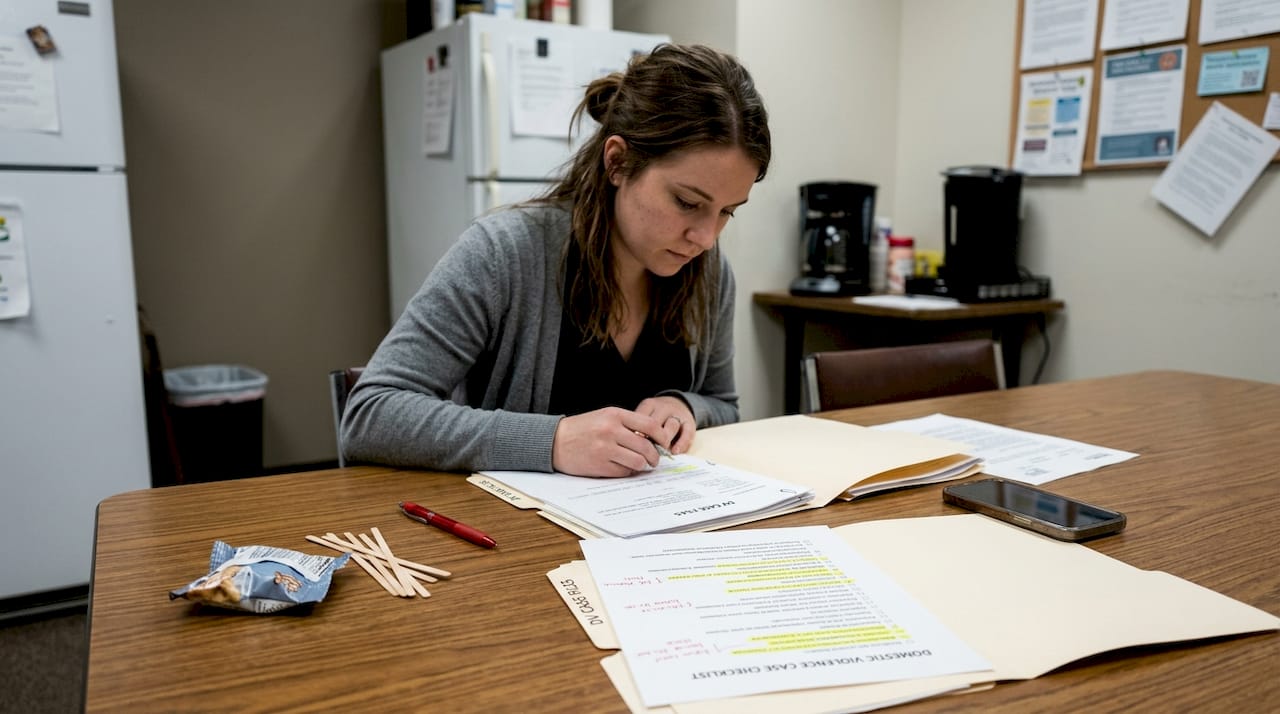
Step 1: Get to safety. If you are in immediate danger, call 911. Law enforcement is required to respond to domestic violence calls as a priority, and officers are trained to conduct lethality assessments on scene.
Step 2: Contact a crisis center. New Hampshire has 12 regional crisis centers operated through NHCADSV. The 24/7 statewide hotline is 1-866-644-3574. Calls are confidential. Advocates can help you create a safety plan, understand your options, and accompany you to court if needed.
Step 3: Seek legal assistance. NH Legal Assistance offers free civil legal aid to low-income individuals in domestic violence situations. Private attorneys, including those who specialize in family law, can also represent you in protective order hearings and related proceedings.
Step 4: Document the abuse. Keep records of incidents, including dates, descriptions, photos of injuries, and screenshots of threatening messages. This documentation strengthens any legal action you pursue.
Step 5: Connect to long-term support. Crisis centers offer not only emergency shelter but also counseling, children’s programs, and help finding permanent housing. Recovery is a process, and these services are designed to support you through it.
Pro Tip: If resources feel stretched or you are told a shelter is full, ask the crisis center about alternative placements or safety planning in your current location. Advocates are trained to find options even when primary resources are unavailable.
The reality is that resource strain is a documented national and state-level challenge. Knowing this in advance helps you persist through any initial barriers rather than interpret a full shelter as a closed door.
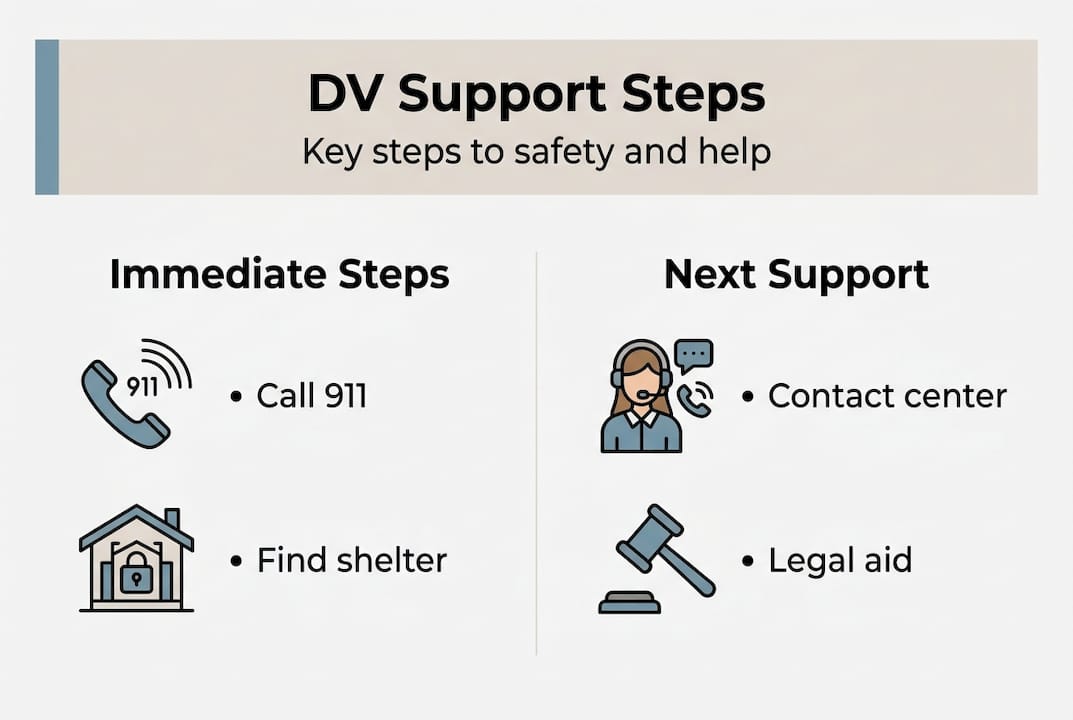
Understanding the arrest process and what immediate help looks like after an incident can also reduce uncertainty at a particularly stressful moment.
Recent high-profile cases and ongoing challenges
Real cases expose where the system works and where it fails. One of the most discussed examples in New Hampshire is the murder of Marisol Fuentes Huaracha, a case that revealed serious information-sharing failures despite an active protective order being in place. She was killed even though legal protections had been obtained, highlighting a gap between the protection a court order provides on paper and the protection it delivers in practice.
Key systemic issues that emerged from this and similar cases include:
- Poor inter-agency communication: Law enforcement, courts, and social services often operate in separate silos, meaning critical information about a case does not always reach the right people in time.
- Controversial plea deals: Some cases resulted in reduced charges that failed to reflect the true danger posed by the offender.
- Inconsistent firearm surrender: Court orders requiring abusers to surrender weapons are not always enforced with speed or consistency.
- Shelter capacity limits: On a single census day, NH programs served 338 victims and turned away 10 due to lack of capacity.
In response to these failures, the Domestic Violence Fatality Review Committee established by SB 140 in 2025 is designed to review deaths, identify the specific breakdowns that occurred, and produce actionable recommendations. Lethality assessments have been expanded. Advocates are pushing for stronger firearm surrender enforcement and better cross-agency data sharing.
Understanding how violent crimes and system response interact is essential context when navigating the NH legal landscape, especially when you are evaluating whether a court order alone is enough to keep you safe.
Why legal reform isn’t enough: what New Hampshire’s response really shows
Legal reform matters deeply. But here is what years of cases and advocacy make clear: a new law does not automatically change behavior on the ground. The gap between written protection and real-world safety is filled, or left open, by how quickly systems communicate, how consistently orders are enforced, and how much support a survivor has from the people around them.
The current legal landscape in New Hampshire reflects genuine progress. The 2025 Supreme Court privacy ruling and the new fatality review process are meaningful wins. But survivors should enter the system with clear eyes: legal tools are most powerful when paired with survivor-centered advocacy, strong community networks, and attorneys who actively protect your rights throughout the process.
Get legal support for domestic violence cases in New Hampshire
If you or someone you care about is facing a domestic violence situation, connecting with experienced legal counsel is one of the most protective steps you can take. Naro Law provides confidential consultations for individuals navigating domestic violence attorneys services and related family law matters across New Hampshire. Understanding your rights early gives you more options. Whether you need guidance on protective orders, custody implications, or criminal defense, our team is ready to help you move forward with clarity and confidence. Explore our family law services in NH to learn more about how we can support your situation.
Frequently asked questions
What immediate steps should I take if I’m a victim of domestic violence in New Hampshire?
Call the 24/7 statewide hotline at 1-866-644-3574 to reach a confidential advocate who can help with safety planning, shelter, and court accompaniment through one of 12 regional crisis centers.
What legal protections are available for domestic violence survivors in New Hampshire?
Survivors can request civil protective orders, emergency orders, and criminal no-contact orders, and a 2025 Supreme Court ruling now protects their communications with crisis center advocates from disclosure.
Are resources for shelter and support always available in NH?
Not always. On a single census day, NH crisis programs served 338 victims and had to turn away 10 due to insufficient capacity, so persistence and advocacy help when initial resources are strained.
What recent changes have improved protections for victims?
The Domestic Violence Fatality Review Committee established in 2025 and the new constitutional privacy protections for crisis center records represent the most significant recent advances in survivor protection.
Does the legal system always protect victims effectively?
Not consistently. Cases like the Marisol Fuentes Huaracha murder show that protective orders can fail when information-sharing gaps, inconsistent enforcement, and resource shortages interfere with real-world protection.


