

TL;DR:
- New Hampshire’s domestic violence laws cover a wide range of abusive behaviors beyond physical assault.
- Protective orders are accessible, can be granted quickly, and last up to one year with renewal options.
- Victims should document violations, seek advocate support, and call law enforcement if their order is broken.
New Hampshire’s domestic violence laws are more accessible than many victims realize. If you’ve been told that getting legal protection is complicated, expensive, or out of reach, that assumption deserves a closer look. This guide walks you through what qualifies as domestic violence under state law, how to obtain a protective order, what that order actually covers, and where to find real support. Whether you’re in an immediate crisis or trying to understand your options, the information here is designed to give you clarity and a clear path forward.
Table of Contents
- What counts as domestic violence under New Hampshire law
- How protective orders work in New Hampshire
- What protection orders cover and how enforcement works
- Essential safety strategies and legal resources for victims
- Why strong domestic violence laws still fall short in New Hampshire
- Get legal support for your safety and peace of mind
- Frequently asked questions
Key Takeaways
| Point | Details |
|---|---|
| Domestic violence broadly defined | New Hampshire law covers a wide range of relationships and abusive actions including indirect contact. |
| Protective orders are accessible | You can file for a protective order without fees or criminal charges, and get temporary protection. |
| Enforcement has limits | Even with orders in place, system gaps mean victims must combine legal tools with strong safety plans. |
| Resources and help are available | Hotlines, advocates, and free self-help legal guides can support you through each step. |
What counts as domestic violence under New Hampshire law
Under New Hampshire law, domestic violence is not limited to physical assault. The legal definition of domestic violence covers a range of abusive conduct, including threats, stalking, harassment, sexual assault, and destruction of property. The law focuses on the nature of the relationship between the parties as much as the act itself.
New Hampshire’s RSA 173-B defines abuse as conduct occurring between family or household members, which includes:
- Current or former spouses and intimate partners
- Co-parents, regardless of marital status
- People who currently live together or have lived together
- Individuals related by blood or marriage
- Victims of stalking, even without a prior relationship
This broad definition means many people who don’t think of themselves as victims of “domestic violence” may still qualify for legal protection. The scope is intentionally wide to account for the many forms abuse takes.
The scale of the problem in New Hampshire is significant. Consider this:
33.4% of New Hampshire women have experienced intimate partner violence, and recent Attorney General reports have linked a majority of homicides to domestic violence situations.
These numbers reflect why the law is structured to make access to protection as straightforward as possible.
How protective orders work in New Hampshire
Once you know your situation may qualify, the next step is understanding exactly how New Hampshire’s protective order process works and what each type offers.
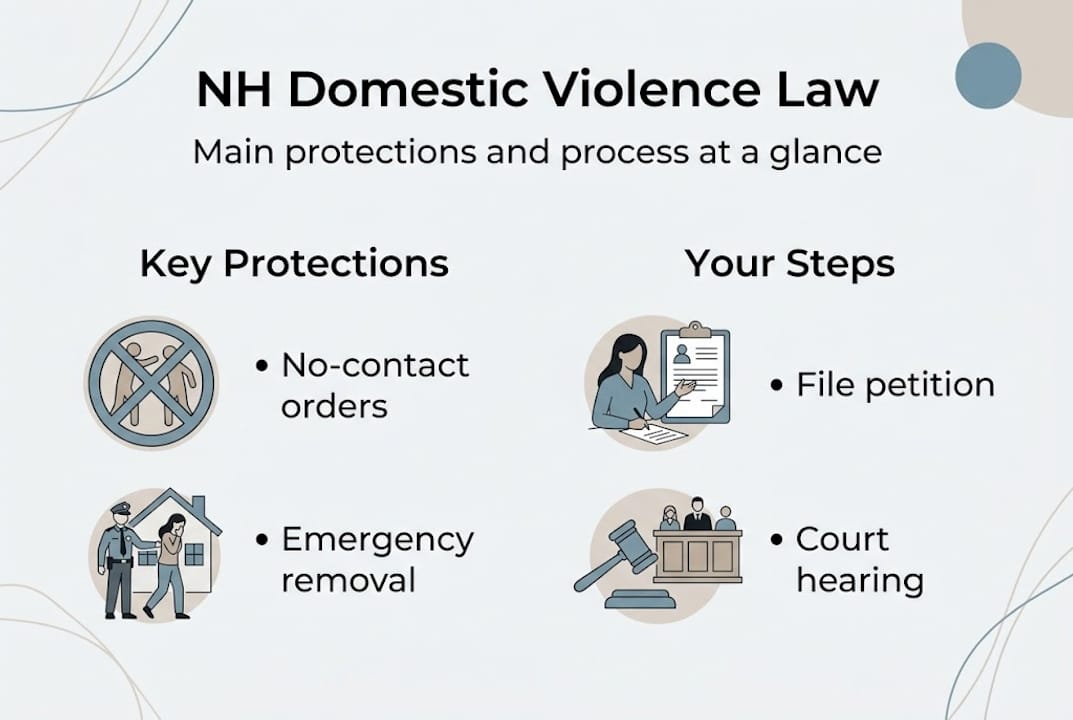
Here is a step-by-step overview of the process:
- File a petition at your local Circuit Court. There is no filing fee.
- A judge reviews your petition the same day or the next business day and may issue a temporary order.
- A hearing is scheduled, typically within 30 days, where both parties can present evidence.
- A final order may be issued based on the preponderance of evidence standard, meaning it is more likely than not that abuse occurred.
No criminal charge is required to obtain a protective order. The civil and criminal systems operate independently.
| Order type | When issued | Duration |
|---|---|---|
| Temporary (ex parte) | Before the hearing, based on your petition alone | Until the hearing date |
| Final protective order | After the hearing, with both sides heard | Up to one year, renewable |
Understanding how protective orders work and what the restraining order steps involve can reduce anxiety about the process considerably. You also have victim notification rights throughout the proceedings.
Pro Tip: Bring printed copies of texts, emails, voicemails, photos of injuries, and any witness names to your hearing. Judges weigh concrete evidence heavily, and organized documentation can make a meaningful difference in the outcome.
What protection orders cover and how enforcement works
With a basic understanding of how the process works, it’s important to know exactly what a granted order will cover and what it cannot guarantee.
A protective order in New Hampshire can require the abuser to:
- Stay away from your home, workplace, and children’s school
- Have no direct or indirect contact with you
- Surrender firearms
- Vacate a shared residence
- Pay temporary support in some cases
One important and often overlooked point: indirect social media posts that are clearly directed at a protected person can constitute a violation of the order, even if the abuser never contacts you directly. New Hampshire courts have interpreted “contact” broadly.
Orders generally last up to one year and can be renewed before they expire. Review the differences between emergency vs final restraining orders to understand the protections available at each stage.
Common enforcement challenges include:
- Delays in law enforcement response in rural areas
- Difficulty proving indirect contact violations
- Abusers who relocate frequently to avoid service
- Victims who feel unsafe reporting violations out of fear of retaliation
Pro Tip: Keep a written log of every violation with dates, times, and descriptions. Screenshot social media posts immediately, since they can be deleted quickly. This documentation supports both 911 calls and future court hearings.
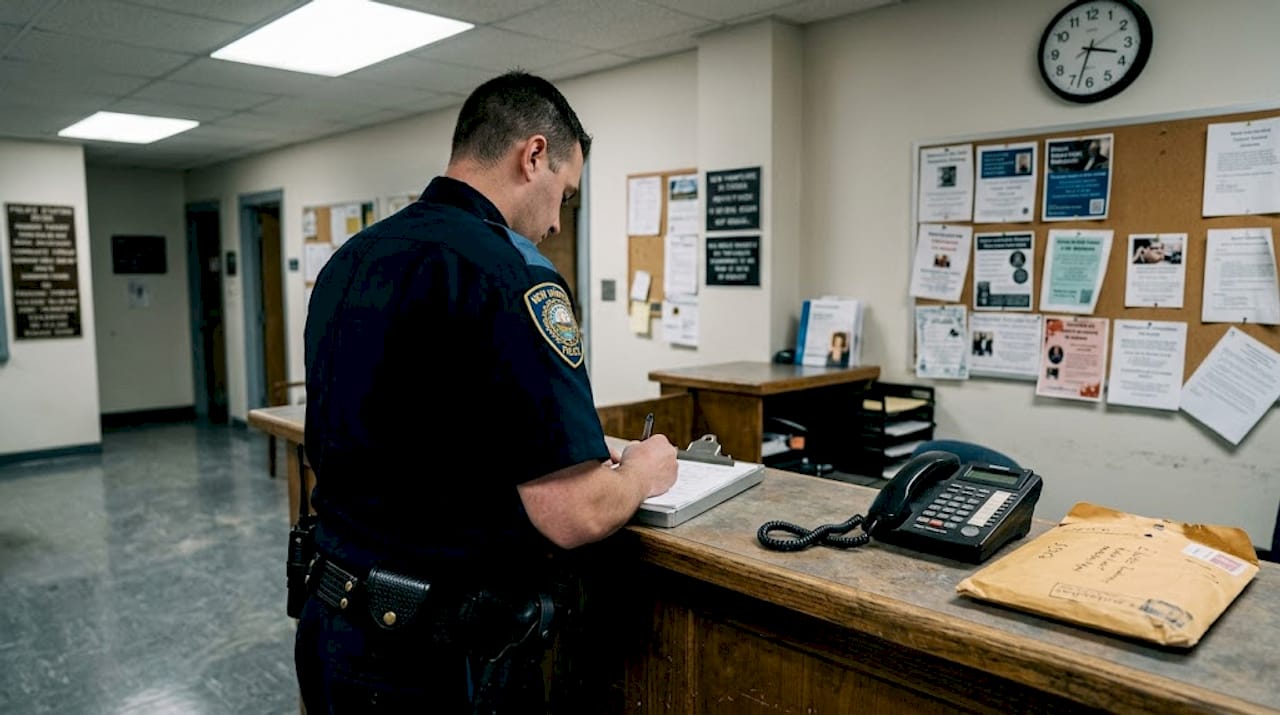
If a violation occurs, call 911. Law enforcement is authorized to arrest an abuser for violating a protective order without a separate warrant. Knowing your domestic violence protections helps you act quickly and confidently.
Essential safety strategies and legal resources for victims
Even with an order in place, victims need a practical plan and resources. Here’s how to protect yourself and get real help.
Documentation is your foundation. Save every threatening text, email, and voicemail. Photograph injuries as soon as possible, ideally with a timestamp. Note dates and witnesses for any incidents. This record supports both your petition and any future enforcement actions. Protection orders don’t require a criminal charge, but strong documentation makes the civil case far more persuasive.
Working with a domestic violence advocate is one of the most practical steps you can take. Advocates help you navigate court paperwork, connect you with shelter resources, and assist with safety planning at no cost.
Key resources available to you right now:
- NH Coalition Against Domestic and Sexual Violence (NHCADSV): Call 1-866-644-3574 for 24/7 support
- NH Circuit Court Self-Help Center: Free assistance with forms and filing
- WomensLaw.org legal self-help resources: Plain-language legal guidance specific to New Hampshire
- 911: Always appropriate when you feel unsafe or an order is violated
Pro Tip: Before leaving an unsafe situation, prepare a bag with essential documents: ID, Social Security card, financial records, medication, and copies of your protective order. Store it somewhere accessible or with a trusted person.
For ongoing guidance, reviewing resources on support with protection orders and understanding domestic violence can help you stay informed at every stage.
Why strong domestic violence laws still fall short in New Hampshire
New Hampshire has made real progress. The legal framework is more accessible, more inclusive, and more protective than it was even a decade ago. But progress on paper does not always translate to safety in practice.
Advocates and legal professionals continue to push for better enforcement and system reforms because fatalities still occur even when orders are in place. Defense attorneys, for their part, raise valid concerns about the risk of false claims in contested cases. Both perspectives deserve honest acknowledgment.
The practical wisdom here is this: a protective order is a powerful legal tool, but it is not a physical barrier. Pairing it with a personal safety plan, consistent documentation, and trusted support contacts gives you the strongest possible position. The law can protect you. Using it fully requires follow-through on your part as well.
Get legal support for your safety and peace of mind
Understanding your rights is the first step. Taking action is the next. If you or someone you care about is navigating a domestic violence situation in New Hampshire, working with an experienced attorney can make a critical difference in how your case unfolds. A knowledgeable attorney can help you file correctly, prepare for hearings, and protect your long-term interests. Review this New Hampshire family law guide to understand the broader legal landscape, or speak with a family law attorney at Naro Law to discuss your specific situation.
Frequently asked questions
How do I file for a protective order in New Hampshire?
File a petition at your local Circuit Court; a judge will review it for a temporary order and then schedule a hearing where both sides present evidence.
How long does a final protective order last in NH?
Final protective orders last up to one year and can be renewed before they expire if continued protection is needed.
Is a criminal charge required to get a protective order?
No. A protective order is a civil remedy, and no criminal charges are needed to apply for or receive one.
What should I do if a protection order is violated?
Call 911 immediately and document the violation with dates and details. Law enforcement can arrest the abuser without a separate warrant when a protective order is violated.


