

TL;DR:
- First-time drug offenses in New Hampshire vary by substance, with marijuana under 3/4 ounce resulting in only a civil fine.
- For other drugs, charges can escalate from misdemeanors to felonies, carrying significant fines and jail time.
A first-time drug offense in New Hampshire is defined as a criminal or civil violation involving controlled substances with no prior drug conviction on record. The first time offenders guide for drug charges in NH covers everything you need to know: how offenses are classified, what penalties apply, and what alternatives exist to a full conviction. New Hampshire law treats marijuana possession very differently from other controlled substances, and the distinction matters enormously for your case outcome.
What penalties do first-time drug offenders face in NH?
New Hampshire classifies drug offenses by substance type, schedule, and quantity. The classification determines whether you face a civil fine, a misdemeanor, or a felony charge.
For marijuana, the rules are relatively forgiving at low quantities. Adults 21 and older caught with 3/4 oz or less face only a civil violation and a $100 fine for a first or second offense within three years. No arrest, no criminal record. However, possession over 3/4 oz becomes a misdemeanor with fines and up to one year in jail. Possession over one ounce escalates to felony exposure under manufacturing and distribution statutes.
For other controlled substances, the stakes are higher from the start. Penalties for first-time possession range from fines up to $2,000 and jail up to three years for misdemeanors, to felony charges carrying 3–7 years imprisonment and fines exceeding $25,000, depending on drug schedule and amount.
| Drug Type | Amount | Charge Level | Potential Penalty |
|---|---|---|---|
| Marijuana | Up to 3/4 oz | Civil violation | $100 fine |
| Marijuana | 3/4 oz to 1 oz | Misdemeanor | Fines, up to 1 year jail |
| Marijuana | Over 1 oz | Felony | Felony-level exposure |
| Schedule I/II substances | Any possession | Misdemeanor to felony | $350–$25,000+ fines; 60 days–7 years |
- Drug schedule (I through V) directly affects charge severity
- Quantity is the single biggest factor in escalating a charge from misdemeanor to felony
- Prior offenses, even minor ones, can shift a charge upward
Pro Tip: Courts may waive fines for a first marijuana offense if you complete a substance abuse assessment and treatment program. This is not guaranteed, but it is worth discussing with your attorney.
How can first-time offenders qualify for alternative sentencing in NH?
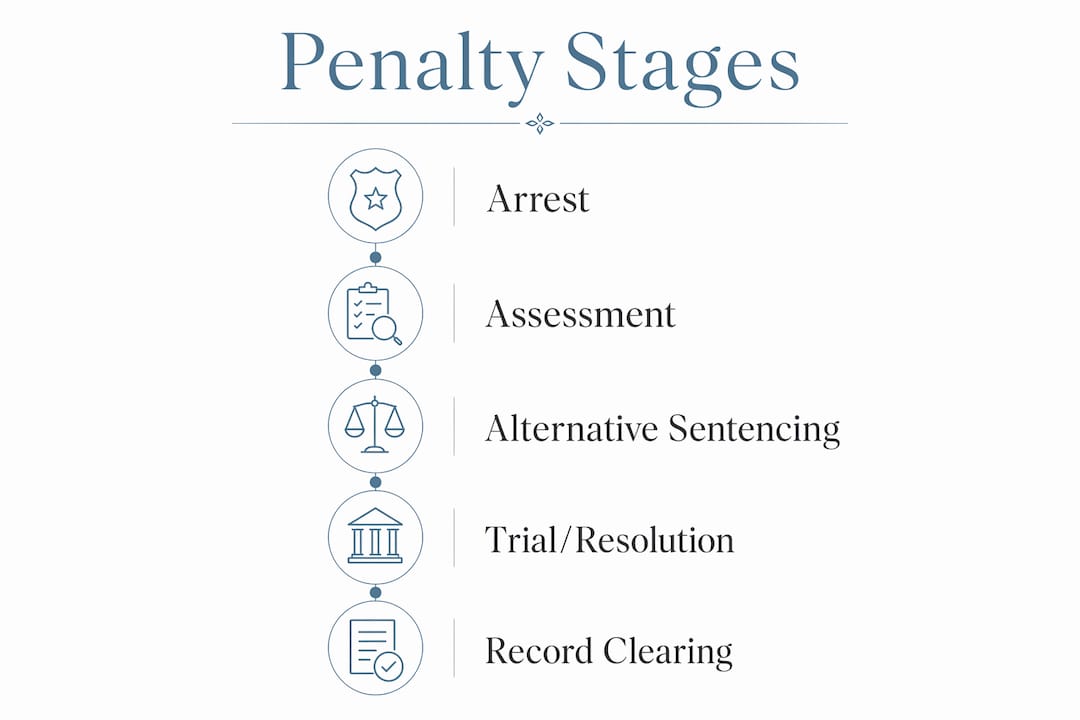
Alternative sentencing is one of the most important options available to first-time drug offenders in New Hampshire. Drug court programs operate in Hillsborough, Merrimack, Rockingham, and Strafford Counties, combining judicial supervision with community-based treatment to reduce recidivism and protect public safety.

These programs exist because New Hampshire courts recognize that treatment over incarceration produces better long-term outcomes for non-violent offenders. Completing a drug court program can mean avoiding a conviction entirely.
General eligibility criteria for alternative sentencing include:
- No prior major drug trafficking convictions
- Residence within the county where the program operates
- The offense must have occurred within that same jurisdiction
- Willingness to participate in treatment and comply with court supervision
- No pending violent criminal charges
Other options beyond drug court include pretrial diversion, deferred sentencing, and probation with mandatory counseling. Each program has its own conditions, timelines, and completion requirements. The NH Judicial Branch treatment courts page lists current program availability by county.
Pro Tip: Eligibility is highly location-specific. Missing a residency requirement is one of the most common reasons defendants are denied program access. Confirm your county’s requirements before assuming you qualify.
What steps should you take after a drug arrest in NH?
The actions you take in the days immediately following an arrest directly affect your case outcome. First-time drug offenders often make avoidable mistakes by waiting too long to act or by misunderstanding their rights.
- Hire an experienced criminal defense attorney immediately. Skilled legal counsel is critical to preventing harsher penalties and gaining access to alternative sentencing programs. Do not wait until your court date.
- Understand your rights during police encounters. You have the right to remain silent and the right to an attorney. Exercise both. Statements made at the scene can be used against you.
- Document everything accurately. Write down the details of your arrest as soon as possible, including what was said, what was searched, and the sequence of events. This information helps your attorney build your defense.
- Consider a drug offender education program. Online, self-paced courses cover legal consequences, health effects, and responsible decision-making. Completing one voluntarily can demonstrate good faith to the court.
- Ask your attorney about record annulment. After sentencing conditions are met, you may be eligible to pursue annulment. Planning for this from the start helps you meet the requirements efficiently.
Pro Tip: Be fully open with your attorney about every detail of your case, including facts that feel embarrassing or incriminating. Attorney-client privilege protects everything you share. Incomplete information leads to weaker defense strategies.
For a deeper look at your rights during police encounters, the Narolaw guide on police car searches in NH is a practical starting point.
How do drug charges affect your future, and can you clear your record in NH?
A drug conviction in New Hampshire carries consequences that extend well beyond the courtroom. Felony convictions affect employment, housing applications, professional licensing, and federal financial aid eligibility. Misdemeanor convictions are less severe but still appear on background checks.
The good news is that New Hampshire law provides a path to annulment. After approximately two years, most first-time drug possession convictions qualify for annulment if all sentencing conditions have been met and no new offenses have occurred. Annulment effectively seals the record from public view.
Key points about record clearing in NH:
- The two-year waiting period begins after the sentence is fully completed, including probation
- Annulment is not automatic. You must petition the court
- Certain felony convictions may face additional restrictions on eligibility
- Alternative sentencing that avoids conviction entirely eliminates the need for annulment
- Completing drug court or diversion programs is the fastest path to a clean record
Rebuilding after a drug charge takes time, but the legal tools exist. Connecting with a drug possession defense attorney early gives you the best chance of minimizing long-term damage.
Key Takeaways
First-time drug offenders in New Hampshire have real legal options, but acting quickly and understanding the specific rules for your county and substance type is what determines the outcome.
| Point | Details |
|---|---|
| Marijuana vs. other substances | Marijuana under 3/4 oz is a civil fine; other controlled substances carry misdemeanor or felony charges. |
| Alternative sentencing availability | Drug courts in Hillsborough, Merrimack, Rockingham, and Strafford Counties offer treatment-based alternatives to conviction. |
| Residency rules matter | Program eligibility depends on where you live and where the offense occurred. Missing this disqualifies you. |
| Annulment is possible | Most first-time possession convictions qualify for annulment after a two-year waiting period. |
| Legal counsel is the first step | Hiring an attorney immediately after arrest is the single most effective action you can take. |
What I’ve learned from watching first-time offenders navigate NH drug charges
The biggest mistake I see first-time offenders make is assuming the system will go easy on them automatically. It does not. The leniency that exists in New Hampshire drug law, and there is genuine leniency for first offenders, is not automatic. You have to know where to look, meet specific eligibility criteria, and have someone in your corner who understands the county-by-county differences.
The second misconception is that marijuana charges are always minor. A civil fine for a small amount is genuinely low-stakes. But the moment quantity crosses a threshold, you are looking at misdemeanor or felony exposure that can follow you for years. Quantity matters more than most first offenders realize.
What gives me confidence in the NH system is the genuine commitment to treatment over punishment for non-violent offenders. Drug courts work. The data supports it, and the outcomes I have seen reflect it. But you have to qualify, and qualification is not guaranteed. Residency rules, offense location, and charge type all factor in. The opioid crisis has shaped how NH courts approach drug offenses, and understanding that context helps you see why early engagement with the legal system, rather than avoidance, is always the right move.
— Rich
Narolaw’s criminal defense support for first-time drug offenders
Narolaw is a New Hampshire-based criminal defense practice with direct experience handling drug charges for first-time offenders across the state. The firm builds defense strategies specific to your charge, your county, and your eligibility for alternative sentencing programs. Whether you are facing a misdemeanor possession charge or a more serious felony allegation, Narolaw provides the legal guidance needed to protect your rights and pursue the best available outcome.
If you are looking for experienced criminal defense attorneys who understand NH drug laws and the local court system, Narolaw offers free consultations to review your case. Reach out today to understand your options before your first court appearance.
FAQ
What is a first-time drug offense in New Hampshire?
A first-time drug offense in NH is any drug-related charge where the defendant has no prior drug conviction on record. The charge can range from a civil violation for small marijuana amounts to a felony for other controlled substances.
Can a first-time drug offender avoid jail in NH?
Yes. First-time, non-violent offenders may qualify for drug court, pretrial diversion, or deferred sentencing in Hillsborough, Merrimack, Rockingham, and Strafford Counties, which can result in no jail time and no conviction.
How long does it take to clear a drug charge from your record in NH?
Most first-time possession convictions qualify for annulment after two years once all sentencing conditions are met. Annulment must be petitioned through the court and is not automatic.
Does marijuana possession always result in a criminal charge in NH?
No. Adults 21 and older caught with 3/4 oz or less face only a $100 civil fine for a first or second offense within three years. No criminal arrest or record results from this level of possession.
What is the most important step after a drug arrest in NH?
Hiring a criminal defense attorney immediately is the most critical step. Legal support early in the process prevents harsher penalties and opens access to alternative sentencing programs that may not be available later.


