

TL;DR:
- Most New Hampshire divorces are filed on the no-fault ground of irreconcilable differences, which requires no proof of misconduct. Fault-based grounds are available but involve higher costs, higher complexity, and require substantive evidence of misconduct. The choice of grounds impacts the divorce timeline, costs, and financial outcomes, with uncontested no-fault cases generally being faster and less expensive.
Grounds for divorce in New Hampshire are defined as the legally recognized reasons a court accepts to dissolve a marriage. Under state law, two categories apply: no-fault divorce based on irreconcilable differences under RSA 458:7-a, and fault-based divorce under RSA 458:7. The New Hampshire divorce process runs through the Circuit Court Family Division, which handles all family law matters. Knowing which ground applies to your situation shapes every part of what follows, from paperwork to timeline to cost.
What are the grounds for divorce in New Hampshire?
Irreconcilable differences is the no-fault ground for divorce in New Hampshire, and it is the most widely used. Approximately 90% of divorces in New Hampshire proceed on this ground under RSA 458:7-a. That figure reflects a clear legal reality: most residents choose the path that requires the least proof and the least conflict.

Filing on irreconcilable differences means you do not need to prove your spouse did anything wrong. You state only that the marriage has broken down beyond repair. The court accepts that statement without requiring evidence of misconduct, and your spouse cannot block the divorce by simply refusing to agree.
The practical advantages are real:
- No evidence of wrongdoing is required
- The filing process is simpler and faster
- Legal fees are significantly lower
- The emotional toll on both parties is reduced
- Children are shielded from courtroom conflict over parental conduct
New Hampshire law designed this ground to reflect modern family law values. The state recognizes that forcing couples to assign blame rarely produces better outcomes for anyone involved.
What are the fault-based grounds for divorce in New Hampshire?
Fault-based divorce is available under RSA 458:7 when specific misconduct has occurred. Nine fault grounds are codified in New Hampshire law, each with its own evidentiary requirements. These grounds exist because certain situations, such as serious criminal conduct or abandonment, warrant a different legal response.
The nine recognized fault grounds are:
- Impotency at the time of marriage
- Adultery
- Extreme cruelty
- Conviction of a crime punishable by more than one year of imprisonment
- Habitual intoxication for two or more years
- Abandonment for two or more years
- Absence and presumed death for two or more years
- Joining a religious sect that refuses cohabitation
- Treating the petitioner so as to injure health or reason
Proving any of these grounds requires presenting evidence in court. That means witness testimony, documentation, or other records that meet the legal standard. The evidentiary burden adds time, complexity, and cost to the process.
Fault allegations also affect financial outcomes. Courts consider proven fault when dividing marital property under RSA 458:16-a and when determining alimony. A spouse who committed adultery or extreme cruelty may receive a less favorable property settlement as a result.

Pro Tip: Fault grounds are worth pursuing only when the misconduct is well-documented and directly affects property division or alimony. Filing on fault without strong evidence often extends the case and increases costs without improving the outcome.
How do residency requirements affect your divorce filing?
Residency requirements under RSA 458:5 must be satisfied before any divorce petition is accepted by a New Hampshire court. The law requires that both spouses are domiciled in New Hampshire, or that the petitioner is domiciled in the state and the defendant is served within state lines. Residency must be established before the Circuit Court Family Division will accept the case.
Key procedural points to know before filing:
- Both spouses domiciled in New Hampshire satisfies the residency rule
- If only one spouse lives in New Hampshire, in-state service on the other spouse is required
- New Hampshire has no mandatory waiting or cooling-off period before a divorce is finalized
- The Circuit Court Family Division is the correct venue for all divorce filings
- Your chosen ground for divorce must be stated clearly in the initial petition
Pro Tip: Gather proof of domicile, such as a driver’s license, lease agreement, or utility bills, before you file. Courts expect clear documentation, and missing paperwork delays the process.
The step-by-step filing process in New Hampshire is straightforward when residency is established and the correct ground is identified from the start.
How do divorce grounds affect timeline and costs?
The ground you choose directly determines how long your divorce takes and what it costs. Uncontested divorces resolve in 2–4 months, while contested cases take 8–18 months depending on complexity and court schedules. That gap is not accidental. It reflects the difference between a process built on agreement and one built on litigation.
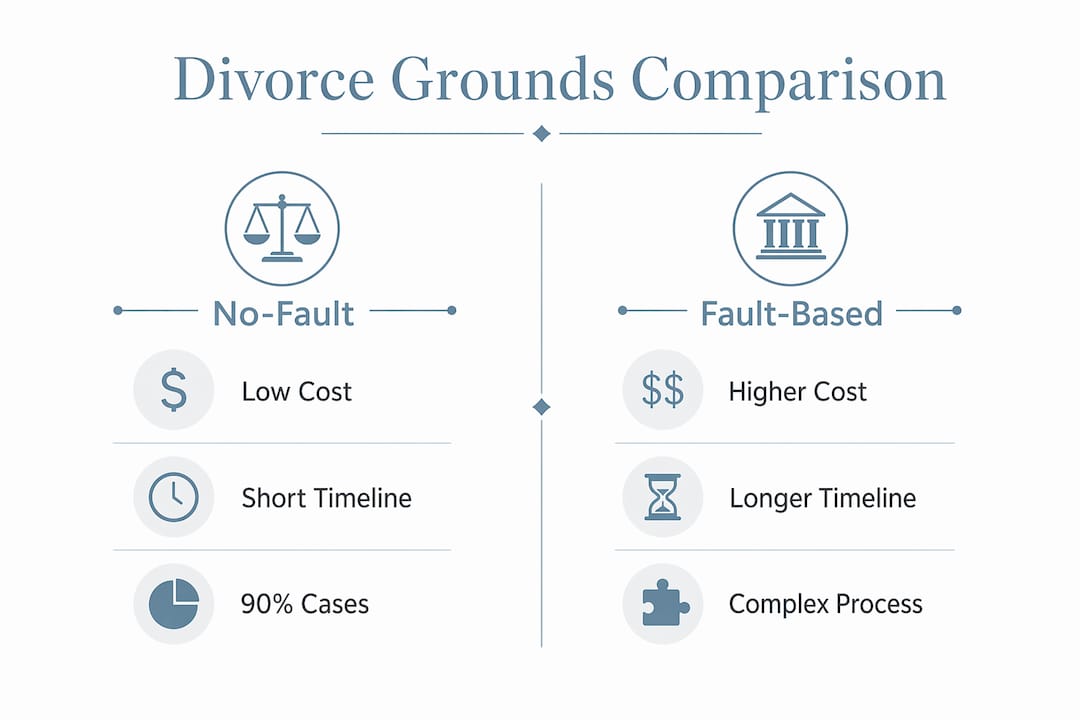
Cost differences are equally significant:
| Divorce Type | Estimated Cost | Typical Timeline |
|---|---|---|
| Uncontested, no-fault | $1,500–$5,000 | 2–4 months |
| Contested, fault-based | $15,000–$30,000+ | 8–18 months |
Fault-based allegations drive costs upward because they require discovery, witness preparation, and courtroom hearings. Each additional hearing adds attorney hours and court fees. The financial gap between the two paths is substantial and should factor into your decision.
Over 65–70% of New Hampshire divorces are uncontested, meaning both parties reach mutual agreements on property, support, and parenting. That cooperation shortens the process and reduces costs for everyone involved.
Pro Tip: If you and your spouse agree on the major issues, an uncontested divorce in New Hampshire is almost always the faster and less expensive path. Reserve fault grounds for situations where documented misconduct materially affects your financial outcome.
What should New Hampshire residents know before choosing divorce grounds?
Choosing the right ground for divorce is a legal decision with lasting consequences. Most family law attorneys recommend no-fault grounds unless fault-based allegations directly and significantly affect property division or alimony. That recommendation reflects practical experience, not a preference for avoiding conflict.
Consider these factors before you file:
- No-fault is the default for most cases. If the marriage has simply broken down, irreconcilable differences is the correct and most efficient ground.
- Fault grounds require solid evidence. Without documentation, fault allegations often fail and extend the case unnecessarily.
- Mediation reduces conflict. Many New Hampshire couples resolve contested issues through mediation before filing, which lowers costs and preserves co-parenting relationships.
- Legal counsel matters for fault cases. Fault-based divorce involves evidentiary standards that are difficult to meet without an attorney’s guidance.
- Organize your documents early. Financial records, property deeds, and communication records all become relevant in contested cases.
Understanding the key differences between contested and uncontested divorce helps you set realistic expectations before the process begins.
Pro Tip: Even if you believe fault grounds apply, consult an attorney before filing. The strategic value of fault allegations depends entirely on the specific facts of your case and what you are trying to achieve.
Key takeaways
No-fault irreconcilable differences under RSA 458:7-a is the most practical and widely used ground for divorce in New Hampshire, resolving cases faster and at significantly lower cost than fault-based alternatives.
| Point | Details |
|---|---|
| No-fault is the dominant ground | Approximately 90% of New Hampshire divorces use irreconcilable differences under RSA 458:7-a. |
| Fault grounds carry a high burden | Nine fault grounds exist under RSA 458:7, each requiring documented evidence presented in court. |
| Fault affects financial outcomes | Proven fault can influence property division under RSA 458:16-a and alimony awards. |
| Timeline and cost vary sharply | No-fault cases resolve in 2–4 months for $1,500–$5,000; fault cases can take 8–18 months and cost $30,000 or more. |
| Residency must be established first | RSA 458:5 requires domicile in New Hampshire before any divorce petition is accepted. |
Why the no-fault path reflects where New Hampshire family law is heading
After working in and around New Hampshire family law for years, one pattern stands out clearly. Clients who pursue fault grounds often do so for emotional reasons, not strategic ones. They want the court to acknowledge what happened. That impulse is completely understandable. But courts are not designed to validate feelings. They are designed to divide assets, assign custody, and finalize legal status.
The misconception I encounter most often is that proving fault automatically produces a better financial result. That is rarely true. Judges have wide discretion under RSA 458:16-a, and fault is just one factor among many. Spending $20,000 more in legal fees to prove adultery may produce a marginally better property split, or it may produce no difference at all.
The no-fault path is not a concession. It is a recognition that the marriage is over and that both parties deserve a resolution that does not consume years and savings. New Hampshire’s family law framework supports that approach, and the data on uncontested divorce rates confirms that most residents agree.
If fault genuinely matters to your financial outcome, pursue it with good evidence and clear legal strategy. If it matters only emotionally, the no-fault ground will get you to the same place faster and with far less damage.
— Rich
How Narolaw helps New Hampshire residents through divorce
Narolaw is a New Hampshire-based legal practice with deep experience in family law and divorce, including cases involving both no-fault and fault-based grounds. The firm guides clients through every stage of the process, from identifying the correct legal ground to navigating property division, custody, and support. Whether your situation calls for a straightforward uncontested filing or a more complex contested case, Narolaw provides clear, personalized legal advice grounded in New Hampshire law. Scheduling a free consultation is the first step toward understanding your options and making informed decisions about your case.
FAQ
What is the most common ground for divorce in New Hampshire?
Irreconcilable differences under RSA 458:7-a is the most common ground, used in approximately 90% of New Hampshire divorces. It requires no proof of misconduct and cannot be blocked by the other spouse.
Can my spouse prevent a divorce in New Hampshire?
No. Under RSA 458:7-a, a spouse cannot block a no-fault divorce by refusing to consent. The court will grant the divorce once the legal requirements are met.
How long does a no-fault divorce take in New Hampshire?
Uncontested no-fault divorces typically resolve in 2–4 months. Contested or fault-based cases can take 8–18 months depending on the issues involved.
Does fault affect property division in New Hampshire?
Yes. Courts may consider proven fault when dividing marital property under RSA 458:16-a and when determining alimony, though fault is one factor among several.
Do I need an attorney to file for divorce in New Hampshire?
An attorney is not legally required, but fault-based cases involve evidentiary standards that are difficult to meet without legal guidance. For complex or contested cases, professional representation significantly improves outcomes.


