

Many parents in New Hampshire find themselves overwhelmed when legal decisions impact their children. Facing a child custody dispute means balancing emotional stress and complex legal questions, all while protecting your parental rights. Understanding the best interests of the child and how New Hampshire courts evaluate custody arrangements can help you approach these challenges with clarity. Legal guidance offers real value—clarifying rules, correcting misconceptions, and helping you prepare for every step so you stay focused on your child’s needs.
Table of Contents
- Child Custody Attorneys: Roles And Misconceptions
- Types Of Custody Disputes In New Hampshire
- Legal Standards And Family Court Process
- Protecting Parental Rights And Children’s Welfare
- Risks Of Self-Representation In Custody Cases
- Financial Implications And Legal Fees Explained
Key Takeaways
| Point | Details |
| Role of Child Custody Attorneys | Child custody attorneys are essential for representing parents and prioritizing the best interests of the child during family disputes. |
| Misconceptions in Custody Cases | Many parents have outdated beliefs about custody processes, often thinking that mothers are favored, which is untrue under evolving legal standards. |
| Navigating Legal Procedures | Understanding the complex family court process is crucial; parents should seek professional guidance to navigate filing petitions and attending hearings effectively. |
| Financial Considerations | Legal fees in custody disputes can accumulate quickly; parents should be proactive in understanding the financial landscape to avoid overwhelming costs. |
Child custody attorneys: Roles and misconceptions
Child custody attorneys play a critical role in navigating complex legal landscapes during family disputes. Their primary responsibility is to represent parents while prioritizing the best interests of the child throughout legal proceedings. Custody legal standards have significantly evolved, challenging traditional assumptions about parental rights and family dynamics.
These legal professionals serve multiple essential functions:
- Providing expert legal guidance through custody negotiations
- Interpreting complex family law statutes
- Protecting parental rights while maintaining child welfare focus
- Mediating communication between separating parents
- Representing clients in court hearings and legal proceedings
Misconceptions about child custody often stem from outdated social norms and incomplete understanding of legal processes. Many parents mistakenly believe that mothers automatically receive preferential treatment or that custody decisions are simple and straightforward. Evolving legal standards actually emphasize equitable treatment, focusing on each child’s unique circumstances rather than gender stereotypes.
Understanding the nuanced role of child custody attorneys helps parents approach these challenging situations with greater clarity and realistic expectations. These legal professionals do more than argue cases – they serve as strategic advocates who help families transition through difficult legal challenges while maintaining the child’s emotional and psychological well-being.
Pro tip: Always consult with a child custody attorney who specializes in New Hampshire family law to understand your specific legal rights and potential strategies for your unique situation.
Types of custody disputes in New Hampshire
Custody disputes in New Hampshire encompass a complex range of legal scenarios that require careful navigation and professional guidance. Custody legal frameworks distinguish between several critical types of custody arrangements that parents and courts must carefully consider during family law proceedings.
The primary types of custody disputes in New Hampshire include:
- Legal Custody disputes involving decision-making rights for the child
- Physical Custody conflicts about the child’s primary residence
- Temporary Custody arrangements during separation or divorce proceedings
- Exclusive Custody cases where one parent seeks full parental rights
- Third-Party Custody involving grandparents or other relatives seeking guardianship
New Hampshire courts prioritize the best interests of the child when resolving these disputes. Pretrial custody conferences provide a structured environment where parents can negotiate parenting plans, exchange critical information, and attempt to resolve disagreements before formal litigation.
Understanding the nuanced landscape of custody disputes requires recognizing that each case is unique. Factors such as parental capabilities, child’s relationship with each parent, stability of home environments, and the child’s emotional well-being play crucial roles in determining custody arrangements. Professional legal guidance becomes essential in navigating these complex and often emotionally charged proceedings.
To better understand custody dispute variations, compare these key arrangements:
| Custody Type | Primary Decision-Maker | Child’s Living Situation | Typical Court Focus |
| Legal Custody | Parent(s) or sole parent | May live with either parent | Decision-making authority for major choices |
| Physical Custody | Parent(s) | Resides with designated parent | Stability of home, daily care |
| Temporary Custody | Parent(s) or guardian | Short-term arrangements | Immediate welfare during proceedings |
| Exclusive Custody | One parent | Lives with one parent | Parental capacity and history |
| Third-Party Custody | Relative or guardian | May live with non-parent | Child’s safety and existing relationships |
Pro tip: Document all interactions, communications, and child-related decisions meticulously, as these records can be instrumental in demonstrating your commitment to your child’s welfare during custody disputes.
Legal standards and family court process
Navigating the complex landscape of child custody requires a deep understanding of New Hampshire’s legal framework and court procedures. Parenting petition processes involve intricate steps that demand careful attention and strategic legal representation to protect parental rights and child welfare.
The family court process typically involves several critical stages:
- Initial Petition Filing: Establishing jurisdictional requirements
- Service of Legal Documents: Notifying the other parent
- First Appearance Session: Understanding court procedures
- Mediation and Negotiation: Attempting collaborative resolution
- Comprehensive Evaluation: Assessing family dynamics and child’s best interests
- Final Hearing: Judicial determination of custody arrangements
Jurisdictional standards play a crucial role in New Hampshire custody cases. The state requires a significant connection to the child’s residence or primary caregiving environment before proceeding with legal action. Family Division court rules emphasize a gender-neutral approach, focusing exclusively on the child’s welfare and each parent’s ability to provide a stable, nurturing environment.
Courts meticulously examine multiple factors when determining custody, including parental fitness, the child’s emotional and physical needs, existing relationships, and potential future stability. Professional legal guidance becomes essential in presenting a comprehensive case that addresses these complex considerations and effectively communicates a parent’s commitment to their child’s well-being.

Pro tip: Prepare a detailed, organized documentation of your parenting history, involvement, and ability to support your child’s needs before entering family court proceedings.
Protecting parental rights and children’s welfare
Protecting parental rights requires a delicate balance between individual family needs and the broader welfare of children. Child protection programs in New Hampshire are designed to safeguard children while simultaneously preserving family integrity and supporting parental involvement.
Key strategies for protecting both parental rights and children’s welfare include:
- Maintaining transparent communication with legal representatives
- Documenting parental involvement and caregiving contributions
- Understanding legal standards and family court expectations
- Demonstrating consistent emotional and financial support
- Prioritizing the child’s physical and psychological well-being
- Participating proactively in court-mandated evaluations
The state takes a comprehensive approach to balancing parental rights with child protection. Child advocacy systems work collaboratively to ensure that interventions are measured, purposeful, and oriented toward maintaining family connections whenever possible. This nuanced approach recognizes that most parents genuinely want to provide safe, nurturing environments for their children.
Navigating these complex legal landscapes requires strategic thinking, emotional intelligence, and a deep commitment to understanding each family’s unique dynamics. Professional legal guidance becomes crucial in presenting a comprehensive case that effectively communicates a parent’s dedication to their child’s welfare while addressing potential concerns raised by courts or child protection agencies.
Pro tip: Maintain meticulous records of your parental involvement, including documentation of financial support, communication logs, and evidence of consistent caregiving efforts.
Risks of self-representation in custody cases
Attempting to navigate complex child custody proceedings without professional legal representation can have devastating consequences for parents seeking to protect their parental rights. Self-represented litigants face significant challenges that can dramatically impact their custody outcomes and long-term family dynamics.
The most critical risks of self-representation include:
- Misunderstanding complex legal procedural requirements
- Failing to present compelling evidence effectively
- Emotional decision-making that undermines legal strategy
- Inability to interpret nuanced legal standards
- Missing critical filing deadlines and court procedures
- Lack of strategic negotiation skills
- Potential unintentional self-incrimination during proceedings
Systemic challenges create substantial barriers for parents attempting to represent themselves. Research demonstrates that individuals without legal training are statistically more likely to receive unfavorable custody arrangements. Pro se litigation risks often stem from a fundamental lack of understanding about courtroom protocols, evidentiary standards, and the intricate legal frameworks governing child custody disputes.
Professional attorneys bring strategic expertise that extends far beyond basic legal representation. They understand how to frame arguments, anticipate opposing strategies, and navigate the emotional complexities of family court proceedings. Their objective perspective helps parents present their case most effectively, focusing on the child’s best interests while protecting parental rights.
Pro tip: Consult with a child custody attorney for a preliminary case assessment, even if you initially plan to represent yourself, to understand the potential legal complexities and strategic considerations.
Financial implications and legal fees explained
Child custody legal proceedings can be financially complex, with costs that extend far beyond simple attorney fees. Counsel fee regulations in New Hampshire provide structured guidelines to help manage and control legal expenses during custody disputes, protecting parties from potentially overwhelming financial burdens.
Typical financial considerations in child custody cases include:
- Initial consultation fees
- Hourly attorney rates
- Court filing expenses
- Expert witness costs
- Document preparation charges
- Potential mediation expenses
- Administrative processing fees
- Potential post-judgment modification costs
Financial transparency is critically important throughout legal proceedings. Financial affidavits require comprehensive disclosure of income, expenses, and assets, ensuring that all financial aspects are carefully evaluated by the court. These detailed documents help determine appropriate child support arrangements and protect both parties’ financial interests.
Understanding the potential financial landscape helps parents make informed decisions about legal representation. While hiring an attorney represents an upfront investment, the long-term financial and emotional benefits often outweigh the initial costs. Professional legal guidance can help prevent costly mistakes, reduce prolonged litigation, and potentially secure more favorable custody arrangements that provide stability for children.
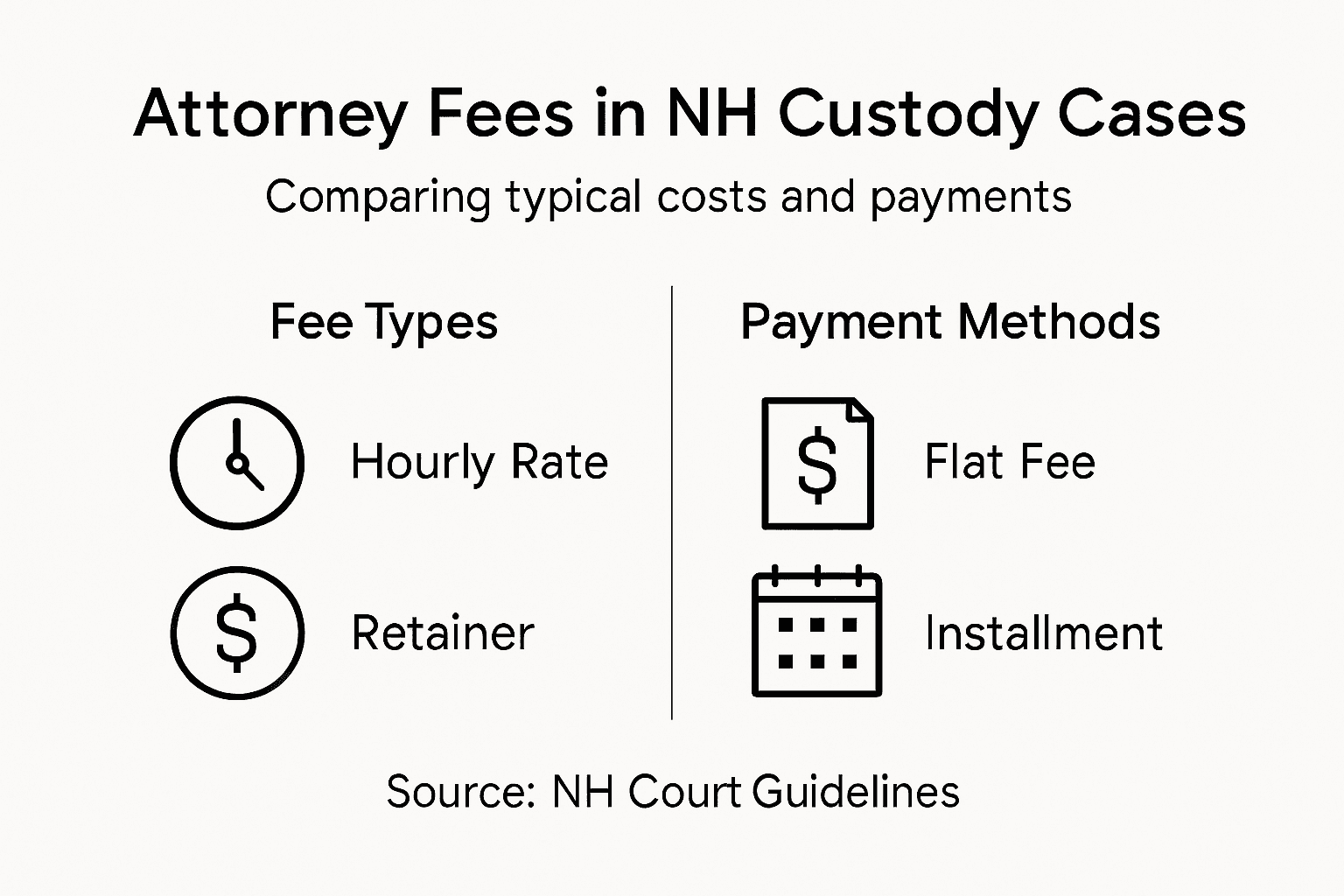
Here is a summary of common financial elements in custody cases:
| Expense Category | Typical Payment Method | Impact on Overall Case Cost |
| Initial consultation | Flat fee or hourly rate | Establishes upfront legal budget |
| Court filing fees | Direct pay to court | Adds to administrative burden |
| Expert witness costs | Hourly or flat fee | Can significantly raise expenses |
| Mediation expenses | Shared or individual | May reduce future litigation costs |
| Document preparation | Attorney or third-party | Essential for effective evidence |
Pro tip: Request a detailed fee structure and billing breakdown from potential attorneys during initial consultations to understand exact financial expectations and potential total case costs.
Why You Should Trust a Skilled Child Custody Attorney in New Hampshire
Navigating child custody disputes in New Hampshire can feel overwhelming and emotionally draining. The complex legal standards and family court processes require more than just passion for your child’s welfare – they demand strategic advocacy and expert guidance. If you are facing challenges like legal custody conflicts, temporary arrangements, or protecting your parental rights, understanding the nuances can mean the difference between a favorable outcome and prolonged uncertainty.
At Naro Law, we specialize in family law and stand ready to support you through this difficult time. With compassionate advocacy and personalized legal strategies, our experienced attorneys focus on what truly matters: the best interests of your child and protecting your rights as a parent. Discover how we can help you confidently navigate negotiations, court hearings, and documentation while reducing the risks of self-representation.
Start protecting your family’s future today by exploring our Family Law Archives – Naro Law page. Don’t face child custody challenges alone. Contact us now at Naro Law to schedule your free consultation and take your first step toward clarity and peace of mind.
Frequently Asked Questions
What does a child custody attorney do?
A child custody attorney provides legal representation for parents in custody disputes, ensuring that the child’s best interests are prioritized while protecting parental rights.
Why is it important to hire a child custody attorney?
Hiring a child custody attorney is important because they navigate complex legal processes, interpret family law statutes, and develop strategic plans tailored to individual cases, which can significantly improve custody outcomes.
What are the risks of representing myself in a custody case?
Representing yourself in a custody case can lead to misunderstandings of legal requirements, emotional decision-making, and a higher likelihood of receiving unfavorable outcomes due to a lack of legal expertise.
How much do child custody attorneys typically charge?
Child custody attorneys typically charge various fees, including consultation fees, hourly rates, court filing costs, and possible mediation expenses. It’s essential to discuss fee structures upfront to understand total expected costs.


