

TL;DR:
- Uncontested divorces in New Hampshire typically conclude within two to three months, while contested cases can last over a year or more. The process’s duration depends on case complexity, presence of children, and chosen filing method, with cooperative couples able to expedite through joint petitions and prompt disclosures. Delays mainly stem from procedural readiness and dispute resolution, making early preparation and communication crucial.
A divorce in New Hampshire takes anywhere from 2 months to over a year, depending primarily on whether the case is uncontested or contested. Uncontested divorces finalize within 2 to 3 months in most cases, while contested divorces routinely run 8 to 18 months or longer. New Hampshire does not impose a mandatory waiting period after filing, which means the timeline is driven entirely by procedural steps and the level of disagreement between spouses. Understanding where your case falls on that spectrum is the most useful first step you can take.
How long does a divorce take in new hampshire?
An uncontested divorce in New Hampshire is the fastest path to finalization. Both spouses agree on all terms, including property division, spousal support, and, if applicable, child custody and parenting time. That agreement removes the need for litigation, which is what keeps timelines short.
The typical duration is 2 to 3 months from the date of filing. Cases that are jointly filed and fully documented at the time of submission can conclude in as little as 2 to 8 weeks. That speed is not guaranteed, but it is achievable when both parties are prepared and cooperative.
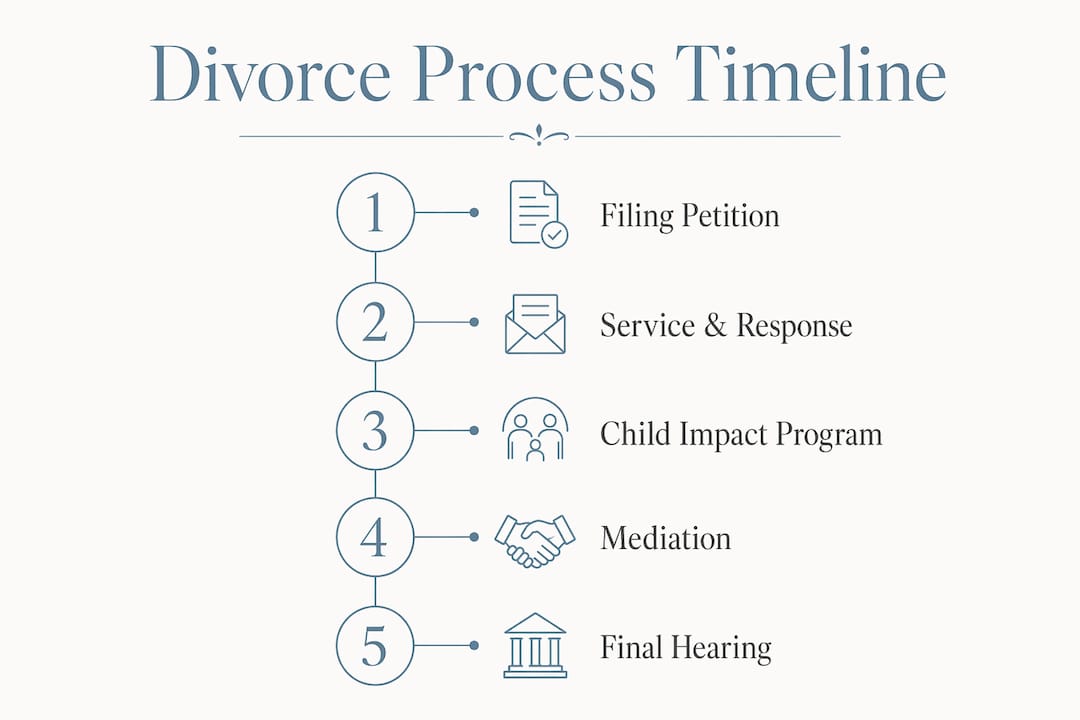
Here is the standard process for an uncontested divorce in New Hampshire:
- File the petition. One spouse files a Petition for Divorce, or both spouses file jointly using Form NHJB-2058-F.
- Complete service of process. If filing individually, the other spouse must be formally served. A joint petition waives this step entirely.
- Exchange financial disclosures. Financial disclosures must be exchanged within 45 days following service. This step applies to both uncontested and contested cases.
- Attend the final hearing. A judge reviews the agreement and, if satisfied, issues the divorce decree.
If minor children are involved, both parents must complete the mandatory Child Impact Program before the final hearing. That requirement adds time, which is covered in detail below.
Pro Tip: Filing a joint petition using Form NHJB-2058-F eliminates the formal service requirement and waives the 30-day response window. For cooperative couples, this single decision can shave weeks off the total timeline.
How long is a contested divorce in NH and why?
A contested divorce occurs when spouses cannot reach full agreement on one or more issues. Those issues might include the division of a business, a disputed parenting schedule, or disagreement over spousal support. Each unresolved issue adds procedural steps, and those steps add time.
Contested divorces typically require 8 to 14 months for straightforward disputes and up to 18 months or longer for complex cases. High-conflict cases involving business valuations, hidden assets, or relocation disputes can extend well beyond that range. The financial stakes are also higher: simple uncontested cases may cost around $2,000, while complex contested cases can exceed $44,000.
The main factors that extend a contested New Hampshire divorce timeline include:
- Discovery. Both parties exchange financial records, depositions, and other documentation. This process alone can take several months.
- Mediation. New Hampshire courts require mediation in most contested cases before scheduling a trial. Scheduling mediation sessions adds weeks.
- Custody evaluations. When parents dispute custody, the court may appoint a guardian ad litem or order a formal custody evaluation. These evaluations take months to complete.
- Court scheduling. Family division dockets in New Hampshire vary by county. Merrimack County and Hillsborough County courts can have backlogs that push hearing dates out significantly.
- Motions and temporary orders. Either party can file motions for temporary support or custody arrangements, each requiring a separate hearing.
Pro Tip: Requesting mediation early, before disputes harden into formal litigation positions, is one of the most effective ways to reduce the duration of a contested case. Couples who resolve even one or two contested issues in mediation often avoid a full trial.
How do children affect the divorce timeline in NH?
Cases involving minor children require additional procedural steps that add weeks to the overall process. New Hampshire law treats these steps as mandatory, not optional.
The Child Impact Program is a 4-hour course that both parents must complete within 45 days of service. The program covers how divorce affects children developmentally and emotionally. Scheduling availability varies by location, and completing it within the 45-day window requires prompt action. This requirement alone adds a minimum of 4 to 8 weeks to the timeline.
The First Appearance session is typically held within 30 days after service in cases involving minor children. This session is a scheduling conference where the court sets dates for mediation, hearings, and other case events. It does not resolve anything substantively, but it locks in the procedural calendar.
Custody disputes are the single largest driver of extended timelines in child-related cases. When parents cannot agree on a parenting plan, the court may order a guardian ad litem investigation. That process involves interviews, home visits, and a written report, often taking 3 to 6 months. You can learn more about how courts approach these decisions in Narolaw’s guide on child custody after divorce.
| Scenario | Estimated Timeline |
|---|---|
| No minor children, uncontested | 2–8 weeks |
| Minor children, uncontested | 2–4 months |
| No minor children, contested | 8–14 months |
| Minor children, contested | 12–18+ months |
Does filing method change how fast your divorce moves?
The method you choose to file your divorce petition has a direct and measurable effect on how quickly the process moves. This is one of the few timeline factors entirely within your control at the outset.
A joint petition eliminates formal service and waives the 30-day response period that an individual petition requires. That alone can remove a full month from the front end of your case. Choosing Form NHJB-2058-F for a joint filing is the single fastest procedural decision available to cooperative couples.
An individual petition requires formal service of process on the other spouse. If the spouse is cooperative and accepts service voluntarily, delays are minimal. If service is contested or the spouse is difficult to locate, the timeline can extend significantly before the case even formally begins. You can review the full filing process step by step on the Narolaw website.
| Filing Method | Service Required | 30-Day Response Period | Estimated Start-to-Finish |
|---|---|---|---|
| Joint petition | No | Waived | 2–8 weeks (uncontested) |
| Individual petition | Yes | Required | 3+ months (uncontested) |
The table above reflects uncontested cases only. In contested cases, the filing method affects the opening weeks but has less influence on the total duration, which is driven by the complexity of disputes.
Key takeaways
The duration of a New Hampshire divorce is determined by case type, the presence of children, and the filing method chosen at the outset.
| Point | Details |
|---|---|
| Uncontested timeline | Most uncontested divorces finalize within 2 to 3 months; joint filings can close in as little as 2 to 8 weeks. |
| Contested timeline | Contested cases typically run 8 to 18 months, with complex disputes extending beyond that range. |
| Children add time | The mandatory Child Impact Program and potential custody evaluations add a minimum of 4 to 8 weeks. |
| Filing method matters | A joint petition waives formal service and the 30-day response window, cutting weeks from the start of the process. |
| No mandatory wait | New Hampshire imposes no statutory waiting period, so the timeline depends entirely on procedural steps and case complexity. |
What i’ve learned about managing the NH divorce timeline
After working with clients through the New Hampshire divorce process, the pattern I see most often is this: delays are rarely caused by the court. They are caused by incomplete preparation and late document submission.
The 45-day deadline for financial disclosures catches people off guard. Gathering tax returns, bank statements, retirement account records, and property valuations takes longer than most people expect. Clients who start that process the day they file are consistently ahead of those who wait for a formal reminder. Using a divorce preparation checklist from the beginning makes a measurable difference.
The other thing I would tell anyone starting this process: court scheduling variability is real and largely outside your control. Some counties move faster than others. Some judges have fuller dockets. The best way to protect your timeline is to control what you can, which means responding to every request promptly, completing required programs early, and not letting disputes sit unresolved when mediation could resolve them.
Seeking legal advice early is not just about knowing your rights. It is about understanding the procedural calendar before you are already behind it.
— Rich
How Narolaw helps you move through the NH divorce process
Narolaw is a New Hampshire-based family law practice that represents clients in both uncontested and contested divorces across the state. The firm’s approach centers on clear communication, thorough preparation, and strategic negotiation to reduce the time and cost of the process wherever possible.
Whether your case is straightforward or involves complex custody or property disputes, Narolaw provides personalized guidance at every procedural step. From filing the initial petition to preparing for a final hearing, the goal is to keep your case moving without unnecessary delays. You can explore Narolaw’s full range of NH family law services or schedule a free consultation to discuss your specific situation and timeline.
FAQ
How long does an uncontested divorce take in NH?
Uncontested divorces in New Hampshire typically finalize within 2 to 3 months. Jointly filed cases with complete documentation can close in as little as 2 to 8 weeks.
Is there a waiting period for divorce in new hampshire?
New Hampshire does not impose a mandatory waiting period after filing. The timeline is determined by procedural requirements and the complexity of the case.
What makes a contested divorce take longer in NH?
Contested divorces take longer because of discovery, mandatory mediation, custody evaluations, and court scheduling. Cases with significant asset disputes or custody conflicts routinely take 8 to 18 months or more.
Does the child impact program delay my divorce?
Yes. Both parents must complete the 4-hour Child Impact Program within 45 days of service, which adds a minimum of 4 to 8 weeks to cases involving minor children.
Can i speed up my divorce in new hampshire?
Filing a joint petition, completing financial disclosures promptly, and finishing required programs early are the most effective ways to shorten the process. Choosing mediation over litigation also reduces the overall timeline in contested cases.


