

Facing a child custody dispute in New Hampshire feels overwhelming. You worry about your child’s welfare, your parental rights, and navigating a complex legal system. The good news? Mediation resolves about 75% of NH custody cases, offering a path to cooperative solutions. This guide explains NH custody laws, preparation steps, filing procedures, mediation processes, evidence strategies, and safety considerations to help you protect your rights and your child’s best interests.
Table of Contents
- Understanding New Hampshire Child Custody Laws and Criteria
- Prerequisites: What You Need Before Filing for Custody
- Step by Step Custody Filing and Court Process in New Hampshire
- Role and Process of Mediation in Custody Cases
- Evidence Gathering and Presentation Strategies
- Common Legal Mistakes and How to Avoid Them
- Expected Timelines, Costs, and Realistic Outcome Expectations
- Safety Considerations in Cases of Domestic Violence
- Work with Experienced New Hampshire Child Custody Lawyers
- Frequently Asked Questions
Key Takeaways
| Point | Details |
|---|---|
| Best Interest Standard | NH courts prioritize the child’s best interest under RSA 461-A when determining custody arrangements. |
| Thorough Preparation | Gathering complete financial affidavits, parenting plans, and documentation strengthens your custody case significantly. |
| Mediation Success | Approximately 75% of NH custody disputes resolve through mediation, reducing conflict and legal costs for families. |
| Evidence Matters | Well organized evidence demonstrating parental involvement and child welfare directly influences court custody decisions. |
| Safety Priority | Courts require protective orders and abuse documentation when domestic violence affects custody determinations. |
Understanding New Hampshire Child Custody Laws and Criteria
New Hampshire child custody laws in NH operate under a clear framework. Courts make custody decisions prioritizing the best interest of the child under RSA 461-A, examining multiple factors to determine appropriate arrangements. This legal standard isn’t arbitrary. It requires judges to evaluate the child’s safety, the quality of the relationship with each parent, each parent’s ability to provide stability, and how well parents can cooperate in raising their child together.
You need to understand the different types of custody available. Legal custody refers to decision making authority about education, healthcare, and religious upbringing. Physical custody determines where the child lives day to day. Arrangements can be sole, where one parent holds primary responsibility, or joint, where both parents share custody. New Hampshire child custody laws favor arrangements promoting meaningful relationships with both parents when safe and appropriate.
Key factors NH courts consider include:
- The child’s relationship with each parent and any siblings
- Each parent’s ability to provide a stable home environment
- The child’s adjustment to home, school, and community
- Each parent’s willingness to foster the child’s relationship with the other parent
- Any history of abuse or domestic violence
- The child’s preference if mature enough to express a reasoned opinion
Parental cooperation weighs heavily. Courts view parents who demonstrate flexibility and commitment to co-parenting more favorably than those who create conflict or refuse reasonable communication.
Prerequisites: What You Need Before Filing for Custody
Proper preparation sets the foundation for success. Before filing custody petition documents, gather all necessary forms and evidence. Filing requires a Petition for Custody and Parenting Time forms, along with financial affidavits and parenting plans. These aren’t suggestions. Courts require complete documentation to process your case.

Start with the Petition for Custody and Parenting Time forms available through NH family division circuit courts. Complete every section accurately and honestly. Errors or omissions delay your case and undermine your credibility. Financial affidavits demonstrate your income, expenses, and ability to provide for your child. Courts use this information when determining custody arrangements and potential child support obligations.
Develop a detailed proposed parenting plan before filing. This document outlines your vision for custody schedules, holiday arrangements, vacation time, transportation responsibilities, and decision making processes. A thoughtful, child focused plan shows the court you’ve seriously considered your child’s needs and routines.
Essential documents to gather include:
- Birth certificates and identification documents
- School records showing your involvement
- Medical records demonstrating healthcare participation
- Communication logs with the other parent
- Documentation of your living situation and home environment
- Records of childcare arrangements and costs
- Evidence of your relationship and time spent with your child
Organize everything chronologically in clearly labeled folders. Courts appreciate organized, accessible evidence.
Step by Step Custody Filing and Court Process in New Hampshire
Understanding the NH custody legal process removes uncertainty. Here’s exactly what happens from filing through resolution.
File Your Petition: Submit your Petition for Custody and Parenting Time to the NH family division circuit court in the county where your child lives. Filing the petition with family division circuit court initiates the process, and mandatory mediation precedes hearings. Pay required filing fees and ensure the other parent receives proper legal notice of your petition.
Attend Mandatory Mediation: NH requires mediation before contested custody hearings. Schedule your mediation session promptly. This collaborative process allows both parents to negotiate custody arrangements with a neutral mediator’s guidance. Mediation resolves approximately 75% of custody disputes, saving time, money, and emotional stress.
Prepare Your Evidence: If mediation doesn’t resolve all issues, prepare for court hearings. Organize documentation demonstrating your fitness as a parent and your child’s welfare in your care. Review child custody tips NH experts recommend for effective presentation strategies.
Participate in Court Hearings: Present your case to a judge if mediation fails. Dress professionally, speak respectfully, and answer questions directly. The judge evaluates testimony, evidence, and both parents’ demeanor when making custody determinations.
Comply with Court Orders: Once the court issues custody orders, follow them precisely. Violations damage your credibility and can result in contempt charges. If circumstances change significantly, you can petition for post decree modifications through proper legal channels.
Pro Tip: Document everything from the moment you decide to pursue custody. Detailed records of your parenting time, expenses, and the other parent’s behavior create compelling evidence courts rely on when making decisions.
The NH custody filing process demands patience and attention to procedural requirements, but following these steps systematically increases your chances of favorable outcomes.
Role and Process of Mediation in Custody Cases
Mediation in NH custody cases serves as the cornerstone of dispute resolution. This mandatory step occurs before contested court hearings and offers parents an opportunity to craft cooperative solutions prioritizing their child’s needs.
During mediation sessions, a trained neutral mediator facilitates discussions between parents. The mediator doesn’t make decisions or take sides. Instead, they guide conversations toward productive compromise, helping parents identify common ground and develop parenting plans both can accept. Sessions remain confidential, allowing honest dialogue without fear statements will be used against you in court.
Approximately 75% of custody disputes in New Hampshire are resolved successfully through mediation, demonstrating the process’s effectiveness in reducing conflict and reaching child focused agreements.
Mediation offers significant advantages:
- Reduced Conflict: Collaborative problem solving decreases hostility between parents
- Cost Savings: Mediation costs far less than prolonged court battles
- Faster Resolution: Cases settle in weeks rather than months of litigation
- Parental Control: You shape the agreement rather than leaving decisions to a judge
- Better Outcomes: Self determined agreements typically work better than imposed court orders
Come to mediation prepared. Bring your proposed parenting plan, financial documentation, and a genuine willingness to compromise. Focus on your child’s best interests rather than winning against the other parent. Courts view parents who engage mediation constructively more favorably if the case proceeds to hearings.
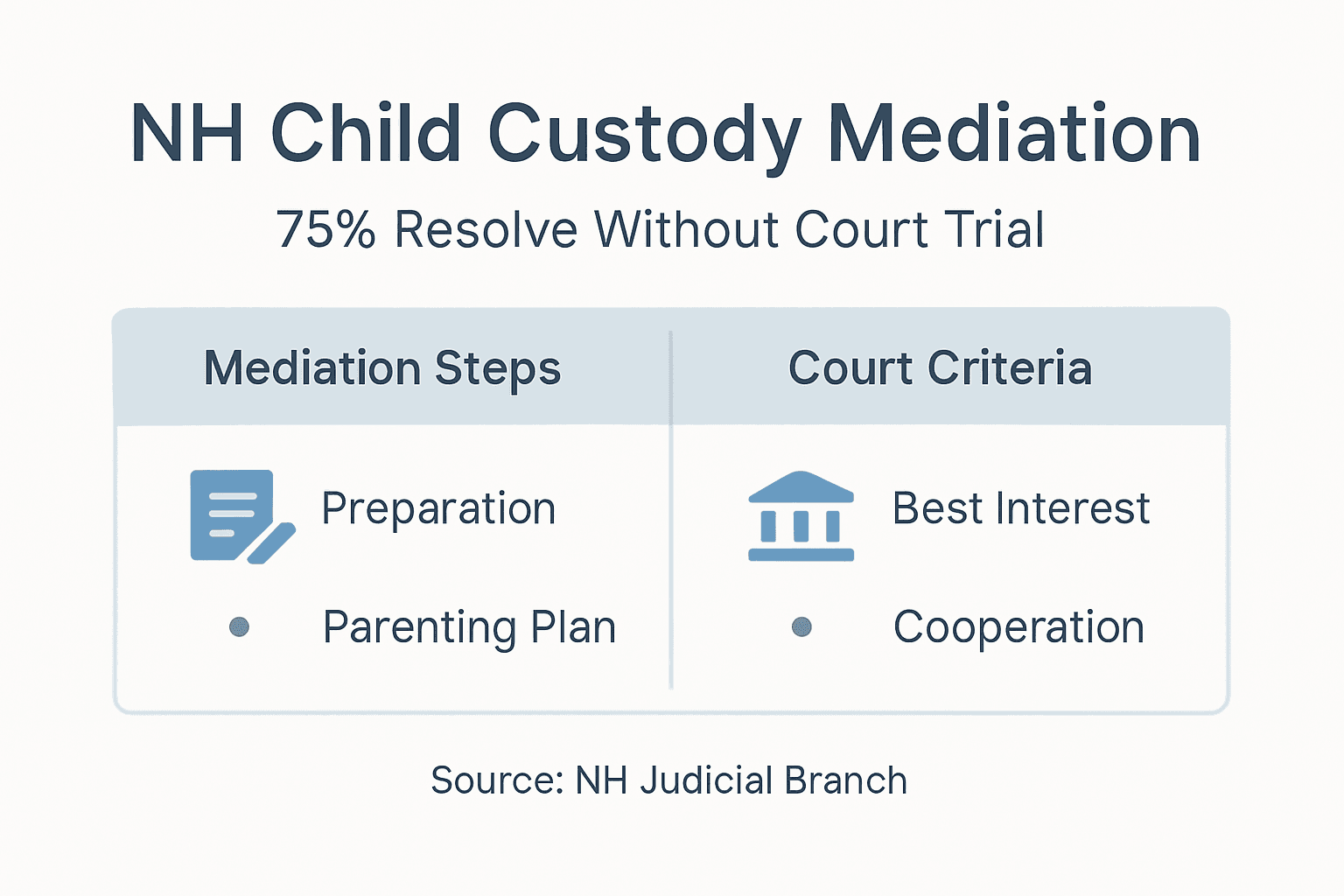
Even if you can’t resolve every issue through mediation, narrowing disagreements saves time and money when you eventually appear before a judge.
Evidence Gathering and Presentation Strategies
Strong evidence preparation separates successful custody cases from unsuccessful ones. Courts don’t guess about parental fitness. They rely on concrete documentation demonstrating your involvement, stability, and commitment to your child’s welfare.
Start collecting evidence immediately. Keep detailed parenting logs recording time spent with your child, activities you share, school events you attend, and medical appointments you manage. These logs prove your active participation in your child’s daily life. Save all communication with the other parent through text messages, emails, and documented phone calls. This record demonstrates your cooperation efforts and any concerning behavior from the other parent.
Gather various types of evidence:
- School Records: Report cards, teacher communications, volunteer activities, and attendance at conferences
- Medical Documentation: Appointment attendance, health insurance coverage, medication management
- Character References: Letters from teachers, coaches, counselors, or community members who observe your parenting
- Financial Records: Proof of stable employment, appropriate housing, and child related expenses you cover
- Photographic Evidence: Pictures showing your home environment, activities with your child, and family relationships
Organize materials chronologically with clear labels and tabs. Create a summary document explaining the relevance of each piece of evidence. Judges appreciate organized presentations allowing them to quickly understand your case’s strength.
Pro Tip: Focus evidence on your positive parenting rather than solely attacking the other parent’s shortcomings. Courts respond better to demonstrations of your fitness than negativity about your co-parent unless safety concerns exist.
Present evidence professionally. Use binders with indexed sections. Provide copies for the judge, opposing counsel, and your attorney. Clear organization signals competence and preparation, traits courts associate with good parenting.
Common Legal Mistakes and How to Avoid Them
Many parents unknowingly sabotage their custody cases through preventable errors. Recognizing these legal mistakes in custody cases helps you avoid similar pitfalls.
Skipping mandatory mediation sessions damages your case severely. Courts view mediation participation as evidence of your willingness to cooperate and prioritize your child’s needs. Missing sessions without legitimate emergency reasons signals to judges that you’re uncooperative or not serious about custody.
Insufficient or disorganized evidence weakens even strong cases. You might be an excellent parent, but without documentation proving your involvement and fitness, courts can’t rule in your favor. Start gathering evidence early and maintain consistent records throughout your case.
Emotional reactions in court harm your credibility. Anger, crying, or confrontational behavior during hearings makes judges question your stability and judgment. Maintain composure regardless of what the other parent says or does. Let your attorney handle objections and arguments.
Mistakes to avoid:
- Self Representation: Parents without experienced legal counsel reduce success rates by approximately 25% compared to those with attorneys
- Violating Temporary Orders: Breaking court mandated custody or visitation arrangements while your case is pending
- Social Media Oversharing: Posting content that undermines your parenting claims or displays poor judgment
- Speaking Negatively: Badmouthing the other parent to your child, on social media, or to mutual acquaintances
- Ignoring Safety Issues: Failing to document domestic violence or seek protective orders when necessary
Address problems proactively. If you make a mistake, acknowledge it honestly and demonstrate corrective action. Courts respect accountability more than perfection. Ignoring errors or making excuses damages credibility far worse than admitting and fixing problems.
Expected Timelines, Costs, and Realistic Outcome Expectations
Understanding custody case timelines and costs helps you plan realistically and manage expectations throughout the process.
Average NH custody cases last approximately six to nine months from initial filing to final resolution. This timeline varies significantly based on case complexity, court schedules, and whether parents reach mediated agreements or require contested hearings. Cases settling through mediation often resolve in three to four months. Highly contested cases involving extensive evidence and multiple hearings can extend beyond a year.
| Cost Category | Typical Range | Notes |
|---|---|---|
| Court Filing Fees | $250 to $350 | Initial petition and subsequent motions |
| Mediation Fees | $150 to $300 per session | Usually 2 to 4 sessions required |
| Attorney Fees | $3,000 to $15,000+ | Depends on case complexity and contestation |
| Expert Witnesses | $1,500 to $5,000 | If custody evaluations or psychological assessments needed |
| Total Estimated Cost | $5,000 to $25,000+ | Varies widely based on cooperation level |
Participating constructively in mediation significantly reduces both timeline and expenses. Parents who reach agreements avoid costly trial preparation, expert witness fees, and extended attorney time. Even partial agreements narrow contested issues, limiting hearing time and associated costs.
Expect realistic outcomes aligned with NH’s best interest standard. Courts rarely award sole custody unless one parent demonstrates significant unfitness or safety concerns exist. Most cases result in shared legal custody with varying physical custody arrangements. Your outcome depends on evidence quality, parental cooperation, and how well proposed arrangements serve your child’s specific needs and circumstances.
Financial planning matters. Discuss fee structures with attorneys upfront. Some offer payment plans or limited scope representation reducing costs while providing crucial legal guidance at key case stages.
Safety Considerations in Cases of Domestic Violence
When domestic violence custody considerations affect your case, specialized legal protections become essential. NH courts treat child safety as the paramount concern, especially when domestic violence definitions apply to your situation.
Parents in domestic violence situations must submit protective orders and abuse evidence to ensure child safety is prioritized in custody decisions. Courts don’t assume abuse occurred without documentation. You need police reports, medical records, photographs of injuries, witness statements, and any protective orders in NH custody cases you’ve obtained.
Domestic violence significantly impacts custody determinations. Courts may order supervised visitation for abusive parents, restrict overnight visits, or in severe cases, terminate parental rights. The burden falls on you to present clear evidence demonstrating the abuse and explaining how it affects your child’s safety and wellbeing.
Critical safety steps include:
- Obtain Protective Orders: File for restraining orders through NH courts immediately if you face ongoing threats
- Document Everything: Photograph injuries, save threatening messages, and report incidents to police
- Secure Safe Housing: Arrange living situations the abuser doesn’t know about or can’t access
- Develop Safety Plans: Work with domestic violence advocates to create exit strategies and emergency protocols
- Seek Specialized Counsel: Attorneys experienced in domestic violence and custody cases understand unique legal strategies and protections available
Child safety takes highest priority in custody decisions involving domestic violence. Courts carefully scrutinize evidence and may appoint guardians ad litem to investigate and represent the child’s best interests independently.
NH provides resources supporting domestic violence victims through the process. Crisis centers offer counseling, temporary housing, and legal advocacy. Connect with these services early. They provide crucial support and documentation courts find credible when evaluating safety concerns.
Never minimize or hide abuse to appear cooperative or avoid conflict. Protecting your child’s safety outweighs all other custody considerations. Courts respect parents who prioritize safety over maintaining appearances of amicable co-parenting when violence exists.
Work with Experienced New Hampshire Child Custody Lawyers
Navigating NH custody laws and court procedures requires specialized knowledge and strategic advocacy. Experienced custody lawyers in Manchester and throughout the state understand how to present compelling cases maximizing your chances of favorable custody arrangements aligned with your child’s best interests.
A skilled New Hampshire child custody lawyer guides you through complex legal requirements, prepares persuasive evidence, negotiates effectively during mediation, and advocates powerfully in court hearings. Legal representation significantly improves outcomes compared to self-representation, especially in contested cases involving substantial disagreements or safety concerns.
Naro Law provides dedicated family law representation throughout New Hampshire, including custody attorneys in Merrimack and surrounding communities. Our attorneys combine deep knowledge of NH custody law with compassionate understanding of the emotional challenges parents face during disputes. We develop personalized legal strategies protecting your parental rights while prioritizing your child’s welfare and safety. Contact Naro Law today to schedule a consultation and build a strong foundation for your custody case.
Frequently Asked Questions
Who Can File for Child Custody in New Hampshire?
Any parent, legal guardian, or person with a legitimate interest in the child’s welfare can file for custody in NH. Biological parents typically have priority, but grandparents or other relatives may petition if they’ve provided substantial care or if parental unfitness exists. Courts evaluate each petitioner’s relationship with the child and ability to provide appropriate care.
How Does Mediation Work in NH Custody Cases?
Mediation involves confidential sessions where a neutral mediator facilitates discussions between parents to develop mutually acceptable parenting plans. Sessions typically last two to three hours and may require multiple meetings. The mediator doesn’t make decisions but guides productive conversations toward compromise. Review helpful child custody tips NH professionals recommend before attending mediation.
What Evidence Do Courts Find Most Persuasive in Custody Cases?
Courts value consistent documentation showing active parenting involvement, stable home environments, and child focused decision making. School records, medical appointment attendance, communication logs, character references, and parenting activity documentation carry significant weight. Evidence demonstrating cooperation with the other parent and willingness to facilitate the child’s relationship with both parents particularly influences judges.
How Long Do Typical Custody Cases Take in New Hampshire?
Most NH custody cases resolve within six to nine months from filing to final orders. Cases settling through mediation often conclude in three to four months, while highly contested matters requiring multiple hearings can extend beyond a year. Timeline depends on court schedules, case complexity, evidence volume, and whether parents reach agreements or require judicial decisions on all issues.
What Options Exist if Domestic Violence Affects My Custody Case?
Immediately seek protective orders through NH courts if you face domestic violence threats. Document all abuse through police reports, medical records, and photographs. Courts can order supervised visitation, restrict contact, or modify custody arrangements prioritizing safety. Connect with domestic violence resources providing legal advocacy, counseling, and safe housing assistance throughout the custody process.


