

Facing divorce in New Hampshire often brings a mix of anxiety and uncertainty, especially when emotions and finances feel overwhelming. Getting ready for your legal consultation starts with practical steps that offer clarity in the midst of confusion. By focusing on organization and clear preparation, you give both yourself and your attorney the best chance at building a strong plan to protect your interests and lay the groundwork for your future.
Table of Contents
- Step 1: Gather Essential Financial And Personal Documents
- Step 2: Organize Questions And Concerns For Your Attorney
- Step 3: Assess Your Goals And Desired Outcomes
- Step 4: Schedule And Confirm Your Consultation Appointment
- Step 5: Review Your Readiness Before The Meeting
Quick Summary
| Key Point | Explanation |
|---|---|
| 1. Gather Essential Documents | Collect financial and personal documents to provide a comprehensive overview for your attorney. This includes bank statements, tax returns, and legal certificates. |
| 2. Organize Questions for Your Attorney | Prepare a detailed list of questions to maximize your consultation’s effectiveness, covering strategy, timelines, and cost expectations. |
| 3. Assess Goals and Desired Outcomes | Clearly define your priorities for divorce, such as financial stability and custody arrangements, to guide your legal strategy. |
| 4. Schedule and Confirm Your Appointment | Research and communicate effectively to schedule your consultation, ensuring all necessary information is ready for the attorney. |
| 5. Review Readiness Before the Meeting | Mentally and emotionally prepare for your consultation by organizing documents and setting clear goals for the discussion. |
Step 1: Gather Essential Financial and Personal Documents
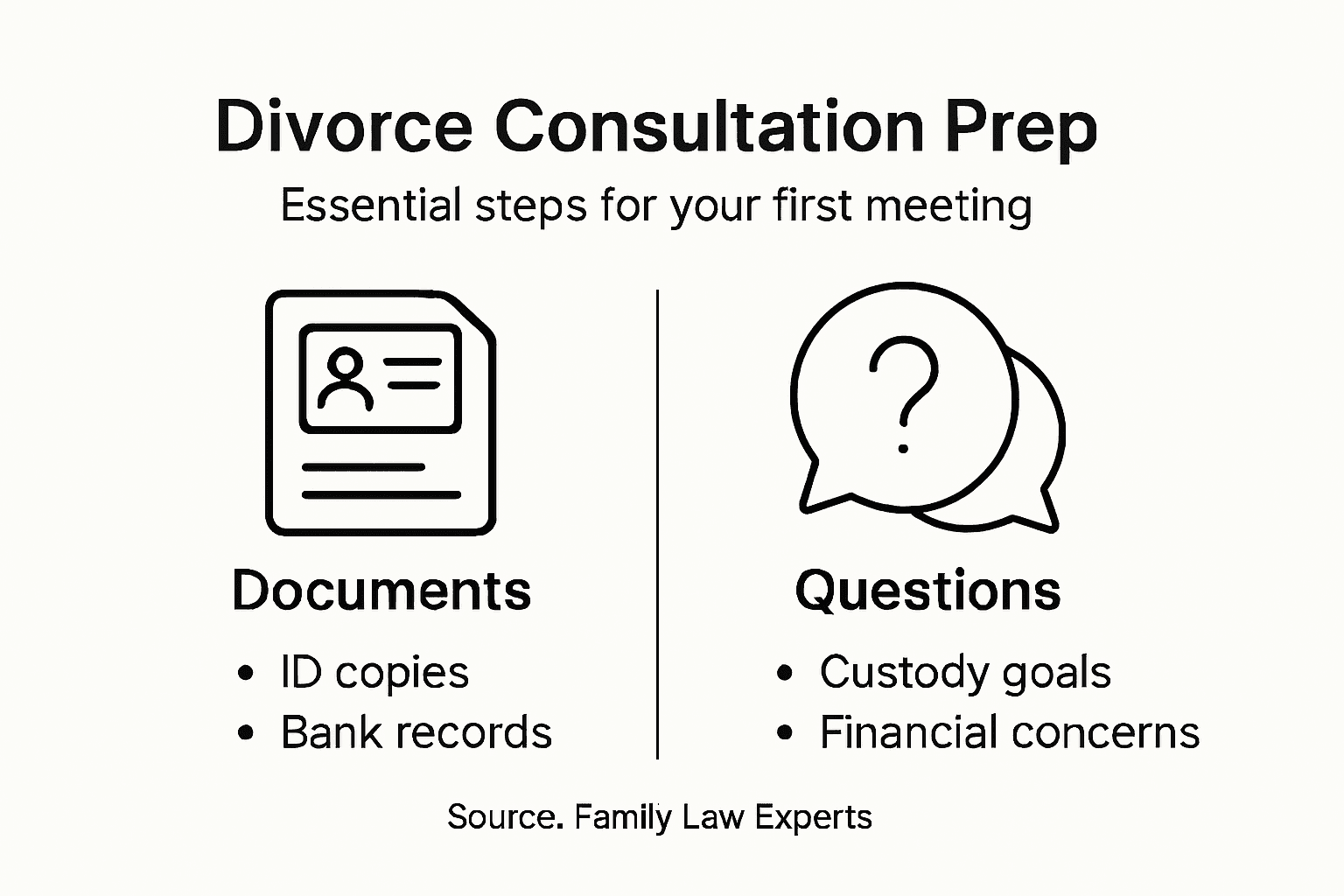
Preparing for your divorce consultation means collecting a comprehensive set of documents that will help your attorney understand your financial and personal situation. Documentation is your roadmap through the legal process, providing critical insights into assets, debts, income, and family dynamics.
Your document gathering should focus on several key categories. Start by compiling financial records that paint a complete picture of your economic circumstances. This includes:
- Bank statements for all checking and savings accounts
- Tax returns from the past three years
- Pay stubs and income verification documents
- Retirement account statements
- Investment portfolio records
- Property deeds and mortgage documents
- Vehicle registration and ownership papers
- Insurance policy details
Personal documentation is equally important. You’ll want to collect:
- Marriage certificate
- Birth certificates for children
- Social security cards
- Prenuptial or postnuptial agreements
- Existing court orders related to support or custody
Organizing these documents systematically can significantly streamline your divorce form preparation. Consider creating digital and physical copies, keeping them secure but accessible.
Tip: Create a dedicated folder or digital file for all divorce-related documentation to stay organized and reduce stress.
Pro tip: Before your consultation, make a checklist and confirm you have copies of all critical documents to maximize your attorney’s time and insights.

Step 2: Organize Questions and Concerns for Your Attorney
Your initial divorce consultation is a critical opportunity to understand your legal landscape and set strategic expectations. Preparing a comprehensive list of questions will help you maximize this important meeting and ensure you receive clear, actionable advice from your attorney.
To effectively organize your concerns, start by documenting key questions systematically. Your list should cover several crucial areas:
- Legal strategy and approach to your specific case
- Potential timeline for divorce proceedings
- Expected financial outcomes including asset division
- Child custody and support considerations
- Alimony or spousal support possibilities
- Legal fees and billing structure
- Communication expectations during the process
When preparing your questions, be brutally honest with yourself. Think through every aspect of your situation, including complex or uncomfortable details. Personal insights matter tremendously in legal strategy. Consider creating separate lists for emotional concerns and practical legal questions.
Preparing comprehensive questions demonstrates your commitment to understanding the legal process and helps your attorney provide targeted advice.
Pro tip: Create a digital or physical document where you can continuously add questions as they occur to you, ensuring no important concerns are forgotten during your consultation.
This table summarizes key discussion topics to address with your attorney:
| Topic Area | Why It Matters | Example Question |
|---|---|---|
| Legal strategy | Shapes overall case direction | What options fit my situation? |
| Financial outcomes | Impacts future stability | How is property typically split? |
| Custody/support | Affects family arrangements | What factors guide custody? |
| Fees/communication | Sets expectations for process | How do you bill for services? |
Step 3: Assess Your Goals and Desired Outcomes
Navigating a divorce requires more than just legal paperwork. Understanding your personal objectives is crucial to achieving a resolution that truly meets your long-term needs. Your goals will serve as a strategic compass throughout the entire legal process.
To effectively clarify your desired outcomes, consider breaking down your objectives into distinct categories:
- Financial stability post-divorce
- Child custody and parenting arrangements
- Asset division priorities
- Long-term emotional well-being
- Personal independence and future planning
- Potential spousal support requirements
- Minimizing conflict with your spouse
Realistic goal setting matters immensely. Some objectives might need compromise, while others remain non-negotiable. Take time to rank your goals from most to least important, understanding that flexibility can often lead to more favorable outcomes. Consider both immediate needs and long-term implications of each potential decision.
Your divorce goals should balance emotional needs with practical realities, creating a roadmap for your future.
Pro tip: Write down your goals and review them periodically, allowing yourself space to adjust as you gain more perspective during the divorce process.
Step 4: Schedule and Confirm Your Consultation Appointment
Scheduling your initial divorce consultation requires strategic planning and clear communication. Preparing for this critical first step will help you maximize your opportunity to discuss your case with a potential attorney and understand your legal options.
Navigating the consultation scheduling process involves several important actions:
- Research potential attorneys specializing in divorce law
- Collect necessary contact information
- Prepare questions about scheduling and availability
- Check your personal calendar for potential meeting times
- Verify insurance or payment requirements
- Understand potential consultation fees
- Have personal identification ready
Consultation scheduling demands proactive communication. Most law firms offer multiple contact methods including phone, email, and online intake forms. Be prepared to provide basic information about your case and explain your scheduling preferences. Some attorneys offer free initial consultations, while others might charge a standard consultation fee.
Effective communication during scheduling sets the tone for your entire legal relationship and demonstrates your commitment to resolving your divorce professionally.
Pro tip: Request a brief phone screening before scheduling a full consultation to ensure the attorney’s expertise matches your specific divorce circumstances.
Step 5: Review Your Readiness Before the Meeting
Preparing for your divorce consultation involves more than just collecting documents. Mental and emotional preparation are equally crucial to ensuring a productive first meeting with your attorney.
Assessing your legal and emotional readiness requires a comprehensive self-evaluation. Consider these key areas of preparation:
- Emotional state and mental clarity
- Comprehensive document organization
- Understanding of potential legal outcomes
- Personal financial snapshot
- Childcare and custody considerations
- Support system availability
- Realistic expectations about divorce process
Thorough preparation demonstrates your commitment to the legal process. Take time to review your goals, gather necessary paperwork, and reflect on your desired outcomes. Be honest with yourself about your emotional capacity and practical needs. Consider practicing articulating your key concerns and objectives to ensure clear communication during the consultation.
Here’s a comparison of practical and emotional preparation for your divorce consultation:
| Preparation Focus | Practical Example | Emotional Impact |
|---|---|---|
| Document organization | Systematic file collection | Reduces stress and confusion |
| Legal research | Understands process and options | Increases confidence |
| Financial review | Updates budget and asset lists | Provides peace of mind |
| Goal setting | Ranks post-divorce priorities | Clarifies personal direction |
Your readiness will directly impact the quality and effectiveness of your initial legal consultation.
Pro tip: Create a brief written summary of your situation and key objectives to help you stay focused and articulate during your consultation.
Take Charge of Your Divorce Journey with Expert Legal Support
Preparing for a divorce consultation can feel overwhelming with all the documents, questions, and emotions involved. You are facing critical decisions about financial stability, child custody, and long-term goals. At Naro Law, we understand the challenges you confront during this complex time. Our compassionate family law attorneys specialize in guiding clients through every step, from organizing your essential documents to clarifying your desired outcomes with personalized legal strategies.
Don’t wait to get the support that can make a real difference in your case. Explore our Family Law Archives – Naro Law to learn how we help you navigate your divorce with confidence. Take the next step today by scheduling a free consultation through Naro Law. Let us help you turn your divorce preparation into a clear path toward your future.
Frequently Asked Questions
What documents should I gather to prepare for my divorce consultation?
Gather essential financial and personal documents such as bank statements, tax returns, pay stubs, and marriage certificates. Organize these documents systematically to provide your attorney with a complete picture of your situation.
How can I organize questions and concerns for my attorney before the consultation?
Prepare a comprehensive list of questions covering legal strategies, potential financial outcomes, and custody considerations. Arrange your questions by category to ensure clarity and make sure you address all your concerns during the meeting.
What goals should I assess before my divorce consultation?
Evaluate your goals related to financial stability, child custody, and personal independence. Prioritize these objectives to establish a clear roadmap for your discussion and legal strategy.
How do I schedule my divorce consultation effectively?
Research potential attorneys specializing in divorce law and prepare questions regarding their availability and consultation fees. Clearly communicate your preferences to streamline the scheduling process and ensure a suitable meeting time.
How can I assess my readiness before the divorce consultation meeting?
Reflect on your emotional state, review your organized documents, and clarify your goals. Conduct a self-evaluation to make sure you are mentally prepared to discuss your situation and objectives straightforwardly.
Recommended
- Maintaining Your Mental Health Throughout the New Hampshire Divorce Process – Naro Law
- Experienced Attorneys in Concord, NH | Trusted Legal Representation | Naro Law – Naro Law
- Experienced NH Divorce Lawyers | Prenuptial & Postnuptial Agreements – Naro Law
- Compassionate Divorce Lawyers in Merrimack, NH | Naro law – Naro Law


