

TL;DR:
- New Hampshire uses “parental rights and responsibilities” instead of traditional custody terms.
- Mediation is mandatory in NH custody disputes, resolving about 75% of cases before hearings.
- Edge cases like domestic violence, relocation, and modifications require special legal considerations and documentation.
Most parents entering a New Hampshire custody dispute assume the process mirrors what they’ve seen nationally. It doesn’t. New Hampshire replaced traditional “custody” and “visitation” language with its own framework under RSA Chapter 461-A, using the term “parental rights and responsibilities” instead. That shift isn’t just semantic. It changes how courts evaluate your case, how agreements are written, and how you negotiate. This guide breaks down what NH law actually requires, what the process looks like step by step, and how to protect your rights throughout.
Table of Contents
- Understanding New Hampshire child custody terminology
- The child custody process and mandatory mediation
- Handling edge cases: domestic violence, relocation, and modifications
- Preparing for family court and protecting your rights
- What the data and experience tell us about NH child custody
- Get expert help with NH child custody
- Frequently asked questions
Key Takeaways
| Point | Details |
|---|---|
| Parenting rights approach | New Hampshire calls custody ‘parental rights and responsibilities,’ crucial for legal clarity. |
| Mediation success rate | Most custody disputes are resolved by mediation, saving time and reducing conflict. |
| Edge case protections | NH offers special rules for domestic violence, relocation, and custody tweaks. |
| Court preparation essentials | Well-organized documents and early planning often lead to better custody outcomes. |
| Legal support advantage | Consulting a knowledgeable NH attorney empowers parents through the complex process. |
Understanding New Hampshire child custody terminology
New Hampshire law treats custody differently than most states, and knowing the right terms matters from day one. The state uses “parental rights and responsibilities” instead of the traditional “custody” and “visitation” labels, as governed by RSA Chapter 461-A. If you walk into court using outdated terminology, it signals unfamiliarity with state law, which isn’t a position you want to be in.
Under this framework, parental rights and responsibilities break into two distinct categories:
- Decision-making responsibility: Who makes major choices about education, healthcare, and religious upbringing
- Residential responsibility: Where the child primarily lives and the schedule for parenting time
These can be shared jointly or assigned primarily to one parent, depending on what the court finds serves the child’s best interests. You can explore the NH parental rights workflow to see how courts structure these determinations in practice.
Here’s a quick comparison of terms to help orient you:
| Traditional term | New Hampshire equivalent |
|---|---|
| Legal custody | Decision-making responsibility |
| Physical custody | Residential responsibility |
| Visitation | Parenting time |
| Custody agreement | Parenting plan |
Understanding how NH parental rights are structured helps parents frame their goals more clearly before entering any negotiation or hearing. It also becomes critical when drafting a parenting plan, since vague language in that document often leads to future disputes. Familiarizing yourself with family law terms in NH before your first court appearance puts you in a much stronger position.
The child custody process and mandatory mediation
With terminology clarified, understanding the actual legal process helps set realistic expectations. New Hampshire requires most parents to attempt mediation before a contested hearing can be scheduled. This isn’t optional in most cases, and skipping or dismissing it as a formality can hurt your case.
According to law firm reports, mediation resolves roughly 75% of custody disputes, reducing both cost and conflict for families. Cases that do go to a full hearing typically last 6 to 9 months on average, sometimes longer when circumstances are highly contested.
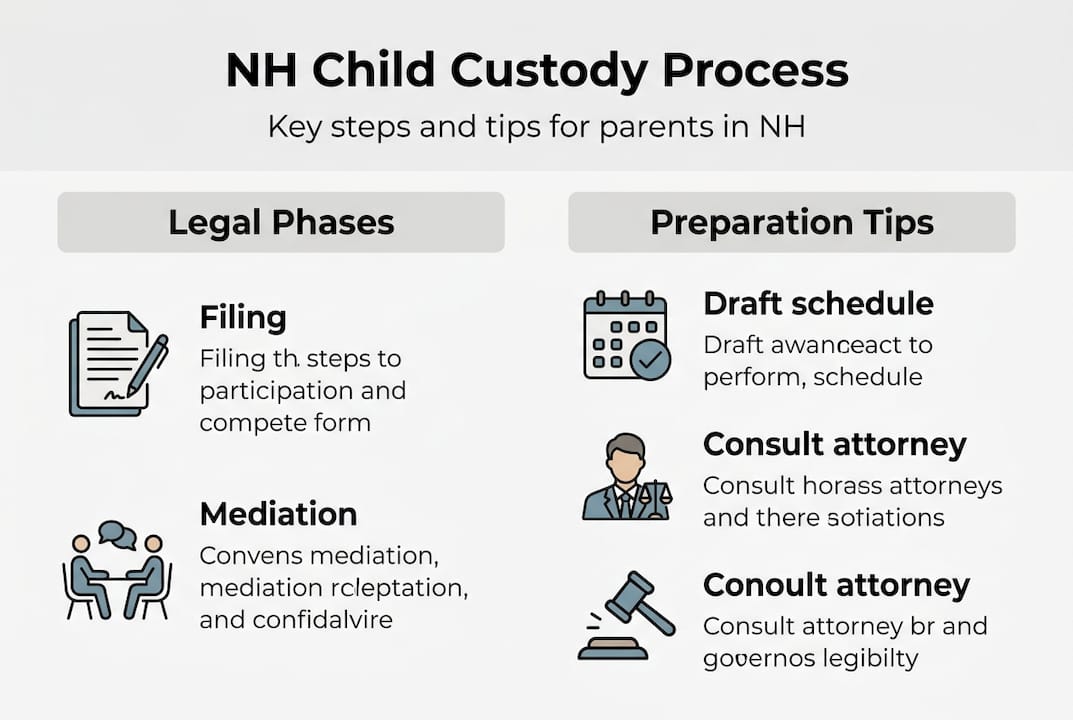
The standard custody process in New Hampshire follows these steps:
- File a petition with the family division of the superior or circuit court
- Attend mediation with a neutral third party to negotiate a parenting plan
- Submit a proposed parenting plan if mediation produces an agreement
- Attend a contested hearing if mediation fails or doesn’t apply
- Receive a final court order that outlines all parental rights and responsibilities
Here’s a general timeline to plan around:
| Phase | Estimated duration |
|---|---|
| Filing to mediation | 4 to 8 weeks |
| Mediation to agreement | 1 to 3 sessions |
| Hearing (if needed) | Adds 3 to 6 months |
| Total average | 6 to 9 months |
Pro Tip: Enter mediation with specific, written goals. Parents who arrive prepared with a draft parenting schedule and clear priorities tend to reach agreements faster and with fewer concessions. Reviewing NH custody mediation steps and negotiation tips for NH before your session can make a real difference.
Handling edge cases: domestic violence, relocation, and modifications
While the basic process applies to most, difficult scenarios require special handling. New Hampshire law carves out meaningful protections for situations that fall outside a standard dispute.
Domestic violence and abuse: When credible evidence of domestic violence exists, courts may grant sole decision-making and residential responsibility to the protective parent. Parenting time for the other parent may be supervised or restricted. Importantly, the mandatory mediation requirement can be waived under RSA 461-A in these situations, recognizing that forced negotiation with an abuser is unsafe and counterproductive.
Relocation: If you are the primary residential parent and plan to move, New Hampshire law requires you to provide at least 60 days written notice to the other parent. This applies even for moves within the state that would significantly affect the existing parenting schedule. Courts weigh relocation requests carefully, balancing your right to move against the child’s relationship with both parents. You can review how NH courts decide relocation requests to understand what factors judges consider.
Modifications: Existing custody orders are not permanent if circumstances change significantly. To modify a custody order, you must demonstrate a substantial change in circumstances since the original order was entered. Job changes, a parent’s remarriage, or a child’s evolving needs may qualify depending on the facts. Learn more about post-divorce modifications in NH to understand when courts will consider reopening an order.
Grandparent visitation rights also exist in New Hampshire, but courts apply them narrowly. Any such arrangement cannot interfere with the fundamental parent-child relationship.
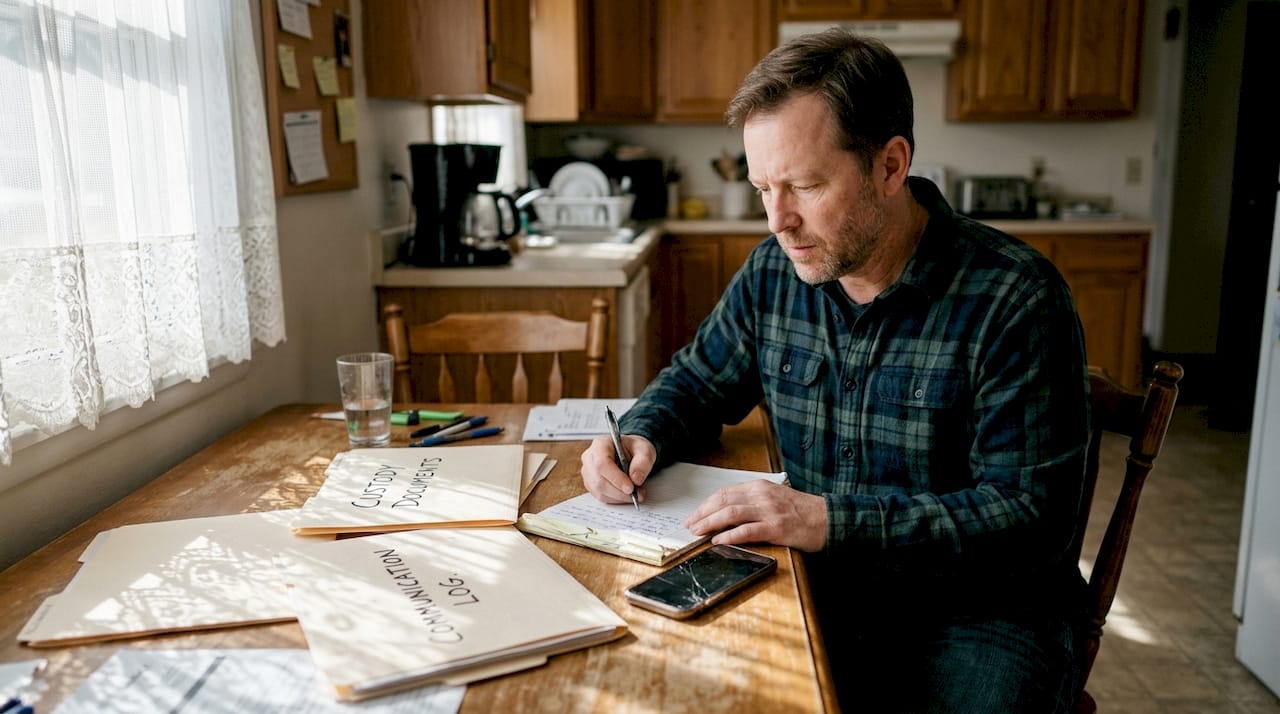
Pro Tip: In any edge case, documentation is your strongest asset. Keep records of communications, incidents, and any changes in living arrangements from the very beginning.
Preparing for family court and protecting your rights
Once you’ve assessed your case and special circumstances, preparation is the key to protecting your rights. Parents who show up organized consistently fare better in mediation and court.
Start by building your documentation file early. Gather the following:
- All written communications with the other parent (texts, emails)
- Financial records including income, expenses, and child-related costs
- School records, report cards, and teacher communications
- Medical records and appointment histories
- A written log of parenting time as it has occurred
Once you have your records, use a structured checklist to prepare for negotiations and court appearances. The NH parental rights checklist is a useful starting point for organizing your priorities.
Here are steps to take before any court date or mediation session:
- Review your existing court orders and any temporary arrangements in place
- Write down your ideal parenting plan, including specifics on holidays and school schedules
- Identify any issues where you’re willing to negotiate and those where you aren’t
- Consult with an attorney to review your position and identify weaknesses
- Prepare questions for your attorney or mediator in advance
Common mistakes include submitting vague parenting plans, missing filing deadlines, or making verbal agreements without written confirmation. Understanding why parental rights matter helps reinforce why precision in documentation and planning matters so much. For a full overview of the process, the NH custody process steps guide is a strong reference.
Pro Tip: If you’re unsure about any part of your case, consulting a New Hampshire family law attorney early prevents costly missteps later.
Note that official custody outcome data from the NH Judicial Branch is limited, so approach broad claims about success rates with healthy skepticism and rely on verified legal guidance.
What the data and experience tell us about NH child custody
With process and preparation explained, let’s step back and consider what experience truly suggests. The reported 75% mediation success rate sounds reassuring, but as official NH outcome data confirms, there are no verified government statistics backing that figure. Treat it as a rough indicator, not a guarantee.
What does hold up is this: parents who treat mediation seriously, arrive prepared, and approach the process cooperatively tend to reach agreements that actually work long-term. New Hampshire’s focus on “parental responsibilities” rather than “custody” subtly encourages a mindset shift, away from ownership and toward shared obligation. That framing, when internalized, often leads to more durable outcomes. Review the NH custody workflow guide to see how preparation translates directly into process advantage.
Get expert help with NH child custody
Navigating New Hampshire’s parental rights framework is manageable with the right guidance. At Naro Law, we work with parents across New Hampshire to build personalized strategies for mediation, court preparation, and parenting plan negotiations. Whether you’re facing a first-time custody filing or a complex modification, our attorneys provide clear, practical support. Explore our child custody tips for NH parents or review our NH legal workflow guide to take the next step. Ready to talk? Connect with a child custody lawyer in NH today.
Frequently asked questions
How does New Hampshire define child custody?
New Hampshire uses “parental rights and responsibilities” instead of traditional “custody,” separating decision-making authority from residential arrangements in the child’s parenting plan.
Is mediation mandatory in child custody cases in NH?
Yes, mediation is required before contested hearings in most cases, with roughly 75% of disputes reportedly settling at that stage according to law firm sources.
What happens in NH custody cases involving domestic violence?
Cases involving domestic violence or abuse typically result in sole custody for the protective parent, supervised parenting time, and a waiver of the mediation requirement under RSA 461-A.
How are custody modifications handled in New Hampshire?
To modify an existing order, a parent must show a substantial change in circumstances since the original order, which often requires additional hearings and supporting documentation.
What documentation should parents prepare for NH custody cases?
Parents should compile communication records, financial statements, school reports, and medical histories to support their position effectively in mediation or before a judge.


