

Navigating parental rights in New Hampshire can feel overwhelming, especially when emotions run high and legal processes seem complex. Parents often struggle with understanding custody distinctions, filing requirements, and court procedures. This guide provides a clear, step-by-step workflow to help you confidently manage your parental rights case, from initial preparation through final court orders.
Table of Contents
- Understanding Parental Rights And Custody In New Hampshire
- Prerequisites: What You Need Before Starting Your Case
- Step-By-Step Filing And Court Process In New Hampshire
- Parenting Plan Creation And Court Approval
- Common Mistakes And Troubleshooting In Parental Rights Cases
- Expected Outcomes, Timelines, And Costs For Parental Rights Cases
- Alternative Approaches And What To Do If You Disagree
- Explore Expert Legal Support For New Hampshire Parental Rights Cases
- Frequently Asked Questions
Key takeaways
| Point | Details |
|---|---|
| Custody types matter | New Hampshire distinguishes between legal custody (decision-making authority) and physical custody (where the child lives). |
| Preparation is essential | Gather all necessary documents, evidence, and financial affidavits before filing your parenting petition to avoid delays. |
| Mediation comes first | Most cases require mandatory mediation sessions before proceeding to trial, reducing court involvement and costs. |
| Avoid common errors | Improper service of documents, incomplete paperwork, and ignoring mediation can derail your case or lead to dismissal. |
| Plan for the timeline | Typical parental rights cases take 6 to 12 months, with costs varying based on case complexity and whether you need legal representation. |
Understanding parental rights and custody in New Hampshire
New Hampshire law protects parental rights under RSA 461-A, which establishes the framework for custody determinations. Understanding these rights helps you navigate the legal system effectively and advocate for your child’s welfare.
Custody in New Hampshire breaks down into two distinct categories. Legal custody grants you authority to make major decisions about your child’s education, healthcare, and religious upbringing. Physical custody determines where your child primarily lives and how parenting time gets divided between parents. Courts can award sole custody to one parent or joint custody where both parents share responsibilities.
New Hampshire law requires custody decisions to prioritize the child’s best interests above all else. Judges evaluate multiple factors when making custody determinations:
- Each parent’s ability to provide a stable, nurturing environment
- The child’s adjustment to home, school, and community
- The quality of relationships between the child and each parent
- Any documented history of abuse, neglect, or domestic violence
- The child’s preferences if they’re mature enough to express them
Courts take abuse allegations seriously. If either parent has a history of domestic violence or child abuse, this weighs heavily in custody decisions. Understanding why custody matters in New Hampshire helps you recognize the significance of building a strong case from the start.
Prerequisites: what you need before starting your case
Proper preparation sets the foundation for a successful parental rights case. Gathering documents early prevents delays and demonstrates your readiness to the court.
Start by collecting essential paperwork for your filing. You’ll need a completed parenting petition form, a personal data sheet with information about both parents and the child, and financial affidavits if child support is involved. These documents form the core of your initial filing and must be accurate and complete.
Evidence supporting your case matters tremendously. Gather materials that demonstrate your involvement in your child’s life and ability to provide care:
- School records showing your participation in educational activities
- Medical records documenting your role in healthcare decisions
- Photos and communications showing your relationship with your child
- Witness statements from teachers, coaches, or family members
- Documentation of your living situation and stability
New Hampshire requires mediation in most parental rights cases before proceeding to trial. Understanding this requirement helps you prepare mentally and financially. However, courts grant exceptions when domestic violence is present, so disclose any safety concerns early in the process.
Budget for filing fees, which typically range from $150 to $300 depending on your county court. Attorney fees add significantly to costs if you choose legal representation. Many parents qualify for fee waivers based on income, so inquire with the court clerk about available assistance.
Pro Tip: Visit your local court clerk or contact legal aid services before filing to verify you have all required documents. This simple step prevents rejections and delays that could push your case back weeks or months.
Step-by-step filing and court process in New Hampshire
Following the proper procedural steps ensures your case moves forward smoothly. Each stage has specific requirements and timelines you must meet.
Prepare your case thoroughly. Review all evidence, organize documents chronologically, and identify witnesses who can support your position. Strong preparation at this stage makes subsequent steps easier.
File your parenting petition. Submit your petition to the Family Division in the county where your child resides. Include the personal data sheet and pay the filing fee or submit a fee waiver request.
Serve the other parent properly. New Hampshire requires formal service of all custody papers to the other parent. Use certified mail with return receipt or hire a sheriff to serve documents in person. Keep proof of service for your records.
Attend mandatory mediation. Within weeks of filing, you’ll receive a mediation appointment. Come prepared to discuss parenting schedules, decision-making authority, and dispute resolution. Mediators help parents reach agreements without going to trial.
Participate in court proceedings. If mediation doesn’t resolve all issues, you’ll attend court hearings where a judge reviews your case. Present evidence, call witnesses if necessary, and respond to questions from the judge.
Obtain your final custody order. Once the court approves your parenting plan, you’ll receive a formal custody order. This legally binding document outlines all custody arrangements and parenting time schedules.
| Approach | Timeline | Average Cost | Emotional Impact |
|---|---|---|---|
| Mediation | 2 to 4 months | $500 to $2,000 | Lower stress, collaborative |
| Trial | 8 to 18 months | $5,000 to $15,000+ | Higher stress, adversarial |
Understanding how to get child custody in New Hampshire provides additional context for building a compelling case. If your situation involves divorce, review specific procedures for child custody after divorce in New Hampshire.
Pro Tip: Always use certified mail or professional process servers when serving custody papers. Standard mail doesn’t provide the legal proof courts require, and improper service can invalidate your entire filing.
Working with a child custody lawyer in New Hampshire can streamline this process, especially if your case involves complex issues or high conflict.
Parenting plan creation and court approval
A parenting plan serves as the roadmap for co-parenting after custody proceedings conclude. New Hampshire courts require detailed plans that address all aspects of shared parenting.
Parenting plans under NH law must include specific components. Your plan needs to outline custody arrangements clearly, specify decision-making authority for education and healthcare, establish holiday and vacation schedules, and include procedures for resolving future disputes.
Drafting an effective plan requires attention to detail. Create specific schedules for regular parenting time, including weekday and weekend arrangements. Address holiday rotations explicitly, naming which parent has the child for Thanksgiving, Christmas, spring break, and summer vacation. Define how major decisions get made, whether jointly or by one parent.
Courts review parenting plans carefully before approval. Judges assess whether the plan serves the child’s best interests and provides adequate contact with both parents. They look for clarity, fairness, and practical schedules that account for work obligations and the child’s activities.
Once approved, your parenting plan carries legal weight. Both parents must follow its terms. Violations can result in contempt proceedings and modified custody arrangements.
Avoid these common drafting mistakes:
- Vague language that creates confusion about schedules or responsibilities
- Unrealistic schedules that don’t account for work or school commitments
- Missing provisions for holidays, birthdays, or special occasions
- No dispute resolution process for handling disagreements
- Failing to address transportation responsibilities between homes
Unmarried parents particularly benefit from formal parenting plans, as explained in why unmarried New Hampshire parents need parenting plans. These documents provide legal protection and clarity that informal agreements cannot offer.
Common mistakes and troubleshooting in parental rights cases
Even well-intentioned parents make errors that complicate their custody cases. Recognizing these pitfalls helps you avoid them.
Incomplete or incorrect paperwork ranks as the most frequent mistake. Missing signatures, incorrect information, or omitted forms trigger rejections that delay your case by weeks. Double-check every document before filing.
Improper service invalidates filings entirely. Some parents attempt to hand deliver papers themselves or use regular mail. New Hampshire requires formal service through certified mail or a process server. Cutting corners here wastes time and money when you must refile correctly.
Ignoring court-ordered mediation creates serious problems. Parents who skip sessions or refuse to participate in good faith face sanctions, case dismissals, or unfavorable rulings. Courts view mediation participation as a measure of your willingness to co-parent effectively.
Underreporting domestic violence incidents affects both custody outcomes and safety. If abuse occurred, document everything and disclose it to the court. Judges need this information to make protective orders and appropriate custody arrangements. Staying silent puts you and your child at risk.
Other frequent errors include:
- Missing court deadlines for filing responses or motions
- Failing to update the court about address changes or new circumstances
- Making unilateral decisions about the child during pending proceedings
- Violating temporary custody orders while the case is active
- Badmouthing the other parent in front of the child or in court documents
Pro Tip: Consult with legal aid organizations or family law attorneys early in your case, even if you plan to represent yourself. A brief consultation can identify potential issues before they become costly problems.
Review common New Hampshire divorce mistakes to understand broader pitfalls that apply to custody cases. Additional guidance appears in child custody tips for New Hampshire parents, which covers practical strategies for building strong cases.
Understanding why custody matters in New Hampshire reinforces the importance of avoiding these mistakes and taking your case seriously.
Expected outcomes, timelines, and costs for parental rights cases
Setting realistic expectations helps you prepare financially and emotionally for your parental rights case.
Typical custody cases in New Hampshire span six months to over a year. Uncontested cases where parents agree on terms resolve faster, often within three to six months. Contested cases involving disputes over custody, parenting time, or decision-making authority take longer, sometimes exceeding 18 months if appeals occur.
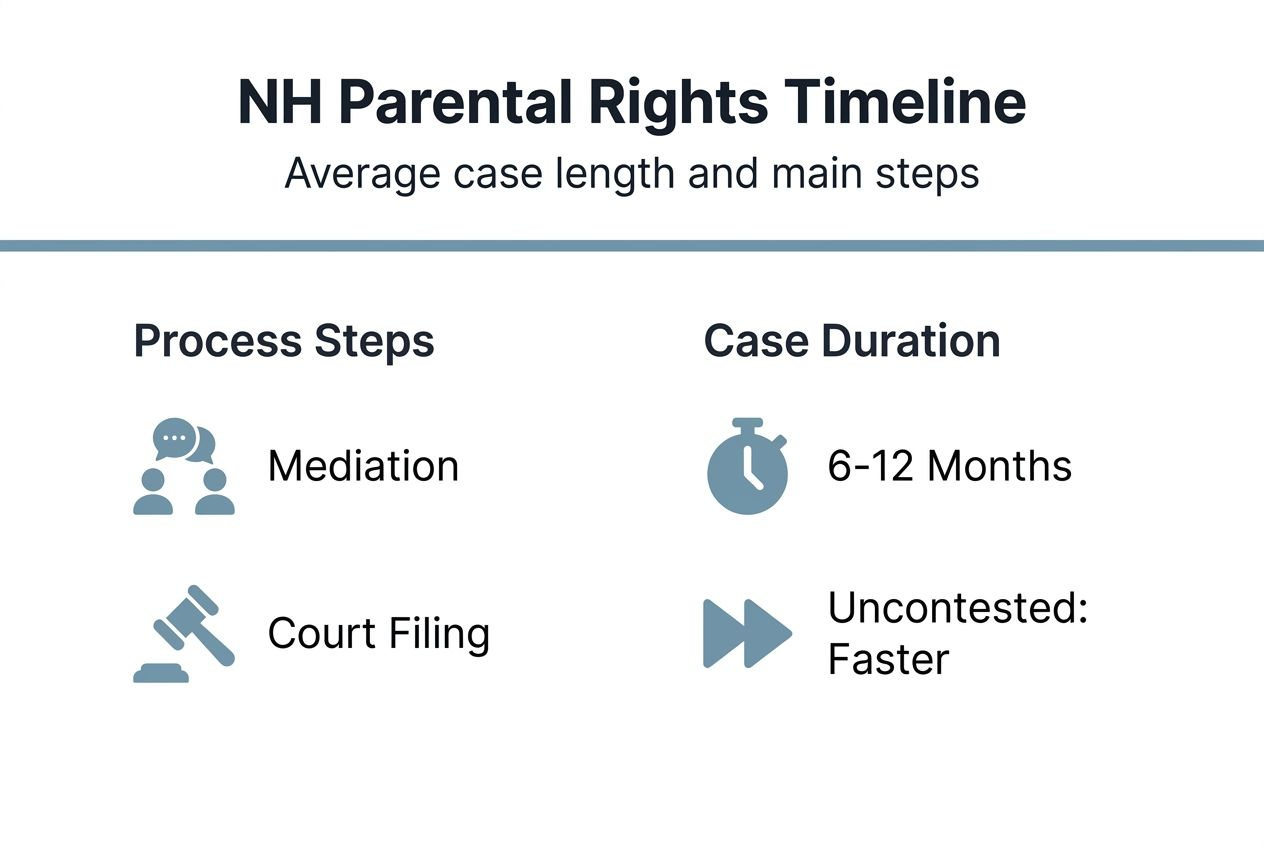
Filing fees and court costs remain relatively modest, typically $150 to $300 for initial filings. However, attorney fees constitute the largest expense if you hire representation. Hourly rates for family law attorneys in New Hampshire range from $200 to $400, with total costs varying widely based on case complexity.
Success metrics vary by case type. Approximately 80% of cases settle through mediation without requiring trial. Courts approve most negotiated parenting plans when they meet legal requirements and serve the child’s best interests. Cases that proceed to trial result in judicial decisions that may not satisfy either parent completely.
Parents should anticipate these costs:
- Financial expenses including filing fees, attorney fees, mediation costs, and expert witness fees if needed
- Time commitments for court appearances, mediation sessions, document preparation, and case strategy
- Emotional costs including stress, anxiety about outcomes, and the challenge of maintaining composure during conflict
- Impact on work schedules and potentially lost income for court dates and related appointments
| Case Type | Average Timeline | Estimated Total Cost | Settlement Rate |
|---|---|---|---|
| Uncontested | 3 to 6 months | $1,000 to $3,000 | 95% |
| Moderately Contested | 6 to 12 months | $3,000 to $8,000 | 75% |
| Highly Contested | 12 to 24 months | $8,000 to $20,000+ | 50% |
These figures represent averages and vary significantly based on individual circumstances, attorney rates, and case complexity.
Alternative approaches and what to do if you disagree
Not every parental rights dispute requires a courtroom battle. New Hampshire offers multiple paths to resolution.
Mediation provides the fastest, least adversarial route to settling custody disagreements. Professional mediators help parents communicate effectively, identify common ground, and develop workable parenting plans. Most cases resolve through mediation, saving time, money, and emotional energy compared to trial.
Trial becomes necessary when mediation fails or fundamental disagreements persist. Formal hearings involve presenting evidence, examining witnesses, and allowing a judge to make final custody determinations. Trials take longer, cost significantly more, and produce outcomes neither parent may fully support.
Circumstances change after initial custody orders. Parents can seek modifications when substantial changes affect the child’s welfare. Common reasons include parental relocation, remarriage, changes in work schedules, or the child’s evolving needs. Learn more about modifying child custody in New Hampshire and specific considerations for modifying parenting plans after remarriage.
When one parent violates court-ordered parenting time, legal remedies exist. Enforcement of parenting plans in New Hampshire provides mechanisms to hold non-compliant parents accountable and restore your rightful time with your child.
| Factor | Mediation | Trial |
|---|---|---|
| Cost | $500 to $2,000 | $5,000 to $15,000+ |
| Timeline | 2 to 4 months | 8 to 18 months |
| Emotional Impact | Lower, collaborative | Higher, adversarial |
| Control Over Outcome | High, parents decide | Low, judge decides |
| Best For | Cooperative parents willing to compromise | High-conflict cases, safety concerns |
Choosing the right approach depends on your specific situation, relationship with the other parent, and the complexity of issues involved.
Explore expert legal support for New Hampshire parental rights cases
Navigating parental rights workflows in New Hampshire becomes easier with experienced legal guidance. Professional family law attorneys understand state-specific requirements, court procedures, and effective strategies for protecting your parental rights.
Naro Law provides comprehensive family law services throughout New Hampshire. Our attorneys help parents avoid common filing mistakes, prepare compelling evidence, navigate mandatory mediation, and advocate effectively in court proceedings. We focus on achieving outcomes that serve your child’s best interests while protecting your parental rights.
Whether you need assistance with initial filings or complex custody modifications, our team offers personalized support tailored to your unique situation. Contact our offices in Manchester, Merrimack, or Concord to discuss your parental rights case with experienced family law attorneys who understand New Hampshire custody law.
Frequently asked questions
What is the difference between legal and physical custody in New Hampshire?
Legal custody grants a parent authority to make important decisions about the child’s education, healthcare, and religious upbringing. Physical custody determines where the child primarily resides and how parenting time gets divided between parents. Courts can award sole or joint versions of each custody type independently.
How long does a typical parental rights case take in New Hampshire?
Most parental rights cases range from six months to a year depending on complexity and cooperation levels between parents. Uncontested cases where parents agree on terms resolve faster, often within three to six months. Contested cases involving significant disputes generally take longer, sometimes exceeding 18 months when trials and appeals occur.
What happens if parents cannot agree on a parenting plan?
New Hampshire requires mediation in most cases to help parents reach agreements and reduce conflict. Professional mediators facilitate discussions and help identify solutions. If mediation fails to resolve all disputes, the court holds hearings and imposes a parenting plan based on the child’s best interests. Parents may later seek enforcement remedies if court-ordered plans get violated.
Can I modify a custody order after it’s been issued in New Hampshire?
Yes, custody orders can be modified when substantial changes in circumstances affect the child’s welfare. Common reasons include parental relocation, significant changes in work schedules, remarriage, or evolving needs as children grow older. Modifications require filing a petition and demonstrating the changed circumstances to the court. Learn more about the modification process in New Hampshire.
Recommended
- Understanding New Parenting Rights And Responsibilities In New Hampshire: A Guide To Recent Legal Changes
- How Long Does a Father Have to Be Absent to Lose His Rights in New Hampshire? – Naro Law
- Enforcement Of Parenting Plans – New Hampshire Strengthens Remedies For Parents Deprived Of Parenting Time
- Fathers’ Rights in New Hampshire Family Law


