

TL;DR:
- Getting a restraining order in New Hampshire can be quick and accessible through emergency options issued the same day.
- Understanding the various types of protective orders and the court process helps victims act confidently to ensure their safety.
If you believe getting a restraining order in New Hampshire is a slow, complicated ordeal, you are not alone in that assumption. Many people delay seeking protection because they expect months of waiting and courtroom battles. The reality is very different. The restraining order process in New Hampshire includes emergency options that can put legal protection in your hands the same day you apply. This article walks you through every stage, from identifying the right type of order to attending your hearing, so you can act quickly and with confidence.
Table of Contents
- Understanding types of restraining orders in New Hampshire
- How to initiate the restraining order process in New Hampshire
- What happens during the court hearing and possible outcomes
- Protections and penalties under New Hampshire restraining orders
- Practical tips for successfully navigating the restraining order process
- Why understanding the restraining order process can empower victims like never before
- Get expert legal help with restraining orders and family law in New Hampshire
- Frequently asked questions
Understanding types of restraining orders in New Hampshire
New Hampshire law recognizes several categories of protective orders, and choosing the right one matters. The type that applies to your situation depends on your relationship with the person threatening you and the nature of the behavior involved.
Domestic violence protective orders are available when the person causing harm is a family or household member, a current or former intimate partner, or someone you share a child with. As defined under New Hampshire law, domestic violence orders apply to family or household members and protect against abuse including physical, sexual, and emotional harm.
Stalking protective orders cover situations where the threatening person is not a household member. If someone is repeatedly following you, monitoring you, or making threats outside of a domestic relationship, a stalking order may be the appropriate path.
Beyond these two categories, New Hampshire also distinguishes orders by their timeline and purpose:
- Temporary restraining order NH (emergency order): Issued on the same day you file, without the other party present, when immediate danger exists. This is also called an ex parte order.
- Final protective order: Issued after a full court hearing, lasts up to one year, and can be renewed if the threat continues.
- Stalking protective order: Specifically addresses repeated, non-domestic harassment or threats that cause reasonable fear.
Understanding which order fits your circumstances is the first step. With the types clarified, it is important to understand how you start the restraining order process.
How to initiate the restraining order process in New Hampshire
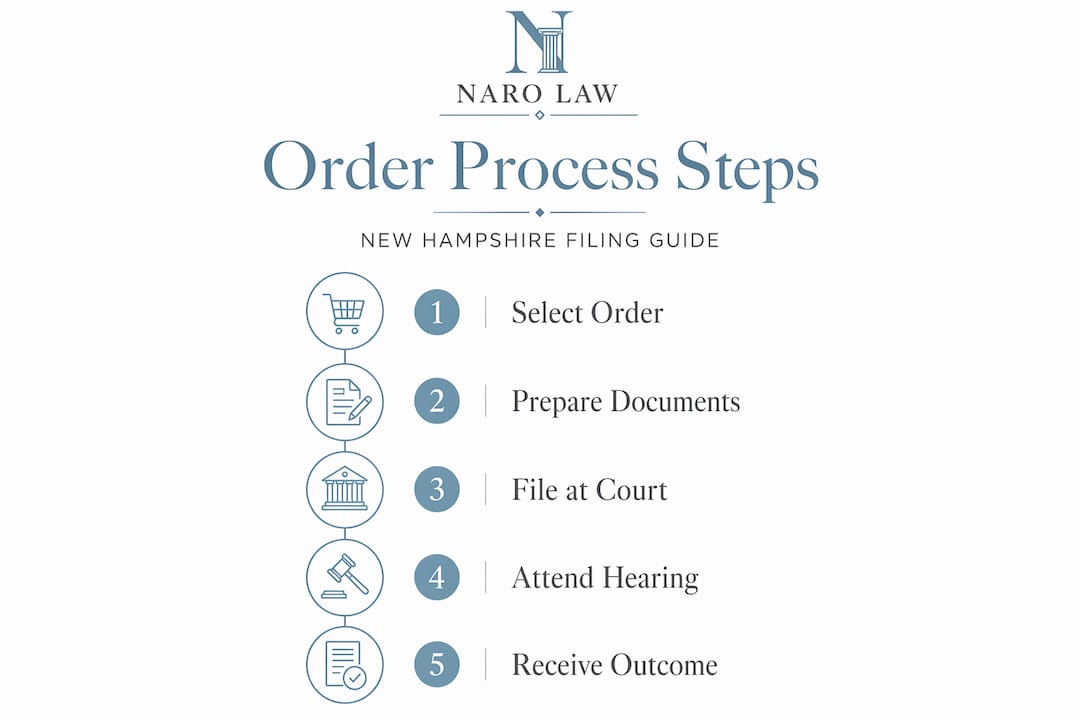
Filing for a restraining order in New Hampshire follows a clear sequence of steps. Knowing what to expect at each stage reduces anxiety and helps you move forward without unnecessary delays.
- Go to the Circuit Court’s Family Division. For both domestic violence and stalking protective orders, you file your petition at your local Circuit Court. Staff can provide the necessary forms.
- Complete a sworn petition. You describe the abuse or threats in a written affidavit. Be specific: dates, locations, and descriptions of incidents carry more weight than general statements.
- Request an emergency (ex parte) order if you are in immediate danger. A judge can review your petition the same day and issue a temporary restraining order NH without the other party being present. Under RSA 173-B, emergency orders can be issued same-day with a full hearing scheduled within 30 days.
- Receive service of process. Law enforcement serves the order on the respondent. The order is not enforceable until the respondent has been formally served.
- Attend the full hearing. Within approximately 30 days, you appear before a judge for an evidentiary hearing where both parties can present evidence and testimony.
Reviewing how to file a restraining order in detail before you go to court can help you arrive prepared. Understanding the differences between emergency vs. final orders also helps you set realistic expectations for each stage.
Pro Tip: Bring a written timeline of incidents to your first court visit. Judges and clerks process many petitions daily, and a clear, organized account of what happened, when, and where helps your case stand out as credible and urgent.

Once filed, knowing what happens next helps you prepare for potential court proceedings.
What happens during the court hearing and possible outcomes
The full hearing is your opportunity to present your case in front of a judge. Both you (the petitioner) and the person you filed against (the respondent) have the right to appear, offer testimony, and submit evidence.
The judge may grant a final order, deny the petition, or continue the hearing based on the evidence presented. Here is what each outcome means for you:
- Grant: A final protective order is issued, lasting up to one year. It can include restrictions on contact, a requirement that the respondent vacate a shared home, custody arrangements for children, and even temporary financial support.
- Denial: The court finds insufficient evidence, and no legal protection is granted. You retain the right to refile if new incidents occur.
- Continuance: The hearing is postponed for more information. Temporary protections may remain in place during this period.
| Outcome | What it means for you | Duration |
|---|---|---|
| Final order granted | Legal protection, possible custody and support terms | Up to one year, renewable |
| Petition denied | No active order, no legal restrictions on respondent | N/A |
| Hearing continued | Temporary order may stay active pending rescheduled hearing | Until next hearing date |
Pro Tip: Attend your hearing even if you feel nervous. Failing to appear almost always results in your petition being dismissed and your temporary order being vacated. For a detailed look at the full filing and hearing process, reviewing court expectations in advance is time well spent.
Understanding these outcomes is crucial, but so is knowing what protections these orders actually provide.
Protections and penalties under New Hampshire restraining orders
A New Hampshire protective order is not just a piece of paper. It carries real legal force, and violations are treated seriously by law enforcement and prosecutors.
Under a final protective order, the court can:
- Prohibit the respondent from contacting you by any means, including phone, text, and social media
- Require the respondent to leave a shared home immediately
- Grant you temporary custody of children
- Order temporary financial support or control over shared property
- Restrict the respondent from harming or taking custody of pets
When it comes to enforcement, the law is direct. Violating a protective order is a Class A misdemeanor in New Hampshire, with enhanced penalties for repeated violations, including potential felony charges.
If someone violates your protective order and you are in immediate danger, call 911. Do not wait. Violations are criminal offenses, and law enforcement is authorized to arrest the respondent on the spot.
Understanding New Hampshire’s domestic violence laws gives you a fuller picture of your rights and the legal tools available to protect yourself and your family.
Knowing protections and penalties sets the stage for taking practical steps to apply for an order.
Practical tips for successfully navigating the restraining order process
Preparation makes a significant difference in how your case unfolds. These practical steps help you build a strong petition and move through the NH court process for restraining orders with greater confidence.
- Document everything. Save text messages, emails, voicemails, photos of injuries, and any medical records. Written evidence strengthens your petition considerably.
- Write a detailed affidavit. Your sworn statement should include specific dates, exact words used, and the impact the behavior has had on you and your family.
- Use emergency protections without hesitation. Emergency protective orders provide same-day protection and fast-track hearings to secure your safety quickly. Do not delay because you think the situation might resolve itself.
- Attend every scheduled court date. Missing a hearing, even once, can result in losing your temporary protection.
- Ask about fee waivers. Filing fees for restraining orders may be waived if you are experiencing financial hardship. Ask the clerk when you file.
- Consult an attorney. Legal guidance is not required to file, but it significantly improves your ability to present evidence and respond to the respondent’s arguments.
A thorough restraining order checklist for NH residents can help you organize your documents and steps before you walk into court.
Pro Tip: If you have children and the respondent is a co-parent, mention this clearly in your petition. Courts can include custody and visitation terms in a protective order, which prevents the respondent from using custody exchanges as opportunities for continued contact or intimidation.
With these tips, you can confidently approach the restraining order process knowing the protections and procedures involved.
Why understanding the restraining order process can empower victims like never before
Here is something most people do not realize: the single biggest barrier to safety in domestic violence situations is not the legal system. It is the belief that the legal system will not help fast enough. That belief keeps people in dangerous situations far longer than necessary.
New Hampshire law is built for urgency. Emergency protective orders under RSA 173-B provide immediate same-day protection, which directly challenges the myth that legal processes are slow and bureaucratic. The system anticipates crisis. It is designed to respond to it.
What is equally underappreciated is that restraining orders do more than create physical distance. They restructure legal relationships. A final protective order can establish temporary custody arrangements, address shared property, and impose financial obligations on the respondent. For many victims, this is the first time the law actively works in their favor on multiple fronts at once.
Knowing your rights in domestic violence situations is not just legally useful. It changes the psychological dynamic. When you understand what you are entitled to and how quickly the system can act, you are far less likely to minimize the threat or delay seeking help. That shift in awareness has real, measurable effects on safety outcomes.
Do not wait for the situation to escalate before you use the tools the law already gives you.
Get expert legal help with restraining orders and family law in New Hampshire
Navigating New Hampshire protective orders is far more manageable with a knowledgeable attorney by your side. At Naro Law, we provide confidential, compassionate guidance for individuals facing domestic violence, stalking, and related family law challenges. Our attorneys understand the NH court process for restraining orders inside and out, and we help clients build strong petitions, prepare for hearings, and protect their families at every stage. Whether you need help understanding domestic violence laws or navigating family law matters like custody and support, we are here to help. Contact us today for a free consultation.
Frequently asked questions
Who can apply for a restraining order in New Hampshire?
Any person, including minors who do not need a parent or guardian present, can apply for a protective order in New Hampshire if they meet the legal criteria related to domestic violence or stalking.
How long does a final protective order last in New Hampshire?
A final protective order typically lasts up to one year and may be renewed by the court if continued protection is still necessary after that period.
What should I do if someone violates my restraining order?
Call 911 immediately if you are in danger, because violating a protective order is a criminal offense in New Hampshire and law enforcement can make an arrest on the spot.
Can I get an emergency restraining order the same day I apply?
Yes. Under RSA 173-B, same-day emergency orders can be issued when immediate danger is demonstrated, with a full hearing scheduled within approximately 30 days.
Are there any fees to file for a restraining order in New Hampshire?
Filing fees may be waived based on your financial situation, and fee waivers for protective orders are available to ensure that cost is not a barrier to seeking protection.


