

TL;DR:
- A second DWI offense in New Hampshire is classified as a class A misdemeanor with mandatory fines, jail time, and a three-year license revocation. The jail period varies from 17 to 60 days depending on the time elapsed since the first conviction, and license reinstatement requires IID installation and IDCMP compliance. Refusing a breath test adds penalties, including a separate suspension that increases to nine months in 2027.
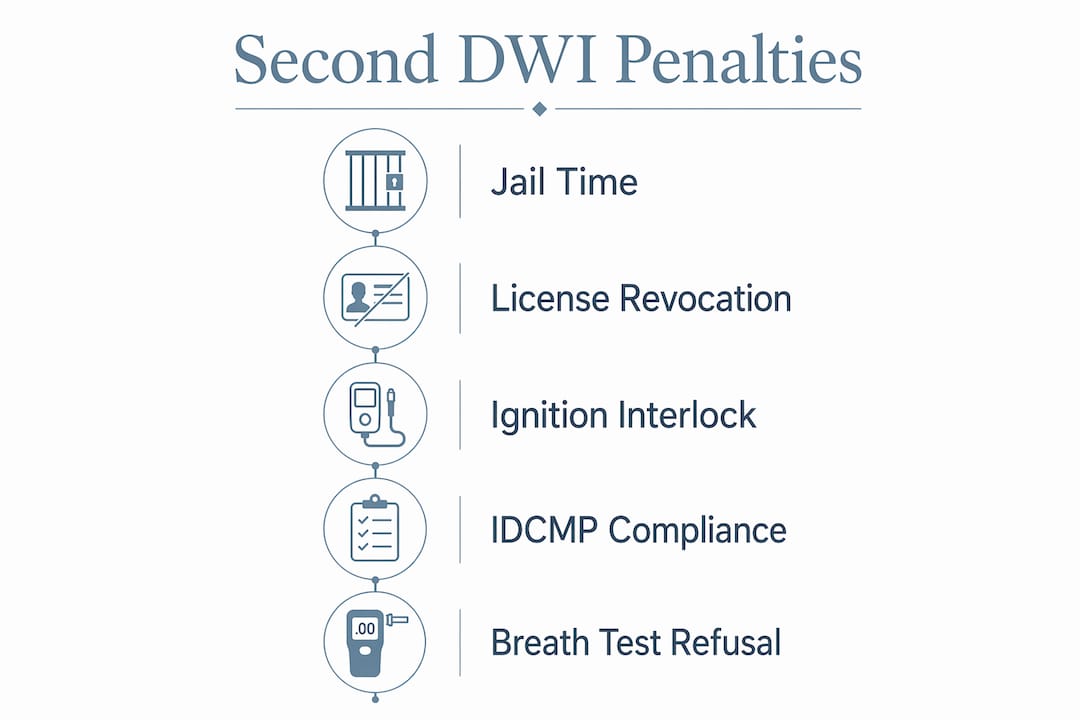
A second DWI offense in New Hampshire is classified as a class A misdemeanor under RSA 265-A:18, carrying mandatory fines, jail time, a three-year license revocation, and a court-ordered referral to a substance use disorder program. The penalties for a second DWI offense in NH depend heavily on one factor: how much time has passed since your first conviction. That single detail determines whether you face 17 days or 60 days behind bars. Understanding the full scope of these consequences gives you a clearer picture of what you are up against and why acting quickly matters.
What are the fines and jail time for a second DWI in New Hampshire?
A second DWI offense carries a mandatory minimum fine of $750, but the jail sentence varies based on timing. New Hampshire law draws a sharp line between offenses committed within two years of the first conviction versus those within the broader ten-year lookback period.
The timing distinction works like this:
- Within 2 years of the first offense: 60 days mandatory jail, with 30 days suspended, contingent on completing the Impaired Driver Care Management Program (IDCMP).
- Within 10 years of the first offense: 17 days mandatory jail, with 12 days suspended, again tied to IDCMP compliance.
- Class A misdemeanor status: This is a step up from the class B misdemeanor applied to a first offense. A third offense within ten years becomes a class B felony.
- Fines: The $750 minimum does not include court fees, surcharges, or program costs, which can push your total financial exposure significantly higher.
The suspended portion of the jail sentence is not automatic forgiveness. The court holds that time over your head as leverage to ensure you complete required programs. Fail to comply, and those suspended days become real incarceration.
Pro Tip: Keep documentation of every IDCMP appointment and payment. Courts have reinstated suspended jail time over missed program sessions, and having a paper trail protects you.

How does license revocation and ignition interlock work for second DWI offenders?
A second DWI conviction triggers a three-year license revocation in New Hampshire. That is not a suspension you can easily work around. You lose your driving privileges entirely for that period, with limited exceptions.
Here is how the reinstatement process works:
- Serve the revocation period. You must complete a mandatory portion of the three-year revocation before applying for any conditional license.
- Apply for a conditional or hardship license. After serving part of the revocation, you may petition the court or the DMV for limited driving privileges, typically for work or medical purposes.
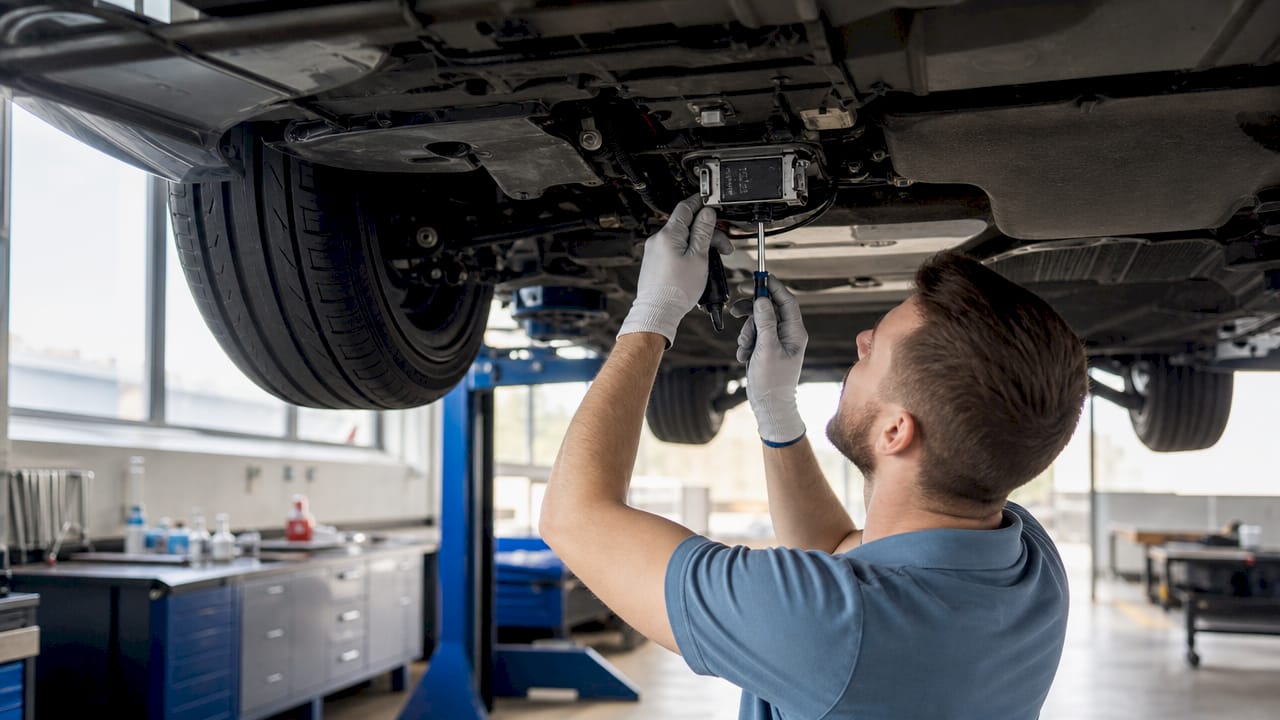
- Install an ignition interlock device (IID). Upon reinstatement, IID installation is required for 12 to 24 months. The device requires you to pass a breath test before your vehicle will start.
- Maintain IID compliance. Any failed IID test or tampering attempt is reported to the court and can restart your revocation clock.
The IID requirement is not just a formality. It monitors every start attempt and generates a compliance record reviewed by the court. Think of it as a probationary driving condition with real consequences for failure.
Pro Tip: Choose an IID provider approved by the New Hampshire DMV. Using an unapproved device can invalidate your compliance record entirely.
What role does the IDCMP play after a second DWI conviction?
The Impaired Driver Care Management Program is mandatory after a second DWI conviction in New Hampshire. It is not optional, and it is not a formality.
After sentencing, you are referred to the IDCMP for a substance use disorder evaluation. Based on that evaluation, a service plan is created. That plan may include counseling, education programs, or treatment depending on your assessment results. You must follow the plan completely.
The IDCMP is legally binding. Failure to comply with your service plan can result in the court reinstating your suspended jail time and blocking your path to license reinstatement.
The program also connects directly to your license recovery. The DMV will not reinstate your license until you have satisfied IDCMP requirements. That means completing your evaluation, following your service plan, and obtaining a program completion certificate.
Pro Tip: Contact the IDCMP immediately after sentencing. Delays in scheduling your evaluation are treated as non-compliance by the court, even if you had no intent to skip.
Non-compliance carries a double penalty. You face both the reinstated jail time and an extended revocation period. The IDCMP is one of the most consequential parts of a second DWI sentence, yet many people underestimate it until they are already in violation.
What are the consequences of refusing a breath test during a DWI stop in NH?
Refusing a chemical breath test in New Hampshire triggers its own set of penalties, separate from and layered on top of any DWI conviction. The current penalty for refusal is a 180-day administrative license suspension.
That changes in 2027. New legislation increases the suspension to nine months, effective january 1, 2027. The change was driven by a 75% test refusal rate observed in 2026, which lawmakers viewed as a direct attempt to avoid chemical evidence.
| Refusal scenario | Current suspension | Suspension from January 2027 |
|---|---|---|
| First refusal | 180 days | 9 months |
| Refusal with prior DWI conviction | Stacked on DWI revocation | Stacked on DWI revocation |
The refusal suspension runs alongside your DWI license revocation, not instead of it. If you are convicted of a second DWI and you also refused the breath test, both penalties apply. You can learn more about the breathalyzer refusal consequences and how they interact with your DWI case before making any decisions.
Refusing the test does not prevent prosecution. Prosecutors can use your refusal as evidence of consciousness of guilt at trial. The short-term benefit of avoiding a BAC reading often comes with significant long-term legal costs.
Key takeaways
A second DWI conviction in New Hampshire carries mandatory jail time, a three-year license revocation, and IDCMP compliance requirements that directly determine whether suspended sentences are served.
| Point | Details |
|---|---|
| Timing determines jail time | Offenses within 2 years trigger 60 days; within 10 years trigger 17 days mandatory minimum. |
| Fines start at $750 | Total costs rise significantly when court fees and program costs are added. |
| License revocation is 3 years | Reinstatement requires IID installation for 12 to 24 months after revocation ends. |
| IDCMP compliance is mandatory | Missing program requirements can reinstate suspended jail time and block license recovery. |
| Breath test refusal adds penalties | A refusal triggers a separate 180-day suspension, increasing to 9 months in january 2027. |
What I have learned about second DWI cases in New Hampshire
The detail that catches most people off guard is the timing rule. Clients often assume the penalties are the same regardless of when the second offense occurred. They are not. The difference between 17 days and 60 days of mandatory jail time comes down entirely to whether two years have passed since the first conviction. That gap matters enormously, and it is the first thing any attorney should examine.
The IDCMP is the second area where people make costly mistakes. Many treat it as an administrative box to check. Courts do not see it that way. I have seen suspended sentences reinstated over missed appointments and incomplete service plans. The program has real teeth, and non-compliance has real consequences.
The broader point is this: a second DWI in New Hampshire is not a situation where waiting to see what happens is a reasonable strategy. The penalties are structured, the timelines are strict, and the consequences compound quickly. Getting legal guidance early gives you the best chance of understanding your options before deadlines close them off.
— Rich
Facing a second DWI charge in New Hampshire
A second DWI charge carries consequences that affect your freedom, your license, and your finances for years. The criminal defense attorneys at Narolaw work with clients across New Hampshire who are facing exactly this situation. Early legal consultation matters because timing-based penalties, IDCMP deadlines, and license revocation procedures move quickly. Narolaw offers free consultations so you can understand your options without delay. Whether you are dealing with NH DWI penalties for the first time or navigating a second charge, having an experienced attorney review your case can make a meaningful difference in the outcome.
FAQ
What is the minimum jail time for a second DWI in NH?
The minimum jail sentence is 17 days if the second offense occurs within ten years of the first. If it occurs within two years, the minimum increases to 60 days with 30 days suspended.
How long is your license revoked for a second DWI in New Hampshire?
A second DWI conviction results in a three-year license revocation. Reinstatement requires completing the IDCMP and installing an ignition interlock device for 12 to 24 months.
What happens if you refuse a breathalyzer during a second DWI stop?
Refusing the breath test triggers a 180-day administrative license suspension, separate from your DWI revocation. Starting january 1, 2027, that suspension increases to nine months under new New Hampshire legislation.
What is the IDCMP and why does it matter for a second DWI?
The Impaired Driver Care Management Program is a mandatory substance use disorder evaluation and treatment referral required after a second DWI conviction. Non-compliance can result in reinstated jail time and delayed license reinstatement.
Is a second DWI in NH a felony?
A second DWI within ten years is a class A misdemeanor, not a felony. A third offense within ten years is classified as a class B felony under New Hampshire law.


