

TL;DR:
- In a New Hampshire divorce, the family home is usually divided based on equitable distribution, which considers each spouse’s circumstances. Courts typically choose among a buyout, sale, or deferred sale, with custody influencing the outcome to ensure children’s stability. Making early property decisions without legal guidance can lead to lasting financial and legal complications.
The family home is typically the largest asset divided in a New Hampshire divorce, and what happens to it depends on equitable distribution, the legal standard defined under RSA 458:16-a. Equitable distribution means fair division based on each spouse’s circumstances, not an automatic 50/50 split. New Hampshire courts weigh factors like marriage length, financial contributions, and child custody when deciding who gets the house in divorce. Understanding this framework before you make any decisions about the property can protect both your financial future and your housing stability.
What happens to the family home during a New Hampshire divorce?
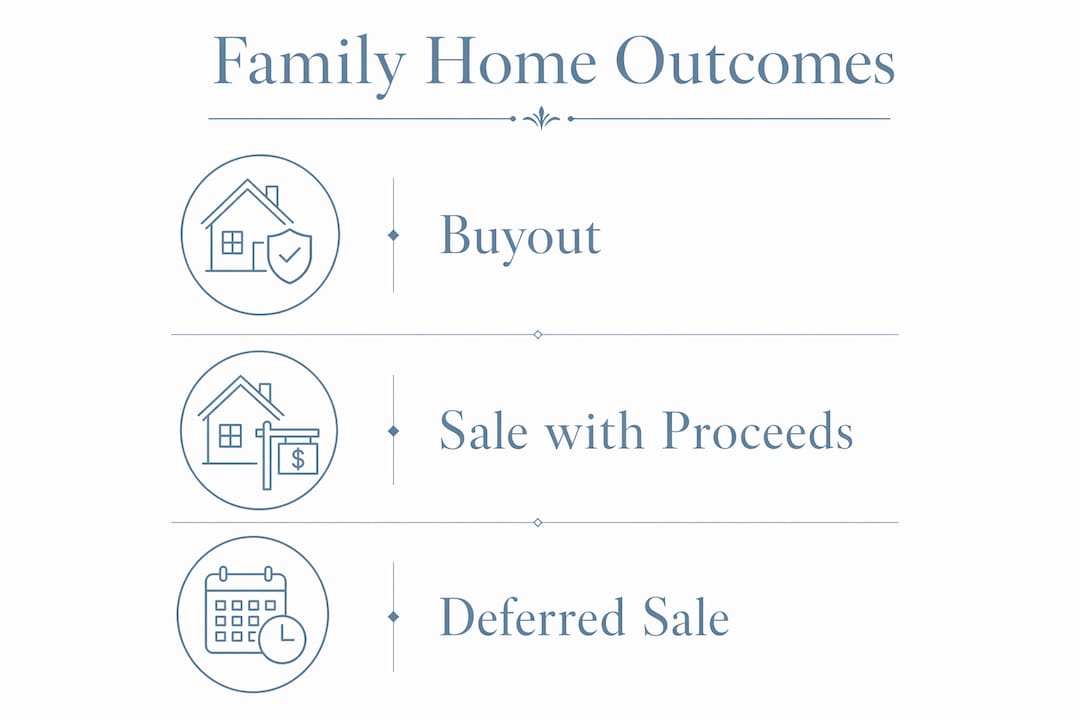
New Hampshire courts resolve the family home through one of three main outcomes: a buyout, a sale with divided proceeds, or a deferred sale. Each path carries distinct financial and legal consequences, so knowing which applies to your situation matters from day one.
The equitable distribution model under RSA 458:16-a starts with a presumption of equal division, but courts regularly deviate from that when circumstances justify it. About 90% of New Hampshire divorces proceed as no-fault cases citing irreconcilable differences, which simplifies the property division process but does not eliminate the court’s discretion. The judge still evaluates each spouse’s contributions, needs, and ability to maintain the home going forward.
Key statutory factors courts consider include:
- Length of the marriage: Longer marriages often result in more equal division of home equity.
- Financial contributions: Both income and non-monetary contributions like homemaking and caregiving count under RSA 458:16-a.
- Custodial parent needs: The court weighs whether a parent with primary custody needs to remain in the home.
- Each spouse’s economic circumstances: Income, debts, and ability to refinance all factor into the decision.
Pro Tip: Request a formal home appraisal early in the divorce process. Agreeing on a single appraiser with your spouse saves time and reduces disputes over the home’s fair market value.
What are the three main outcomes for the family home?
The three primary paths for handling the marital home each come with trade-offs. Understanding them helps you negotiate from a position of knowledge rather than uncertainty.

| Outcome | How it works | Key consideration |
|---|---|---|
| Spouse buyout | One spouse pays the other their equity share and refinances the mortgage | Refinancing is required to remove the departing spouse from liability |
| Sale of home | Home is sold and net proceeds are divided equitably after costs | Selling costs typically run 6–8% of the sale price |
| Deferred sale | Custodial parent stays in the home until children reach adulthood | Non-occupying spouse retains an equity interest until the eventual sale |
A buyout is the outcome courts prefer when one spouse can afford it. Home equity is calculated as fair market value minus the mortgage balance and estimated selling costs. If the home is worth $400,000 with a $250,000 mortgage and $28,000 in estimated selling costs, the net equity is roughly $122,000. A buying spouse would owe the other approximately $61,000 in an equal split scenario.
Refinancing the mortgage solely into the buying spouse’s name is not optional. Failing to refinance leaves the departing spouse legally responsible for mortgage payments even after the divorce is final. That exposure can damage credit and create financial liability for years.
When neither spouse can afford a buyout, the court will order a sale and divide the net proceeds according to equitable distribution. A deferred sale is a less common but important option when minor children are involved, which the next section covers in detail.
Pro Tip: If you are considering a buyout, get pre-approved for a refinance before agreeing to terms. Lenders evaluate your income alone, not the combined household income, and many spouses discover they cannot qualify for the amount needed.
How does child custody affect who keeps the family home?
Courts prioritize the stability of minor children above most other factors when deciding property division in New Hampshire. This single principle shapes more home division outcomes than any other.
Under RSA 458:16-a, the custodial parent’s need to occupy the marital residence is a named statutory factor. A judge can award exclusive possession of the home to the custodial parent, even if that results in an unequal division of assets overall. The logic is straightforward: uprooting children from their school, neighborhood, and home during an already difficult transition causes measurable harm.
Situations where custody directly influences the home outcome include:
- A custodial parent with primary physical custody may receive the right to live in the home rent-free until the youngest child turns 18.
- The non-custodial spouse retains an equity stake, paid out when the home is eventually sold.
- Courts may grant exclusive residence rights to the custodial parent even when that parent earns less income.
- A parent’s ability to maintain the home, covering the mortgage, taxes, and upkeep, factors into whether exclusive possession is realistic.
The deferred sale arrangement protects children’s stability but creates a long-term financial tie between former spouses. Both parties remain co-owners on paper until the sale occurs, which means major decisions about the property, like refinancing or significant repairs, require ongoing cooperation.
Common pitfalls to avoid with the family home in divorce
Property decisions made early in a divorce often have consequences that are difficult to reverse. These are the mistakes New Hampshire residents most commonly make.
Moving out before a court order. Vacating the family home without legal protection can be interpreted as abandonment or an informal agreement that the remaining spouse retains possession. It can also weaken your custody position. Never leave the marital home without first consulting an attorney.
Failing to update the mortgage and deed. A divorce decree does not automatically remove your name from a mortgage. If your spouse keeps the home and fails to refinance, you remain liable for that debt. Confirm that refinancing is completed before the divorce is finalized.
Transferring the home to avoid division. Hiding assets by transferring the family home to a relative or friend violates mandatory financial disclosure rules. Courts treat this as fraud and commonly respond by awarding the asset to the other spouse or imposing severe sanctions.
Skipping professional valuation. Relying on online estimates like Zillow instead of a licensed appraiser creates disputes and inaccurate equity calculations. A formal appraisal protects both parties.
Making decisions without legal counsel. Property division in New Hampshire involves statutory law, mortgage contracts, tax implications, and custody considerations simultaneously. An attorney helps you see the full picture before you agree to anything.
Key takeaways
New Hampshire courts divide the family home based on equitable distribution under RSA 458:16-a, meaning fairness drives the outcome, not an automatic equal split.
| Point | Details |
|---|---|
| Equitable, not equal | Courts divide the home fairly based on contributions, custody, and financial circumstances. |
| Three main outcomes | Buyout, sale, or deferred sale are the standard resolutions for the marital home. |
| Refinancing is required | A buyout only protects the departing spouse if the mortgage is refinanced into one name. |
| Custody shapes decisions | Courts regularly grant custodial parents home possession to preserve children’s stability. |
| Early mistakes are costly | Moving out or transferring the home without legal advice can permanently harm your position. |
My perspective on navigating the family home in divorce
After working through many New Hampshire divorce cases involving the family home, the pattern I see most often is this: spouses make their biggest mistakes in the first few weeks, before they fully understand the legal framework.
The most common misconception is that whoever paid the mortgage gets the house. New Hampshire law does not work that way. Homemaking and caregiving count as contributions under RSA 458:16-a, which means a spouse who stayed home to raise children has a legitimate equity claim even without a paycheck.
The second thing I would tell anyone in this situation is that negotiation almost always produces a better outcome than litigation. When spouses can agree on a buyout price or a sale timeline, they control the result. When a judge decides, neither party gets exactly what they want. Clear, direct communication between spouses, even through attorneys, saves time, money, and emotional strain.
Finally, do not underestimate the tax and long-term financial implications of keeping the home. Carrying a large mortgage on a single income while managing other divorce-related expenses puts many people in financial difficulty within two years. Sometimes selling and splitting the proceeds is the more financially sound choice, even when it feels like a loss.
— Rich
How Narolaw helps with family home division in New Hampshire
Narolaw is a New Hampshire family law practice that guides clients through divorce and property division with personalized legal strategies. Whether you are facing a contested buyout, a deferred sale arrangement, or a dispute over home equity, Narolaw’s attorneys understand the specific factors New Hampshire courts apply under RSA 458:16-a. The firm also handles child custody, spousal support, and related family law matters, so your case is managed with full context. If you are unsure how the family home fits into your overall divorce settlement, schedule a free consultation with Narolaw to get clear answers before making any decisions.
FAQ
What does equitable distribution mean for the family home?
Equitable distribution means the court divides the home fairly based on each spouse’s contributions and circumstances, not necessarily 50/50. New Hampshire follows this model under RSA 458:16-a.
Can I be forced to sell my home in a New Hampshire divorce?
Yes. If neither spouse can afford a buyout or the parties cannot agree, a New Hampshire court can order a sale and divide the net proceeds equitably.
Does the parent with custody automatically get the house?
Not automatically, but the custodial parent’s need to occupy the marital residence is a named factor under RSA 458:16-a. Courts frequently award home possession to the custodial parent to protect children’s stability.
What happens to the mortgage after a divorce?
The spouse keeping the home must refinance the mortgage into their name alone. Without refinancing, the departing spouse remains legally liable for the debt.
Can I move out of the family home before the divorce is finalized?
Moving out before a court order can hurt your housing rights and custody position. Consult a family law attorney before leaving the marital home for any extended period.


