

Every parent in New Hampshire confronting divorce faces tough questions about who their child will live with and who gets a say in important decisions. Child custody is multi-layered, with differences between physical custody and legal custody creating confusion for many. Clearing up these concepts helps protect your rights and ensures your child’s wellbeing. This guide highlights key distinctions and addresses common mistakes to help you make informed choices in family court.
Table of Contents
- Defining Custody And Common Misconceptions
- Types Of Custody In New Hampshire Law
- How Courts Decide Custody Arrangements
- Parental Rights And Obligations Explained
- Risks, Mistakes, And Long-Term Impacts
Key Takeaways
| Point | Details |
|---|---|
| Understanding Custody Types | Distinguish between physical custody (where the child lives) and legal custody (decision-making authority) for clearer rights and responsibilities. |
| Myths About Custody | Common misconceptions, such as the belief that noncustodial parents have no say in decisions or that custody is permanent, can lead to conflicts and misunderstandings. |
| Importance of Documentation | Maintain comprehensive records of your involvement in your child’s life to support your rights in custody disputes and ensure your child’s welfare. |
| Legal Obligations and Rights | Parental rights come with corresponding obligations; neglecting responsibilities can jeopardize your custody rights and your child’s well-being. |
Defining Custody and Common Misconceptions
Custody determines who lives with your child and who makes important decisions about their health, education, and welfare. But here’s where many parents get confused: custody isn’t one single thing.
There are two distinct components to understand:
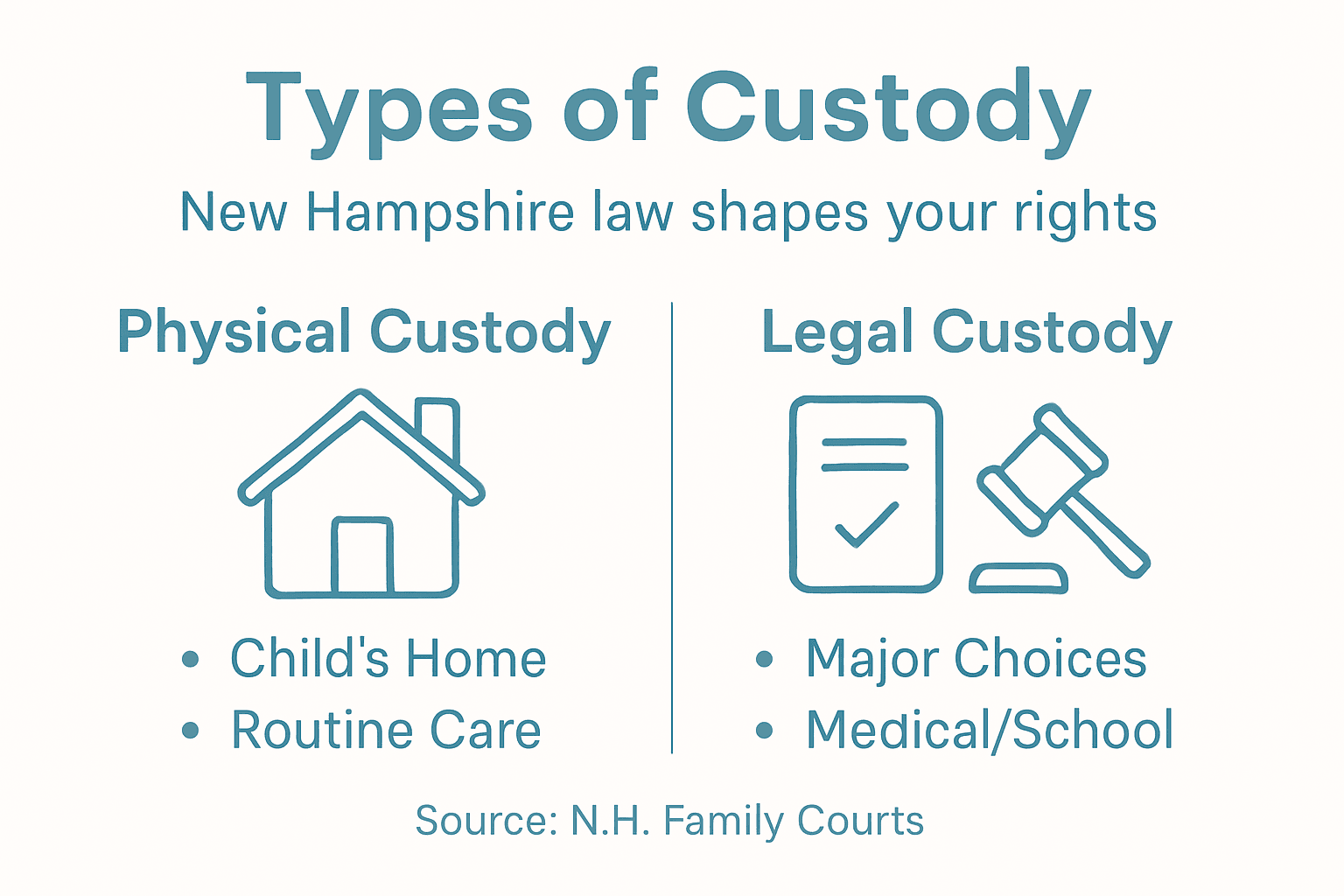
- Physical custody: Where your child actually lives day-to-day. This determines which parent provides housing, supervision, and daily care.
- Legal custody: The authority to make major decisions about your child’s life, including education, medical treatment, religious upbringing, and extracurricular activities.
Both can be shared (joint) or awarded to one parent (sole). You might have sole physical custody while both parents share legal custody, or countless other combinations depending on your specific situation.
The Physical vs. Legal Distinction
Many parents assume these two types are the same thing. They’re not. Understanding the distinction between physical and legal custody is crucial because your rights and responsibilities differ significantly under each.
Imagine this scenario: Your ex-spouse has sole physical custody, meaning your child lives with them most of the time. But you both share legal custody. You still have the right to make medical decisions, choose schools, and weigh in on major life choices—even though your child doesn’t live with you.
This is where many noncustodial parents make a critical mistake.
Major Misconceptions About Custody
Parents often cling to beliefs about custody that simply don’t match New Hampshire law. Here are the most common misunderstandings:
Misconception 1: A noncustodial parent has no say in decisions
False. Historical evolution of custody law shifted away from viewing custody as parental rights alone, instead focusing on the child’s best interests. Just because you don’t have physical custody doesn’t mean you’re locked out of major decisions.
Misconception 2: The mother automatically gets custody
New Hampshire courts don’t favor either parent based on gender. Courts examine all factors affecting your child’s wellbeing and make decisions accordingly.
Misconception 3: Custody is permanent and unchangeable
Custody arrangements can be modified if circumstances change significantly. Job loss, relocation, or changes in your child’s needs may warrant adjustments.
Misconception 4: Custody is about punishing one parent
Custody is exclusively about what serves your child’s interests—not about rewarding good behavior or punishing bad behavior by either parent.
Courts base custody decisions on your child’s best interests, not on whether one parent “deserves” custody more than another.
Why This Matters for Your Family
Getting clear on these definitions protects your rights and your child’s welfare. Vague understandings lead to conflict, missed opportunities to parent your child, and costly legal disputes down the road.
If you’re uncertain about your current custody arrangement or what your rights actually are, protecting your parental rights starts with understanding the legal framework.
Pro tip: Document all communications about custody decisions and keep records of your involvement in major parental choices—schools, medical appointments, extracurriculars—to demonstrate your active parental role if custody arrangements are ever contested.
Types of Custody in New Hampshire Law
New Hampshire recognizes several custody types, each defining different parental roles and responsibilities. Understanding which type applies to your situation is essential for knowing your rights and obligations as a parent.
The state acknowledges two primary custody dimensions that work independently of each other:
- Physical custody: Determines where your child lives and who provides day-to-day care, supervision, and housing.
- Legal custody: Grants the authority to make significant decisions about education, healthcare, religious upbringing, and other major life choices.
Each dimension can be sole (one parent) or joint (both parents sharing responsibility). This creates multiple possible arrangements tailored to your family’s circumstances.
To clarify the different custody arrangements recognized in New Hampshire, here’s a comparison table:
| Arrangement Type | Parental Responsibilities | Decision-Making Authority | Child’s Living Situation |
|---|---|---|---|
| Sole Physical Custody | One parent provides daily care | May involve joint or sole legal | Child resides mainly with one parent |
| Sole Legal Custody | One parent decides major matters | Exclusive authority for decisions | May be with either parent |
| Joint Physical Custody | Both share daily care duties | May be joint or sole legal | Child spends equal time with parents |
| Joint Legal Custody | Both must agree on key decisions | Shared authority over decisions | May be with one or both parents |
Sole Custody Arrangements
Sole custody awards one parent primary responsibility for either physical care, decision-making authority, or both. The other parent typically receives visitation rights but limited or no decision-making power.

Sole physical custody means your child lives primarily with one parent. The other parent may have regular visitation but doesn’t provide daily care and housing.
Sole legal custody gives one parent exclusive authority over major decisions. This arrangement works when parents cannot cooperate on education, medical treatment, or other significant matters.
In some cases, a parent receives sole physical custody while both parents share legal custody, allowing the noncustodial parent input on important decisions even though the child doesn’t live with them.
Joint Custody: Shared Responsibility
Joint custody means both parents share responsibility, though the specifics vary. Joint custody can involve shared legal decision-making, physical custody, or both, depending on what the court determines serves your child’s best interests.
Joint legal custody is common and allows both parents to participate in major decisions equally. You might disagree, but neither parent can unilaterally decide about school choice or medical treatment without consulting the other.
Joint physical custody requires the child to spend substantial time with each parent. Some arrangements alternate weeks; others split the school year or use a 50/50 schedule.
Joint custody succeeds when parents can communicate and cooperate, even if they’re not together romantically.
Temporary and Modified Custody Orders
Not all custody orders are permanent. Courts issue temporary orders during divorce proceedings when immediate decisions about the child’s living situation are necessary.
In emergency situations involving abuse, neglect, or safety concerns, courts can issue temporary custody orders quickly to protect your child. These remain in place until a full custody hearing determines permanent arrangements.
Custody can be modified if circumstances change substantially. Relocation, job loss, changes in your child’s needs, or shifts in parental capacity may warrant court review and adjustment.
Who determines custody arrangements depends on your specific situation. When custody disputes arise, courts evaluate factors like parental capacity, your child’s relationship with each parent, and stability when making custody decisions.
Why Custody Type Matters
Your custody arrangement directly affects your legal rights, financial obligations, and time with your child. Getting the right arrangement protects your parental role and ensures your child’s needs are met.
Misunderstanding which type you have leads to disputes over who can make decisions, where your child should live, and whether modifications are possible.
Pro tip: Review your custody order carefully and clarify whether you have sole or joint custody for physical care and decision-making separately—many parents realize they have more rights than they thought once they understand their actual arrangement.
How Courts Decide Custody Arrangements
Courts don’t flip a coin or rely on outdated assumptions when deciding custody. Instead, judges apply a “best interests of the child” standard, which means every decision focuses on what benefits your child most, not what either parent prefers.
This legal framework considers multiple factors specific to your family’s circumstances. Understanding how courts think about custody helps you prepare for proceedings and advocate effectively for your child’s wellbeing.
The Best Interests Standard
New Hampshire courts use the best interests of the child standard to evaluate multiple factors including your child’s relationship with each parent, how well your child adjusts to their home and community, and the mental and physical health of both parents.
Courts also consider your child’s own preferences, especially as they grow older. A teenager’s wishes carry significant weight, though courts don’t automatically grant custody to the parent a child prefers.
The stability of each parent’s living situation matters. A parent with secure housing, steady employment, and established community ties looks more capable of providing consistent care than one facing frequent moves or job instability.
Key Factors Courts Examine
Judges review specific criteria when evaluating custody arrangements:
Below is a summary table highlighting key court factors in custody decisions:
| Factor Evaluated | Why It Matters | Typical Court Consideration |
|---|---|---|
| Parental involvement | Shows commitment to child | Attendance at events, appointments |
| Stability and environment | Supports emotional security | Housing, employment, community ties |
| Child’s preferences | Respects child’s autonomy | Age and maturity of the child |
| Safety concerns | Protects child from harm | Past abuse, violence, substance abuse |
| Sibling relationships | Maintains family bonds | Preference for keeping siblings together |
| Adjustment to community | Reduces disruption | Impact of moving schools or homes |
- Parental relationship with the child: Who has been the primary caregiver? Which parent attends school events, doctor appointments, and activities? Courts value demonstrated involvement.
- Each parent’s capacity to care: Do you have time, emotional stability, and resources to meet your child’s needs?
- Sibling relationships: Courts strongly prefer keeping siblings together unless circumstances make separation necessary.
- Safety and stability: History of abuse, substance abuse, or domestic violence directly impacts custody decisions.
- Your child’s adjustment to school and community: Moving your child away from familiar schools and friends requires strong justification.
- Your child’s wishes: Older children’s preferences receive significant consideration, though not absolute weight.
Courts prioritize your child’s safety and stability over parental preferences or fairness between parents.
Jurisdiction and Legal Framework
Before determining custody, courts must establish they have authority over your case. New Hampshire follows the Uniform Child Custody Jurisdiction and Enforcement Act (UCCJEA), which determines which state’s courts have the right to make custody decisions.
Generally, the court handling your case is located in your child’s “home state”—where your child has lived for at least six months. In emergency situations involving safety threats, courts can act quickly under emergency jurisdiction rules, then transition to permanent custody decisions through proper jurisdiction.
What You Can Control
While you can’t control what the judge decides, you can present your best case. Document your involvement in your child’s life, maintain stable housing and employment, address any personal issues affecting your parenting capacity, and demonstrate your commitment to your child’s wellbeing.
Consistency matters. Courts notice which parent shows up, follows through on commitments, and prioritizes the child’s needs. Your actions speak louder than arguments about why the other parent is unsuitable.
Pro tip: Keep detailed records of your time with your child, major decisions you’ve made for them, and how you’ve supported their development—schools, activities, medical care, and emotional support—since courts rely heavily on demonstrated parental involvement when making custody decisions.
Parental Rights and Obligations Explained
Parental rights sound like they’re all about what you get to do as a parent. They’re actually about what you’re required to do for your child. This distinction matters tremendously in custody disputes and family law.
Parental rights involve legal responsibilities rooted in your duty to care for, protect, and guide your child. These aren’t freedoms—they’re obligations backed by law. Courts view parental rights as tools for serving your child’s needs, not as personal entitlements.
Your Core Parental Obligations
Law requires you to provide:
- Physical care and supervision: Adequate food, shelter, clothing, and safety. Your child depends on you for basic survival needs.
- Medical and dental care: Regular checkups, vaccinations, treatment for illness or injury, and mental health support when needed.
- Education: Ensuring your child attends school or meets educational requirements through approved alternatives.
- Guidance and discipline: Teaching values, managing behavior, and supporting emotional development appropriately to your child’s age.
- Financial support: Child support payments if you don’t have primary physical custody, and contributing to your child’s reasonable expenses.
These aren’t optional. Courts can enforce them through custody modifications, child support orders, or other legal action if you neglect these duties.
The Rights Side of the Equation
Parental rights exist to help you fulfill these obligations. You have the right to make decisions about your child’s health, education, and welfare. You can access school records, attend medical appointments, and participate in major life decisions.
But here’s the critical part: rights only exist if you actively exercise them. Courts notice which parent stays involved, shows up to school events, and maintains a relationship with their child.
Absence damages your rights. If you don’t contact your child, miss court-ordered visitation, or fail to participate in their life for an extended period, courts may question your parental fitness.
When Rights Have Limits
The legal system protects parental rights as fundamental but allows court intervention when child safety or welfare is at risk. Your rights don’t extend to harming your child through abuse, neglect, or substance abuse affecting your ability to parent.
Courts can restrict your rights if you endanger your child. Domestic violence history, criminal convictions involving violence, substance abuse issues, or a pattern of neglect all justify limiting custody or visitation.
Due process protections apply when courts limit parental rights. You get notice, an opportunity to be heard, and a chance to address concerns before losing custody or decision-making authority.
Rights and Obligations Work Together
You can’t claim parental rights while ignoring parental obligations. Courts see through parents who demand custody or decision-making authority but don’t pay child support, miss visitation, or provide basic care.
Conversely, fulfilling your obligations strengthens your position in custody disputes. Demonstrating consistent care, financial support, and emotional involvement proves your commitment to your child’s wellbeing—exactly what courts reward.
Parental rights exist to serve your child, not to serve your interests.
Pro tip: Document your adherence to parental obligations by maintaining payment records for child support, attending all school and medical appointments, and keeping communication records showing your involvement in your child’s life—this evidence directly supports your rights in any custody proceeding.
Risks, Mistakes, and Long-Term Impacts
Custody decisions aren’t abstract legal matters—they shape your child’s entire future. A single mistake or poor decision can ripple through years of your child’s life, affecting their emotional health, stability, and relationship with both parents.
Understanding these risks helps you avoid costly errors and recognize why getting custody right matters so much for your family.
How Poor Custody Decisions Harm Children
Mistakes in custody arrangements can disrupt child development, stability, and emotional health with lasting consequences. A child placed with an unstable parent, moved away from their community, or forced into an arrangement that ignores their needs suffers real harm.
Children thrive on consistency and stability. Frequent moves between parents, unpredictable schedules, or living with a parent who can’t provide basic care creates anxiety and undermines your child’s sense of security.
Parent-child relationships suffer when custody arrangements don’t match reality. If visitation requires a young child to spend extended time with an uninvolved parent, or if a teenager is forced away from the parent they’re close to, resentment builds.
Common Mistakes Parents Make
Parents often sabotage their own custody cases through preventable errors:
- Failing to document involvement: Not keeping records of time spent with your child, appointments attended, or decisions made. Courts need evidence of your involvement.
- Missing court dates or deadlines: Judges notice which parents show up prepared and which ones don’t. Tardiness or absence signals indifference.
- Speaking negatively about the other parent: Children hear these comments, and courts view parental conflict as harmful to your child’s wellbeing.
- Inconsistent visitation: Canceling scheduled time or showing up sporadically tells the court you’re unreliable.
- Unresolved personal issues: Substance abuse, mental health problems, or criminal behavior directly impact custody decisions if left unaddressed.
- Hiding assets or income: Courts discover financial dishonesty, and it damages your credibility on every issue.
One custody mistake can take years to fix through the appeals process or modifications.
Systemic Issues in Family Court
Structural challenges in family court systems can exacerbate conflicts and cause long-term emotional harm to families. Court delays, overburdened judges, and inconsistent decision-making sometimes lead to outcomes that don’t truly serve your child’s interests.
Navigating these systemic issues requires preparation and often professional guidance. Parents who appear unprepared or unrepresented often face worse outcomes than those who come with evidence and legal support.
Long-Term Consequences for Your Child
Custody arrangements affect your child’s development for years. Poor arrangements damage academic performance, increase behavioral problems, and create lasting emotional wounds.
Your child’s relationship with each parent depends partly on custody structure. If an arrangement prevents meaningful contact with one parent or forces time with an unsafe parent, your child loses either way.
As your child grows older, they remember which parent fought for them and which one disappeared. Custody mistakes made when your child is young often result in strained relationships in adulthood.
Protection Through Preparation
You can’t control the court’s decision, but you can control your preparation. Gather documentation, address personal issues, maintain consistent involvement, and seek legal guidance before mistakes happen.
The cost of hiring an attorney to get custody right initially is far less than the cost of years of custody disputes, appeals, and damage to your child’s wellbeing.
Pro tip: Before your custody hearing, compile a detailed timeline of your involvement in your child’s life—schools attended, medical appointments, activities, holidays, and significant moments—because judges rely on this concrete evidence when evaluating which parent has prioritized your child’s wellbeing.
Protect Your Parental Rights With Expert Help
Custody decisions shape your child’s future and your role as a parent in ways you cannot afford to leave to chance. If you are facing challenges like understanding the difference between physical and legal custody or worried about how the court applies the “best interests of the child” standard, you need personalized guidance tailored to New Hampshire law. The confusion around custody types, common misconceptions, and the serious risks of mistakes mean you deserve compassionate advocacy that prioritizes your child’s safety and your parental rights.
At Naro Law, we specialize in family law and custody cases in New Hampshire. Our experienced attorneys help you navigate complex custody arrangements, protect your parental rights and obligations, and prepare strong evidence to present your active involvement. Don’t wait until conflicts escalate or misunderstandings damage your relationship with your child. Visit us to learn how to safeguard your parental rights and schedule your free consultation so we can develop a strategy that works for your family’s unique needs now.
Frequently Asked Questions
What are the different types of custody recognized in New Hampshire?
New Hampshire recognizes physical custody, which determines where the child lives, and legal custody, which grants the authority to make significant decisions about the child’s life. Both types can be either sole or joint, allowing for various arrangements based on the family’s situation.
How do courts determine custody arrangements in New Hampshire?
Courts use a “best interests of the child” standard to evaluate custody arrangements. Factors considered include parental involvement, the child’s relationship with each parent, stability of the living situation, and the child’s preferences as they grow older.
Can custody arrangements be modified after they are established?
Yes, custody arrangements can be modified if there are significant changes in circumstances, such as job loss, relocation, or changes in the child’s needs. A court review would be necessary to enact any modifications.
What are the parental rights and obligations in a custody arrangement?
Parental rights refer to the legal authority to make decisions about a child’s life, such as education and healthcare. Obligations include providing physical care, medical support, education, guidance, and financial support. Fulfilling these obligations is essential for maintaining parental rights.
Recommended
- Who Gets Child Custody After Divorce in New Hampshire? – Naro Law
- Child Custody Lawyer NH | Protect Your Parental Rights
- Experienced Family Law Attorney Manchester | Divorce & Custody | Naro Law – Naro Law
- Understanding New Parenting Rights And Responsibilities In New Hampshire: A Guide To Recent Legal Changes


