

TL;DR:
- Parental rights in New Hampshire include decision-making, custody, visitation, and support.
- The law favors shared parenting unless specific risks or issues justify otherwise.
- Rights can be limited or terminated only with strong evidence of neglect, abuse, or abandonment.
Separation and divorce can leave parents feeling powerless, especially when it comes to their relationship with their children. Many assume courts automatically favor one parent, or that rights can disappear without warning. That fear is understandable, but it often does not reflect how New Hampshire family law actually works. Understanding your parental rights, what they cover, how they are protected, and what could put them at risk, gives you the knowledge to act with confidence rather than anxiety.
Table of Contents
- What parental rights mean in New Hampshire
- How parental rights protect New Hampshire families
- When parental rights can be lost in New Hampshire
- Navigating challenges and protecting your rights
- Why parental rights debates are more complex than they seem
- Find the right support for your parental rights journey
- Frequently asked questions
Key Takeaways
| Point | Details |
|---|---|
| Shared Parenting Preferred | New Hampshire law favors shared parental involvement and equal time unless it’s not in the child’s best interests. |
| Rights Protect Family Bonds | Parental rights help ensure emotional, educational, and developmental stability for children after family changes. |
| Loss of Rights Is Rare but Serious | Parental rights are only terminated in cases of neglect, abuse, or abandonment, and the impact is usually permanent. |
| Proactive Steps Matter | Taking early legal action, such as establishing paternity or seeking modifications, helps parents protect their rights. |
| Legislation Shapes Outcomes | Changing New Hampshire laws and debates affect the rights and responsibilities of all parents. |
What parental rights mean in New Hampshire
With this urgency in mind, let’s clarify exactly what “parental rights” are and how New Hampshire law approaches them.
Parental rights are the legal protections that define your role as a parent. They cover four main areas:
- Decision-making authority: Your right to weigh in on your child’s education, healthcare, and religious upbringing.
- Physical custody: Where your child lives and how time is divided between parents.
- Visitation: Your scheduled access to your child when you are not the primary residential parent.
- Support obligations: The financial responsibilities tied to raising your child.
New Hampshire law starts from a clear position. The shared parenting presumption holds that children benefit from involvement with both fit parents, and courts favor shared arrangements unless one would be detrimental to the child. The parental rights overview explains how this plays out in practice across different family situations.
| Aspect | What it means for you |
|---|---|
| Shared parenting presumption | Courts start by assuming both parents should be involved |
| HB 185 (effective 2025) | Establishes policy for approximately equal parenting time |
| Best interests standard | All decisions center on the child’s welfare, not parental preference |
| Gender-neutral framework | Neither parent has an automatic advantage based on gender |
The legal workflow for parental rights walks through how these principles translate into court proceedings step by step.
Pro Tip: Document your involvement in your child’s daily life, school events, and medical appointments. Courts look at patterns of engagement, and a clear record supports your case for shared parenting.
How parental rights protect New Hampshire families
After understanding the legal framework, it’s key to see how these rights shape real lives and child well-being.
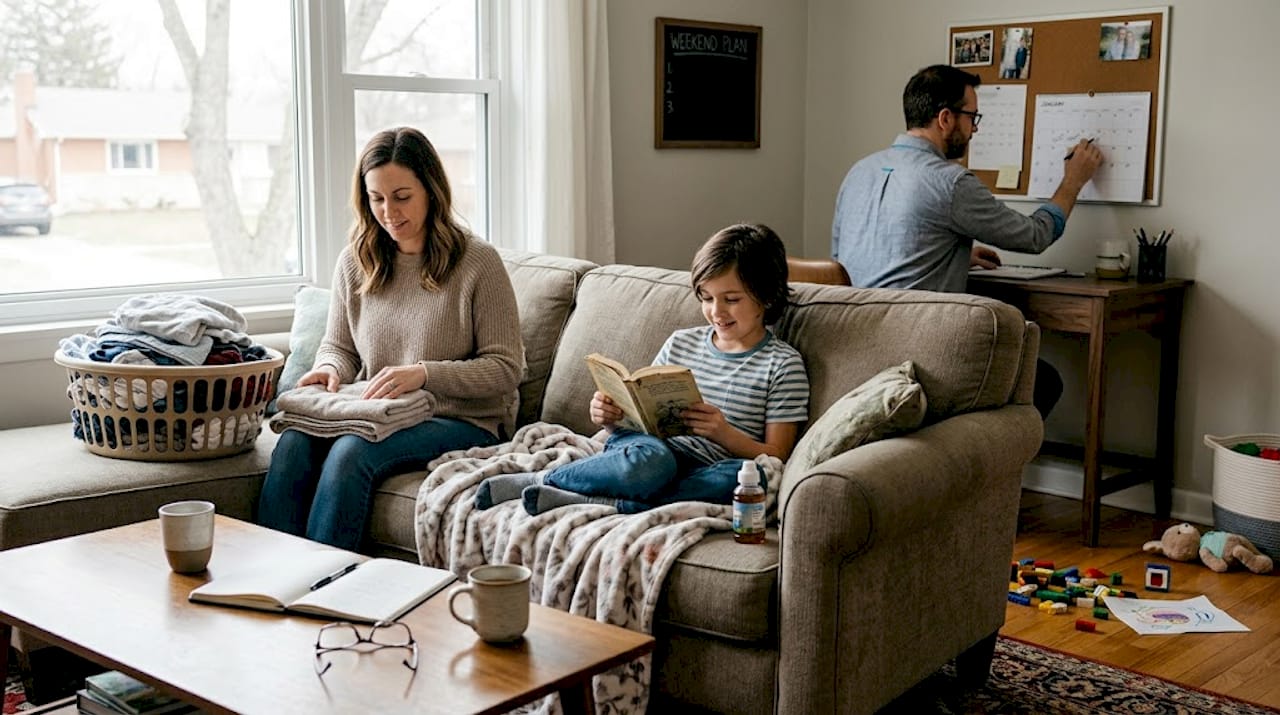
Research consistently shows that children do better when both parents stay meaningfully involved after separation. The impact on educational outcomes is one measurable area: parental separation links to lower educational attainment for children, a finding that has remained stable across multiple study cohorts. This is not a minor concern. It underscores why the law works to preserve both parent-child relationships wherever possible.
Losing parental rights is not just a legal setback. It can permanently sever the bond between a parent and child. That is why New Hampshire’s parental rights protections include several practical tools:
- Gender-neutral custody laws that prevent automatic bias
- Mediation options to resolve disputes without prolonged litigation
- Court enforcement of parenting plans when one parent violates agreed terms
- Modification processes when circumstances change significantly
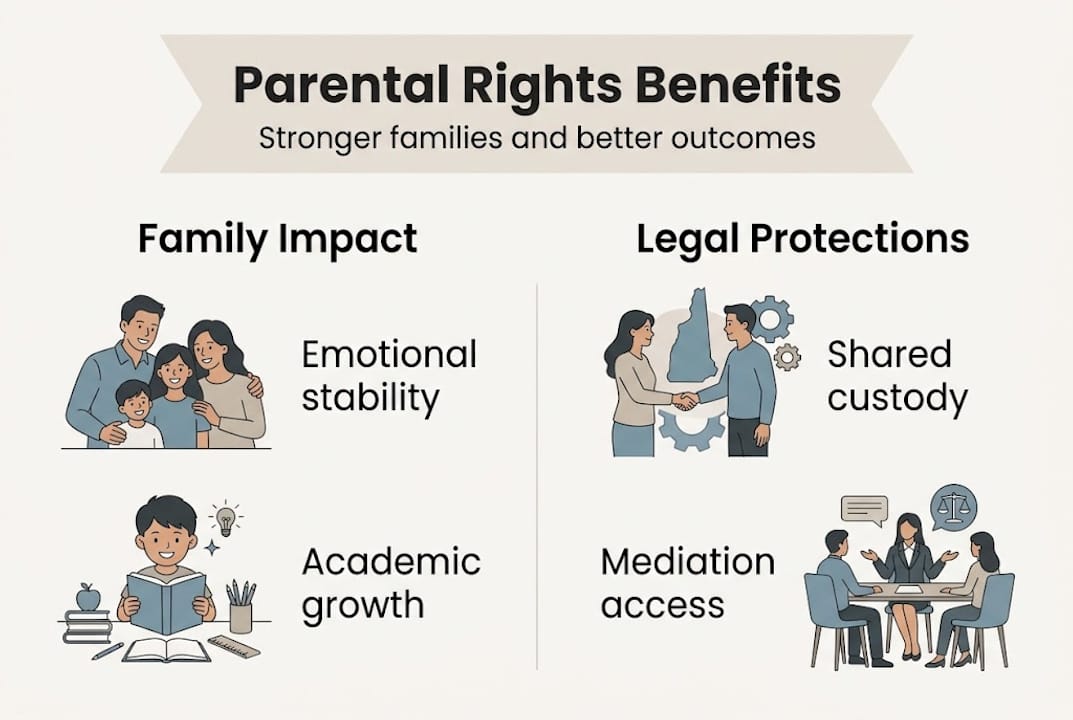
“Parental rights ensure both parents can maintain meaningful relationships with children post-separation, promoting child stability and emotional health. Protections like gender-neutral laws, mediation, and enforcement tools safeguard fit parents facing challenges.”
| Protection tool | When it applies |
|---|---|
| Mediation | Disputes over parenting schedules or decisions |
| Enforcement motions | When a parent withholds court-ordered access |
| Custody modification | Significant life changes affecting the child |
| Paternity establishment | Unmarried fathers seeking legal recognition |
The data is clear: stable, dual-parent involvement produces better outcomes for children across emotional, academic, and social measures.
When parental rights can be lost in New Hampshire
While the law protects fit parents, there are rare but critical times when rights can be limited or removed. Here’s what to know.
New Hampshire sets a very high legal bar for terminating parental rights. Under RSA 170-C:5, the state must prove grounds beyond a reasonable doubt. That is the same standard used in criminal cases. The most common grounds include:
- Abandonment: Presumed after six months with no contact or financial support.
- Abuse or neglect: Documented harm or failure to provide basic care.
- Failure to correct conditions: When a child has been out of the home for 12 months and the parent has not addressed the issues that caused removal.
- Long-term incarceration: When a prison sentence would leave a child without a stable parent for an extended period.
- Severe mental illness: When a parent cannot safely care for a child despite reasonable support services.
In 2023 to 2024, New Hampshire reviewed approximately 3,000 child welfare reports, with 12 child fatalities recorded. These numbers reflect how seriously the state takes child safety, and why courts do not remove parental rights without strong justification.
If you have a criminal record, understanding how criminal history affects parental rights is an important first step. If your situation has changed significantly, you may also want to explore modifying custody or support rather than waiting for a court to act against you.
Pro Tip: If you are concerned about past mistakes affecting your parental rights, speak with an attorney before any court proceedings begin. Early legal guidance can make a significant difference in how your case is framed.
Navigating challenges and protecting your rights
Knowing what can go wrong is vital, but so is understanding what parents can actively do to protect their rights and their children’s well-being.
Taking proactive steps is far more effective than reacting after a problem escalates. Here are the most important actions to consider:
- Establish paternity if you are unmarried. Without legal paternity, an unmarried father has no automatic custody or decision-making rights. This must be done formally, either through a voluntary acknowledgment or a court order.
- Respond quickly to any allegations. Ignoring claims of neglect or abuse, even ones you believe are false, can be interpreted as indifference by the court.
- Give proper notice before relocating. Relocation requests in New Hampshire require a 60-day notice and court approval before moving a child out of state or significantly far within the state.
- Seek a custody modification when life changes. A new job, a health issue, or a change in the other parent’s situation may justify a formal modification through the child custody workflow.
- Get legal representation early. An attorney can help you avoid procedural mistakes that could weaken your position.
Key situations that may require legal action:
- A parent repeatedly violates the parenting plan
- One parent plans to move with the child
- Allegations of abuse or neglect are made
- A significant change in income affects support obligations
Pro Tip: Keep a simple written log of parenting time, communications with the other parent, and any missed visits. This kind of record is straightforward to maintain and can be invaluable if a dispute goes to court.
Why parental rights debates are more complex than they seem
With practical steps covered, it’s worth asking: are these debates really as simple as “protecting parents,” or is the story more complicated?
Most people think of parental rights as a family court issue. But in 2025, New Hampshire’s Parental Bill of Rights (HB 10) expanded the conversation into schools, healthcare decisions, and student privacy. Supporters argue it gives parents greater transparency and control. Teachers’ groups and LGBTQ advocates raise concerns about mandatory disclosures that could put vulnerable students at risk.
This tension matters for any parent navigating the legal system. Rights are not static. They are shaped by legislation, community values, and ongoing legal challenges. Understanding recent legal changes helps you see the full picture, not just the courtroom side. The most informed parents are the ones who recognize that protecting their children sometimes means engaging with debates that go well beyond custody schedules.
Find the right support for your parental rights journey
If you’re facing a parental rights challenge or just want peace of mind, expert help is only a click away.
Navigating parental rights in New Hampshire is rarely straightforward, and the stakes are too high to go it alone. Whether you are an unmarried father establishing paternity, a parent responding to allegations, or someone facing a custody modification, personalized legal guidance makes a real difference. The team at Naro Law works with families across New Hampshire at every stage of these matters. Explore our guide to family law in NH or connect with a family law attorney in Manchester to discuss your situation and understand your options.
Frequently asked questions
What are the main benefits of parental rights for parents and children?
Parental rights help ensure both parents can maintain strong relationships with their children, promoting emotional stability and well-being after separation. They also give parents legal standing to participate in key decisions about education, healthcare, and daily life.
When could a parent lose their rights in New Hampshire?
A parent may lose rights due to abandonment, abuse, neglect, or a serious threat to child safety, and termination under RSA 170-C:5 is rare and requires proof beyond a reasonable doubt. Courts always consider the child’s best interests before making any such determination.
How can unmarried parents protect their parental rights?
Unmarried parents, especially fathers, should establish legal paternity promptly to secure decision-making and custody rights. Without this step, an unmarried father has no automatic legal standing in custody proceedings.
What if one parent wants to move out of New Hampshire with a child?
Relocation typically requires 60-day advance notice and often court approval to confirm the move serves the child’s best interests. Failing to follow this process can result in serious legal consequences, including a change in custody.
Recommended
- Essential parental rights checklist for New Hampshire parents
- Understanding New Parenting Rights And Responsibilities In New Hampshire: A Guide To Recent Legal Changes
- Why Unmarried New Hampshire Parents Need Parenting Plans – Naro Law
- What are parental rights in New Hampshire: 2026 guide
- Role of Parents in Therapy: Supporting Child Recovery – ReviveHealthTherapy


