

TL;DR:
- Child custody disputes in New Hampshire are complex and emotionally challenging, requiring thorough preparation and understanding of the state’s laws. Courts prioritize the child’s best interests, and achieving a favorable outcome depends on proper documentation, cooperation, and focus on the child’s well-being. Legal guidance from experienced attorneys can help navigate the process and enforce or modify custody orders effectively.
Child custody disputes are among the most emotionally demanding legal situations a parent can face. If you are searching for a clear guide to child custody in NH, you are likely dealing with high stakes, uncertainty, and a legal process that can feel overwhelming without proper preparation. New Hampshire has specific laws, filing requirements, and judicial standards that shape every custody case. This article walks you through each stage of the process, from initial filing to parenting plan enforcement, so you can make informed decisions and advocate effectively for your child.
Table of Contents
- Key takeaways
- What this guide to child custody in NH covers first
- The step-by-step child custody process in NH courts
- Types of parental rights in New Hampshire
- Common mistakes and challenges in NH custody disputes
- Enforcing and modifying custody orders in NH
- My perspective on what actually matters in NH custody cases
- How Naro Law supports NH parents through custody disputes
- FAQ
Key takeaways
| Point | Details |
|---|---|
| Best interests standard governs | NH courts base all custody decisions on the child’s well-being, not parental preferences. |
| Preparation prevents delays | Filing requires a Petition, Personal Data Sheet, and Financial Affidavit before any court date. |
| Custody types vary widely | Legal and physical custody are separate concepts, and 50/50 time splits are not guaranteed. |
| First Appearance sets the tone | How you present yourself at this early hearing influences judicial perception throughout the case. |
| Modifications require new evidence | Courts will only change existing orders when there has been a significant change in circumstances. |
What this guide to child custody in NH covers first
Before you file anything, understanding the prerequisites saves you time and prevents costly procedural mistakes. The step-by-step custody process in NH begins at the Circuit Court level, where parents must submit a formal Petition for Custody and Parenting Time along with supporting documentation.
The required documents typically include:
- A completed Petition for Custody and Parenting Time
- A Personal Data Sheet with the child’s identifying information
- A Financial Affidavit detailing income, expenses, and assets
- Proof of seminar completion (the Child Impact Seminar is mandatory)
- A Parenting Plan Worksheet in most contested cases
Jurisdiction under the UCCJEA is another critical threshold. NH courts can hear your case if New Hampshire is the child’s home state, meaning the child has lived there for at least six months prior to filing. If the child recently moved or has connections to another state, jurisdictional disputes can delay your case significantly. Getting this right from the start avoids expensive motions later.
Parenting plans must include certificates of seminar completion, financial affidavits, and support worksheets before a case can be finalized. These are not optional formalities. Missing even one document can stall your case at the courthouse.
Pro Tip: Bring your calendar to every court appearance. The First Appearance session is used to schedule future steps, and being unprepared to confirm dates signals disorganization to the judge.
| Document | Purpose |
|---|---|
| Petition for Custody | Formally initiates the custody case in Circuit Court |
| Personal Data Sheet | Identifies the child and establishes jurisdictional details |
| Financial Affidavit | Provides income and expense data for support calculations |
| Child Impact Seminar Certificate | Confirms completion of the mandatory parenting education program |
| Parenting Plan Worksheet | Outlines proposed custody schedule and decision-making structure |
The step-by-step child custody process in NH courts
Once your paperwork is filed, the case moves through a structured sequence of events. Here is how that process typically unfolds:
- First Appearance. Both parents appear before the judge shortly after filing. This is primarily a scheduling session, but parent demeanor and cooperation are observed by the judge. Showing up prepared and respectful matters more than most parents realize.
- Mediation. NH courts require mediation in most custody disputes before scheduling a contested hearing. A neutral mediator helps both parties work toward a parenting agreement. Many cases resolve here without going to trial.
- Guardian ad Litem appointment. In high-conflict cases, the court may appoint a Guardian ad Litem (GAL) to independently investigate and represent the child’s interests. The GAL submits a report with recommendations that carry significant weight.
- Contested hearing. If mediation fails, the case proceeds to a hearing where both parents present evidence and testimony. Judges may also hear expert witnesses on topics like the child’s developmental needs or parenting capacity.
- Final parenting plan and order. The judge issues a final order incorporating the agreed or court-determined parenting schedule, legal custody rights, and any support arrangements.
The best interests of the child standard governs every decision a judge makes throughout this process. That means the court is evaluating evidence about your child’s emotional needs, stability, and relationships, not just which parent wants more time.
Pro Tip: Keep a written log of parenting-related communications, school involvement, medical appointments, and daily routines. Concrete documentation consistently outperforms emotional testimony in court.
Types of parental rights in New Hampshire
Understanding the types of parental rights in New Hampshire requires distinguishing between two separate legal concepts: legal custody and physical custody.
Legal custody refers to the authority to make major decisions about the child’s education, healthcare, religion, and general welfare. Physical custody refers to where the child primarily lives and the day-to-day care schedule.
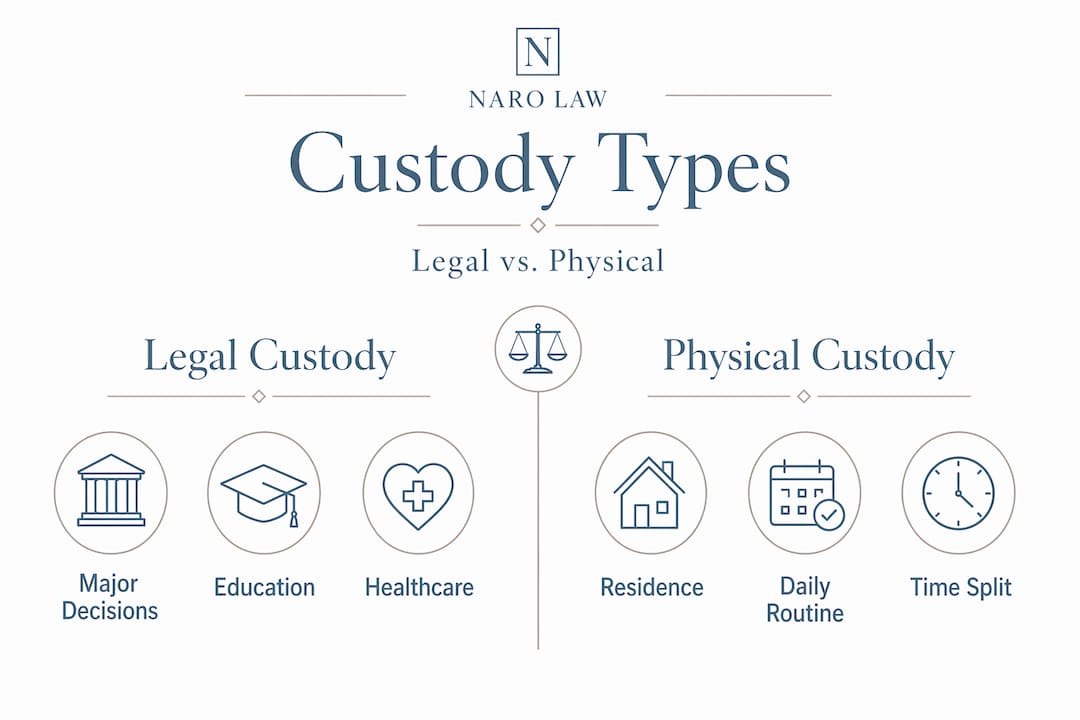
| Custody Type | Definition | Common Arrangement |
|---|---|---|
| Joint legal custody | Both parents share decision-making authority | Most common outcome in NH |
| Sole legal custody | One parent makes all major decisions | Typically when one parent is absent or unfit |
| Joint physical custody | Child spends significant time with both parents | Varies by work schedules and child’s needs |
| Sole physical custody | Child lives primarily with one parent | Other parent often receives visitation rights |
One of the most persistent misconceptions in NH custody arrangements is that courts automatically award a 50/50 time split. They do not. Equal parenting time is encouraged when it serves the child’s best interests, but the actual schedule depends heavily on each parent’s availability, the child’s age and school situation, and the existing parent-child relationship. Parents in Nashua or Manchester, for example, may face practical constraints around school districts and work schedules that directly shape the final plan.
You can explore a deeper breakdown of parental rights in New Hampshire to understand how courts weigh each factor before you walk into any hearing.
Common mistakes and challenges in NH custody disputes
Custody litigation carries specific pitfalls that can damage your case even when your intentions are entirely focused on your child’s welfare.
- Avoid inflammatory labels in court filings. The concept of parental alienation as a legal strategy is controversial and potentially harmful. Experts warn it can be misused to undermine legitimate safety concerns raised by protective parents.
- Stay professional in all communications. Texts, emails, and social media posts are discoverable evidence. Courts regularly see these materials, and hostile messages can directly contradict claims of cooperative parenting.
- Understand recent legislative changes. Recent NH parental rights legislation has focused on clarifying evidentiary standards and parental involvement rights, with ongoing debate about how these changes affect cases involving allegations of abuse or neglect.
- Report safety concerns through proper channels. If you have genuine concerns about abuse or neglect, document them carefully and report to appropriate authorities. Raising safety issues through proper legal channels is very different from using them as litigation tactics.
The judge is not there to decide which parent deserves more time. The judge is there to protect the child. Parents who demonstrate they understand this distinction consistently fare better in court.
Enforcing and modifying custody orders in NH
Getting a custody order is not always the end of the process. Circumstances change, and so can court orders.
- File a motion to enforce. If the other parent is not following the parenting plan, you can petition the court to enforce the existing order. In serious cases, contempt filings are available to compel compliance.
- Document all violations. Before filing, gather records of missed exchanges, denied parenting time, or failure to communicate. Courts require evidence, not just allegations.
- Petition for modification. To change an existing custody arrangement, you must demonstrate a significant change in circumstances since the last order, such as relocation, a parent’s remarriage, or documented changes in the child’s needs.
- Understand DCYF’s role. In cases involving safety concerns, the Division for Children, Youth and Families may be involved. Their findings can influence both enforcement actions and modification petitions.
Child custody modification in NH follows the same best interests standard as the original proceeding. Courts do not grant modifications lightly, which is why thorough documentation is critical before initiating this process.
My perspective on what actually matters in NH custody cases
I’ve seen parents arrive at custody hearings focused entirely on what they want, and I’ve seen how quickly that approach backfires. In my experience, the parents who achieve the best outcomes are those who reorient their focus entirely onto the child before they step into the courtroom.
What I find most overlooked is how much judicial perception is shaped in the very first hearing. The judge is forming impressions about your temperament, your reasonableness, and your willingness to co-parent. None of that is written in a statute, but it’s real.
The shifting legislative environment around parental rights is worth watching closely. Changes to evidentiary standards affect how courts treat everything from school records to allegations of harm. Staying current on those changes, ideally with legal guidance, is not optional anymore. It’s the difference between a well-prepared case and one that gets undermined by procedural missteps.
Cooperation, realistic expectations, and child-focused behavior throughout the process are not just good values. They are the practical foundation of a favorable outcome.
— Rich
How Naro Law supports NH parents through custody disputes
Facing a custody case alone is difficult, and the procedural complexity of NH family courts makes professional guidance genuinely valuable. Naro Law works with parents throughout New Hampshire, from initial filing through hearings, mediation, and post-judgment modifications. Their team understands NH family law thoroughly and builds individualized legal strategies suited to each family’s circumstances. Whether you are just starting the process or dealing with an enforcement issue, Naro Law offers free consultations to help you understand your rights and options. Contact the firm to speak with an experienced NH custody attorney and take the first concrete step toward protecting your child’s future.
FAQ
What documents do I need to file for custody in NH?
You must file a Petition for Custody and Parenting Time, a Personal Data Sheet, and a Financial Affidavit at the Circuit Court. Completion of the Child Impact Seminar is also mandatory before your case can be finalized.
How does a judge decide custody in New Hampshire?
NH judges apply the best interests of the child standard, weighing factors like the child’s relationships, emotional needs, stability, and each parent’s ability to support the child’s development.
Is 50/50 custody automatic in New Hampshire?
No. NH courts encourage shared parenting time when practical, but an equal split is not guaranteed. The actual schedule is determined by the child’s best interests and each family’s specific circumstances.
How do I modify an existing custody order in NH?
You must file a petition for modification and demonstrate a significant change in circumstances since the original order was issued. Courts apply the same best interests standard to modification requests as they do to initial custody determinations.
What happens if the other parent violates the parenting plan?
You can file a motion to enforce the existing order, and in serious cases, a contempt petition. Documenting all violations with dates and specifics before filing significantly strengthens your position in court.


