

Child custody mediation is a structured, confidential process in which a neutral third party helps parents reach their own parenting agreement without a judge deciding for them. Rather than treating a custody dispute as a courtroom contest, mediation keeps both parents at the table, focused on what actually matters: a workable plan for their child. Many programs report generally high success rates for reaching agreements, making it one of the effective tools available to separating families.
What is child custody mediation and why does it matter?
Mediation is a guided conversation between parents, led by a trained, neutral mediator whose job is to facilitate productive communication, not to take sides or render a verdict. The mediator helps both parents identify what they agree on, surface the sticking points, and work toward a parenting plan that addresses both legal custody (decision-making authority over health care, education, and religion) and physical custody (where the child lives and the parenting time schedule).
The process is voluntary in most private settings, though many courts across the United States require parents to attempt mediation before a contested custody hearing will be scheduled. Once parents reach an agreement, the mediator drafts a written parenting plan. A judge then reviews it against the best interest of the child standard and, if approved, signs it into a binding court order.
Key features of child custody mediation at a glance:
- Neutral facilitator: The mediator guides discussion but makes no decisions for either parent.
- Confidential: Statements made during mediation generally cannot be used against you in court if mediation fails.
- Child-centered: The focus stays on the child’s well-being, not on parental grievances.
- Flexible outcomes: Parents can reach a full agreement, a partial agreement, or no agreement at all.
- Legally enforceable: A mediated agreement becomes binding only after a judge reviews and signs it as a court order.
How the child custody mediation process works
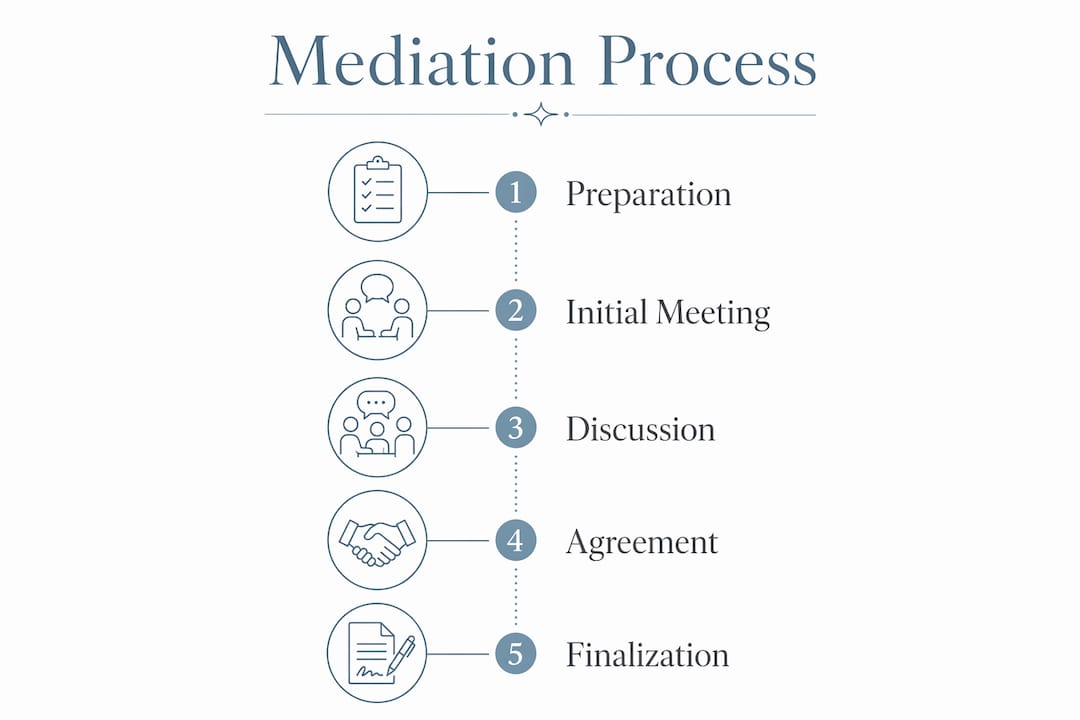
Most mediation follows a predictable structure, even though the tone is far less formal than a courtroom. Understanding each stage helps you walk in prepared rather than reactive.

The process typically begins with an orientation. Many court-connected programs require both parents to attend an information session before the first mediation appointment. This session covers ground rules, confidentiality, and what the mediator can and cannot do. From there, the first mediation session usually opens with the mediator explaining the process, setting expectations, and inviting each parent to share their perspective on the custody arrangement they are seeking.
During the working sessions, the mediator uses several practical techniques:
- Caucusing: Meeting privately with each parent to surface concerns that are difficult to raise in a joint setting.
- Reality testing: Asking each parent to consider how a proposed arrangement would actually function day to day for the child.
- Reframing: Redirecting emotionally charged statements toward child-focused language and practical problem-solving.
- Option generation: Helping parents brainstorm multiple scheduling or decision-making arrangements before settling on one.
Topics covered typically include the child’s primary residence, the parenting time schedule (including holidays and school breaks), how parents will communicate about the child’s needs, and how major decisions will be made. Financial matters like child support fall outside mediation’s scope and are handled separately through the court.
Sessions usually run one to two hours. Most cases resolve in one to four sessions, though the mediator can schedule additional time if both parents agree and progress is being made. If an agreement is reached, the mediator prepares a written parenting plan, which both parents sign before it goes to the judge for approval.
Why mediation often produces better outcomes than going to court
The contrast between mediation and litigation goes beyond cost and speed, though both are real advantages. Litigation frames custody as a dispute with a winner and a loser, which tends to entrench conflict and make post-separation co-parenting harder. Mediation, by design, keeps both parents working toward the same goal.
Longitudinal studies show that parents who reach custody agreements through mediation report higher satisfaction and more positive post-separation relationships than those whose cases were decided by a judge. That difference shows up most clearly in how parents communicate about their child’s needs in the years after separation.
On the financial side, court-connected mediation is often free or low-cost, while private mediation typically runs $100–$350 per hour, with total costs of roughly $3,000–$7,000 split between both parents. A contested custody trial can cost multiples of that figure, and it removes the parents’ control over the outcome entirely.
Additional benefits worth understanding:
- Parental autonomy: You and the other parent craft the agreement, rather than yielding that authority to a judge who does not know your child.
- Reduced emotional harm to children: A less adversarial process lowers the conflict children are exposed to during and after separation.
- Faster resolution: Mediation typically concludes in weeks rather than the months or years a litigated case can take.
- Better compliance: Parents who build their own agreements tend to follow them more consistently than those who have arrangements imposed on them.
Mediation is not the right path in every situation. If domestic violence or a severe power imbalance exists between the parents, courts may waive the mediation requirement entirely and move directly to a hearing. Some states bar mediation once domestic violence is established; others permit it only with written consent from both parties and specific safety protections in place. If you have safety concerns, raise them with the court before any mediation session is scheduled.
What you can realistically expect during custody mediation
Walking into mediation with accurate expectations makes a meaningful difference in how the process unfolds. One of the most common sources of frustration is misunderstanding what the mediator’s role actually is. Mediators do not advocate for either parent, offer legal advice, or tell you what a judge would likely decide. Their sole function is to help both parents communicate productively and explore options for a parenting plan.
What the mediator will do:
- Keep the conversation focused on the child’s needs rather than past grievances.
- Help each parent articulate their priorities clearly.
- Propose options and scheduling frameworks when the conversation stalls.
- Draft the parenting agreement if both parents reach a resolution.
What the mediator will not do:
- Decide who is the better parent.
- Advise you on your legal rights or the strength of your position.
- Recommend a custody arrangement to the judge if mediation fails.
- Address child support, property division, or other financial matters.
Possible outcomes include a full parenting agreement, a partial agreement on some issues with remaining disputes going to a judge, or no agreement at all. If mediation does not produce a resolution, the case moves forward to a contested hearing. Courts generally view a genuine, good-faith effort at mediation favorably, and refusing to engage or stonewalling the process can reflect poorly on a parent at trial.
For New Hampshire parents, understanding how custody mediation fits into the state’s family court process is especially useful before your first session.
The role of legal counsel in child custody mediation
Parents are not required to have an attorney present during mediation. In fact, approximately 60% of people in family law cases proceed without one. That said, the absence of an attorney in the mediation room does not mean legal advice is unnecessary.
The most important moment to involve an attorney is before you sign the parenting plan. A mediator cannot tell you whether the agreement you have reached adequately protects your parental rights or aligns with your state’s legal standards. An attorney reviewing the draft plan can catch provisions that seem reasonable in conversation but create problems in practice, such as vague language around holiday schedules or decision-making authority.
Limited-scope representation, sometimes called unbundled legal services, offers a practical middle ground. Rather than hiring an attorney for full representation, you engage one for a specific task: reviewing the mediation agreement, advising you on a particular legal question, or preparing you for a session. This approach gives you professional legal protection at a fraction of the cost of full representation.
Pro Tip: Bring a written list of your priorities and non-negotiables to the first mediation session. Reviewing that list with a family law attorney beforehand, even in a single consultation, helps you distinguish between positions worth holding firm on and those where flexibility serves your child’s interests.
Common pitfalls that legal counsel helps parents avoid:
- Signing a parenting plan with ambiguous language that leads to future disputes.
- Agreeing to arrangements that conflict with your state’s legal custody standards.
- Misunderstanding the mediator’s neutrality and expecting advocacy that will not come.
- Overlooking provisions for modifying the plan as the child’s needs change.
For parents navigating custody in New Hampshire, the benefits of legal representation in family law cases extend well beyond the courtroom. Even limited legal guidance during the mediation process can protect your rights and produce a more durable agreement for your child.
Key Takeaways
Child custody mediation gives parents the authority to shape their child’s future directly, with success rates between 60% and 80% making it the most effective alternative to contested litigation for most families.
| Point | Details |
|---|---|
| Mediator role | The mediator facilitates discussion and drafts agreements but never advocates for either parent or offers legal advice. |
| Success rates | Programs report success rates between 60% and 80% for reaching agreements, with mediated agreements tending to hold up better over time than court-imposed orders. |
| Cost range | Private mediation typically costs $3,000–$7,000 total split between parents, far less than contested litigation. |
| Legal enforceability | A mediated parenting plan becomes a binding court order only after a judge reviews and approves it. |
| When to involve an attorney | Review the draft parenting plan with a family law attorney before signing, even if you self-represent during mediation sessions. |


